Geopolitics is not a tragedy of errors. It is a cold, calculated math of survival where the currency is blood and the ledger is kept in the shadows. Most coverage of the recent strikes along the Durand Line treats the human cost as the lead story. It frames the fallout as a bilateral "misunderstanding" or a failure of diplomacy. This is a naive fantasy.
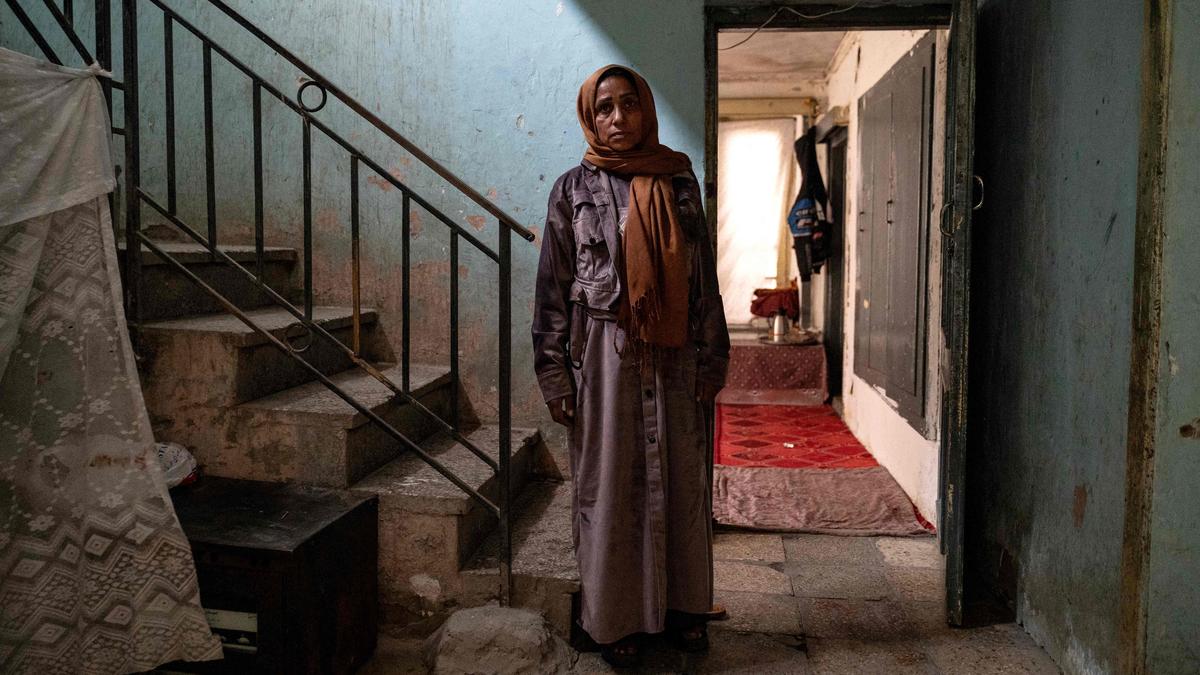
The media focuses on the individual grief of an Afghan mother to sell a narrative of senseless violence. While that grief is undeniably real, focusing on it hides the systemic reality: these strikes are not about "terrorism" or "justice" in the way Western audiences understand those terms. They are about the collapse of a fifty-year proxy management strategy. For an alternative look, see: this related article.
Pakistan isn't "missing the mark." It is desperately trying to rewrite the rules of a game it created.
The Proxy Paradox
For decades, the standard playbook in Islamabad was "strategic depth." The logic was simple: control Kabul to ensure a friendly backyard against India. This wasn't a secret. It was a doctrine. By supporting the Taliban for twenty years against the US-backed republic, the Pakistani security establishment thought they were buying a permanent seat at the table. Further reporting regarding this has been provided by NBC News.
They bought a house fire instead.
The "lazy consensus" says that Pakistan is now a victim of the very groups it fostered. That is only half the truth. The real disruption here is that the Taliban—now a sovereign government—has realized that they no longer need a patron. They have the keys to the kingdom. When the Pakistani military strikes Afghan soil, they aren't just hitting militants; they are trying to remind a defiant Kabul who the boss used to be.
It isn't working.
Sovereignty is the New Weapon
The competitor article mourns the lack of justice. But what does justice look like in a region where the border itself is an illegality? Afghanistan has never formally recognized the Durand Line. To a mother in Khost or Paktika, the border is an invisible ghost. To the Taliban, it is a colonial relic.
When Pakistan bombs these areas, they are attempting to enforce a physical border that the local population ignores and the Afghan government rejects. This isn't a "security operation." It’s an involuntary border-building exercise.
Why the TTP is a Symptom, Not the Cause
The Tehrik-i-Taliban Pakistan (TTP) is often cited as the reason for these escalations. The narrative suggests that if the Afghan Taliban would just "hand them over," the bombing would stop.
This ignores the fundamental mechanics of Pashtun identity and the internal politics of the Taliban movement.
- Brotherhood over Statehood: The Afghan Taliban cannot hand over the TTP without destroying their own ideological legitimacy.
- The Leverage Trap: Kabul views the TTP as a necessary counter-weight. If Pakistan has leverage in Afghanistan, the Taliban wants leverage inside Pakistan.
I have watched regional analysts claim that "better intelligence sharing" is the solution. That is nonsense. You cannot share intelligence with a partner who is actively shielding your target for their own survival.
The Economic Mirage of Stability
Western NGOs and news outlets often scream for "stability" and "de-escalation." They want the status quo back. But the status quo was a lie funded by American dollars that no longer flow.
The current violence is a market correction.
Without the US presence to act as a common enemy or a financial buffer, the underlying friction between a nationalist Afghan state and a paranoid Pakistani state is being exposed. This is what raw regional politics looks like without the veneer of "Global War on Terror" branding.
Imagine a scenario where a landlord spends twenty years training a guard dog to bite the neighbors, only for the dog to take over the house and invite the neighbors over for dinner. The landlord doesn't need "justice." The landlord needs a new house. Pakistan is currently trying to kick the door down to a house they no longer own.
The Professionalism of Brutality
Let's address the "unprofessionalism" of these air strikes. Critics argue they are sloppy because they kill civilians.
From a purely tactical perspective, "collateral damage" in these zones is often a feature, not a bug. In the brutal logic of irregular warfare, collective punishment is a tool used to turn the local population against the insurgents hiding among them. It is a primitive, horrific, and often counter-productive strategy, but it is not accidental.
When a state uses high-altitude bombers on mud huts, they are sending a message to the tribal elders: Your guests are making you targets. Calling for "justice" from the Pakistani court system or the UN is a waste of ink. The UN cannot even enforce its own charters in Gaza or Ukraine; it certainly isn't going to fix a blood feud in the Hindu Kush.
The Wrong Questions
The media asks: "When will the killing stop?"
The better question: "What happens when Pakistan realizes its influence is gone forever?"
The shift we are seeing is the "Sovereignization" of the Taliban. They are no longer a group of insurgents living in Quetta hotels. They are a state. And states do not like being told what to do by their former handlers.
The conflict isn't about a single bombing or a single mother's grief. It is about the death of the "Strategic Depth" era. Pakistan is losing its grip on its western flank, and these strikes are the panicked thrashing of a declining regional power.
The Hard Truth for the Humanitarian Lens
We have to stop viewing the Afghan-Pakistan border through the lens of a "human rights crisis" if we want to understand it. It is a power crisis.
If you want to help the people on the ground, stop advocating for "border security" that only serves to wall off people from their families. Stop asking for "bilateral cooperation" between two entities that are fundamentally at odds.
The disruption required here is an admission that the post-2021 order is not a vacuum—it is a new, hostile equilibrium.
The Afghan Taliban are not "failed partners." They were never partners to begin with. They were clients who outgrew their patron. Pakistan’s attempt to bomb them back into submission is like trying to stop a flood with a handgun. You might make a splash, but you’re still going to get wet.
The tragedy isn't that justice is being denied. The tragedy is the delusion that justice was ever on the menu. In the Durand Line corridor, there is only leverage, and right now, the ground is shifting beneath Pakistan's feet.
Stop looking for a hero or a villain. Start looking at the map. The lines are being redrawn in real-time, and they are being drawn in red.
The era of Pakistani hegemony in Afghanistan is over. No amount of ordnance will bring it back.