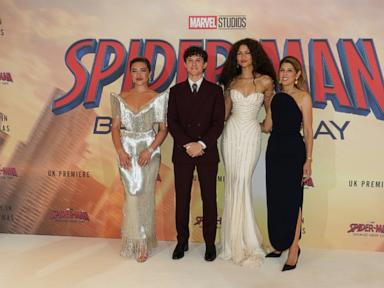
Everybody in the trades is popping champagne over the latest weekend grosses, pretending that high box office velocity means the traditional studio machine is healthy.
It is not. For an alternative look, check out: this related article.
The industry trades love a simple narrative. They look at Christopher Nolan setting a fresh high-water mark with The Odyssey and Marvel maintaining a relentless sprint with Spider-Man: Brand New Day, and they shout from the rooftops that theatrical exhibition is back. They want you to believe that audiences are simply starving for cinematic events, and as long as you give them recognizable intellectual property or an auteur brand, the tollbooth prints cash.
I have spent years watching studios misdiagnose their own failures, and this lazy consensus is the most dangerous delusion currently poisoning Hollywood boardrooms. Related insight on this matter has been shared by The Hollywood Reporter.
The box office numbers are not proof of a healthy ecosystem. They are symptom markers of a desperate monoculture gasping for air.
The Fallacy of the Megahit Mirage
Look closer at the data. When The Odyssey clears unprecedented hurdles for Nolan, studio executives pat themselves on the back and assume that spectacle-driven epics are the universal antidote to streaming fatigue. When Spider-Man: Brand New Day keeps its record-shattering pace, executives greenlight another three iterations of the exact same narrative formula, convinced that superhero fatigue is a myth invented by cynical bloggers.
This is fundamentally backwards.
Massive opening weekends for hyper-branded events do not signal a thriving marketplace; they signal a risk-averse audience that refuses to gamble on mid-budget cinema. When tickets cost twenty bucks a pop, parking is exorbitant, and theater chains act like budget airlines, consumers stop experimenting. They do not buy tickets because they love going to the movies. They buy tickets because they are terrified of wasting money on something mediocre.
Consequently, the blockbuster thrives not on enthusiasm, but on insurance.
Every dollar spent on these record-breaking tentpoles is a dollar withheld from original storytelling. The studios look at the opening weekend receipts for The Odyssey and conclude that audiences only want historical scale and masterclass auteur branding. They look at Spider-Man and conclude that continuity loops and multi-verse Easter eggs are mandatory requirements for survival.
Both conclusions are catastrophically wrong.
Nolan Is Not Proof the System Works
Christopher Nolan is an anomaly wrapped in a paradox. He is the only director working today who operates as his own studio brand. When audiences buy a ticket to a Nolan picture, they are not buying into a cinematic universe; they are buying into an artisanal craft guarantee.
Yet, Hollywood misreads his success entirely. Executives assume Nolan wins because he shoots on large-format film stocks and builds practical sets. They throw massive budgets at directors who possess zero visual architecture, hoping that IMAX cameras will magically fix a broken script.
I have watched financiers throw eight-figure sums at stylistic mimicry while completely ignoring the rigorous script engineering that makes Nolan work. Nolan’s films succeed because of narrative tension, non-linear structural audacity, and a refusal to pulp exposition into the mouths of bored teenagers.
When The Odyssey sets new highs, it is not a victory for the traditional blockbuster ecosystem. It is an indictment of it. It proves that audiences are so starved for rigorous, director-driven intelligence that they will flock to a three-hour epic simply because everything else on the marquee insults their intelligence.
If the studio system were healthy, a film like The Odyssey would be part of a vibrant ecosystem of risky, mid-budget genre experiments, historical dramas, and idiosyncratic comedies. Instead, it stands like a lone monolith in a wasteland of IP recycling.
The Spider-Man Trap
On the opposite end of the spectrum sits Spider-Man: Brand New Day. The box office tracking for this film is treated as validation that the superhero machine cannot fail, provided you hit the reset button at the right interval.
Let us be brutally honest about what is happening here.
We are celebrating a franchise for running the exact same marathon while wearing slightly different sneakers. The box office pace is sustained not by fresh creative energy, but by the gravitational pull of sunk cost. Generations of viewers have invested two decades into these characters; walking away feels like abandoning a timeshare you are still paying off.
The studio strategy relies on engineered nostalgia and fear of missing out. Every plot point is optimized for social media discourse rather than structural integrity. When a movie like this sets records, it does not mean the genre is evolving. It means the audience has been successfully conditioned to treat corporate asset management like an interactive sporting event.
Think about the collateral damage. By funneling all available oxygen, marketing spend, and premium auditorium screens into a single spider-themed iteration, the ecosystem starves everything else. Mid-budget thrillers, character studies, and romance films are banished to streaming purgatory, where they are consumed as background noise and promptly forgotten.
We are trading cultural longevity for weekend velocity.
The Metrics That Actually Matter
If you want to understand the health of the entertainment industry, stop looking at opening weekend grosses. Opening weekends are a triumph of marketing budgets and pre-sold awareness, nothing more.
Look instead at retention, second-week drop-offs, and original IP incubation rates.
When a tentpole drops sixty-five percent in its second weekend, that is not a success story; that is front-loaded panic. It means the audience showed up out of habit and left feeling lukewarm, spreading word-of-mouth that kills long-term tail revenue. Yet, Hollywood accountants brush this aside as long as the opening weekend clears the internal threshold.
This short-termism is destroying the very foundation of studio profitability. By focusing exclusively on four-quadrant, billion-dollar anomalies, studios have priced themselves out of making mistakes. When every single release has to clear a five-hundred-million-dollar global hurdle just to break even after P&A costs, creativity is the first casualty.
Imagine a scenario where a major studio greenlights ten seventy-million-dollar films instead of one seven-hundred-million-dollar behemoth. Statistically, mathematically, and culturally, that portfolio approach creates a resilient business model that can absorb failures, discover new talent, and foster genuine cultural moments.
Instead, we double down on the titan model. We crown The Odyssey and Spider-Man as kings of the mountain, ignoring the fact that the mountain is eroding beneath them.
The Uncomfortable Truth About Audience Fatigue
The common refrain from studio defenders is that audiences simply want what they know. "Data shows people prefer familiar characters," they repeat in every executive conference room.
This is a self-fulfilling prophecy.
When you spend ninety percent of your marketing budget on two or three mega-franchises a year, of course those are the titles the public recognizes. You have starved the alternatives of oxygen and then pointed to their failure as proof that nobody wants original stories.
Audiences do not suffer from fatigue toward original ideas; they suffer from fatigue toward lazy execution. When an original film actually breaks through—often on streaming, where the discovery friction is lower—it ignites massive cultural conversations. People are desperate for novelty. They are simply tired of paying premium prices for recycled comfort food disguised as event cinema.
Nolan proves that scale can work. Marvel proves that familiarity can print money. But neither proves that the current trajectory is sustainable.
Stop Playing For Opening Weekends
The fix requires an institutional reckoning that no publicly traded studio executive has the stomach for.
First, slash marketing budgets. The current model of spending two hundred million dollars globally to tell people a movie exists is a disease born of fear. Word of mouth used to build hits; now, algorithmic saturation forces them.
Second, kill the obsession with opening weekend records. An opening weekend is a vanity metric that flatters investors while eroding long-term brand equity. If a film builds its audience over weeks through organic appreciation, its cultural footprint lasts for decades. If it peaks on Friday night at midnight, it is disposable entertainment designed for a landfill.
Finally, stop treating anomalies as blueprints. You cannot manufacture a Christopher Nolan. You cannot force a cinematic universe into existence by hiring committee-driven writers rooms. You can only build an infrastructure that allows distinct voices to take risks without betting the entire corporate balance sheet on a single weekend's weather report.
Until Hollywood stops celebrating these box office sprints as signs of health, the industry will continue sprinting straight off a cliff, convinced it is flying because the air feels fast.