The air at 8,000 meters is not air. It is a thin, biting ghost of oxygen that mocks your lungs. It tastes like copper and failure.
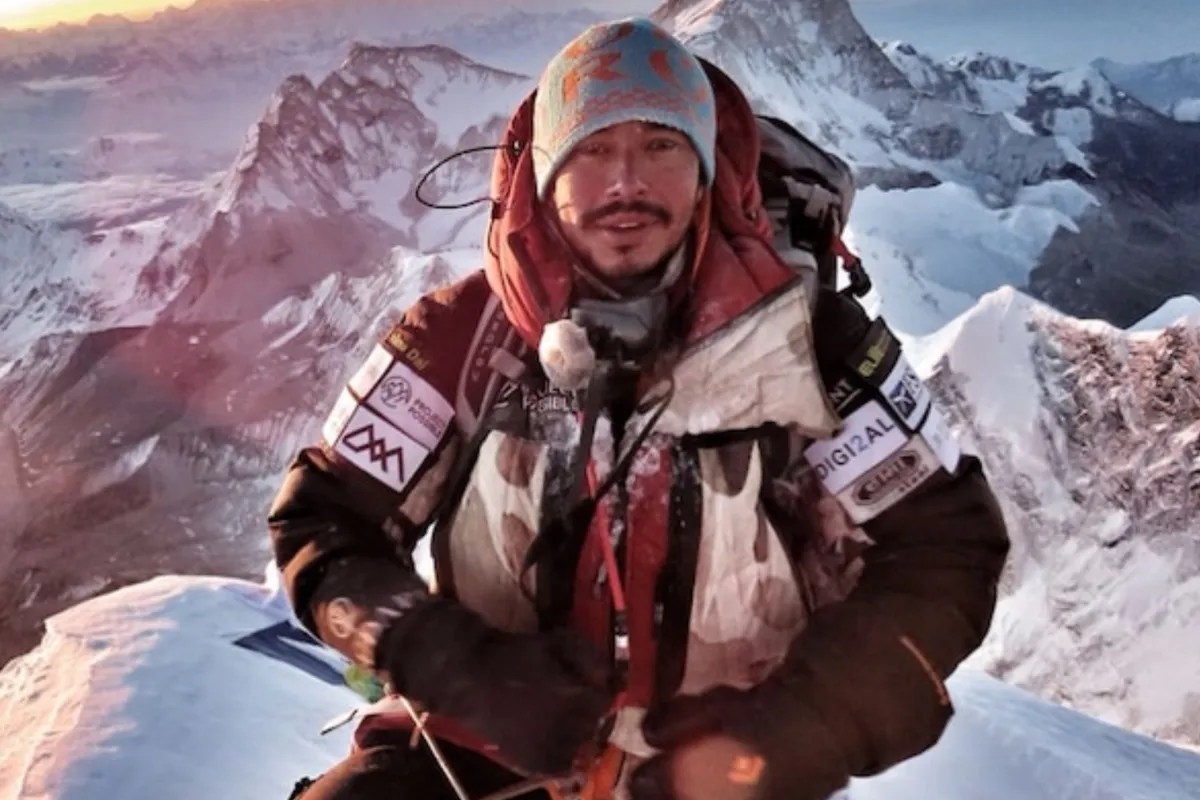
Nirmal Purja knew this taste better than perhaps any human in history. Most people look at a mountain and see a majestic peak. Nims saw a set of stairs. He saw a project. While the world watched from the safety of their sofas, scrolling through bright, sanitized images of summits, Nims was rewriting the physics of human endurance. He did not climb for the view. He climbed to prove that the human machine is capable of terrors we have long forgotten how to face.
There is a myth that mountain climbers are adrenaline junkies. It is a shallow assessment. If you spend enough time around the men and women who court the Death Zone, you realize the truth: they are not chasing a rush. They are chasing a stillness that can only be found where life itself is a constant, exhausting negotiation with gravity.
When he undertook his legendary quest to summit all fourteen of the world's 8,000-meter peaks in record time, people called it insanity. It was, in a sense. It was the deliberate dismantling of the limits that had stood for generations. He wasn't just climbing mountains; he was dismantling the concept of impossible.
Consider the cost.
When you are that high, your body begins to consume itself. Your muscles atrophy. Your brain cells misfire. You are a biological system running on a failing battery, tethered to a frozen rock face by a thin strand of rope. Every movement must be calculated with the precision of a surgeon, even though your mind feels like it is wading through cold molasses.
There are rumors that circulate in the hushed, low-oxygen atmosphere of base camps. Whispers about "final wishes" and grand, singular goals. When the public hears these stories, they often fixate on the macabre. They want to know the why of the end. They want to package a complex, raw existence into a neat, moralizing headline.
But the truth is far less cinematic and far more profound.
There is no "final wish" that justifies the sacrifice of a life. That is a fiction we construct to make sense of the void. In reality, there is only the commitment to the ascent. For someone like Nims, the mountain was never a destination. It was the medium through which he expressed his existence. The risk was not an oversight; it was the price of admission to a state of being that most people never dare to touch.
I remember standing on a much smaller ridge once, nowhere near the scale of Everest or K2, watching the sun bleed across the horizon. My lungs burned. My fingers were numb, aching with that deep, bone-hollow cold that makes you wonder if they’ll ever be warm again. In that moment, the concept of "returning home" felt like a secondary concern. The only thing that existed was the next foothold.
That is the space where these athletes live. It is a place of absolute focus. When you strip away the social media filters and the sponsorship deals, you find a human being stripped to their base components: courage, discipline, and a strange, beautiful hunger to see what lies on the other side of the limit.
Critics often point to the record-breaking nature of these expeditions as a form of ego. They argue that pushing for speed over style—or survival—is a betrayal of the spirit of mountaineering. But this assumes that mountaineering has a singular spirit. It does not. It is as diverse as the people who climb. For some, it is a spiritual pilgrimage. For Nims, it was an athletic evolution. He brought a military precision to a craft that had long been defined by traditional, slower methods. He changed the rhythm of the climb.
And then, the conversation inevitably turns to the mortality of it all. We ask if it was worth it. We treat their lives like a ledger, weighing the value of a record against the tragedy of a loss.
But the ledger is ours, not theirs.
The mountain does not care about your records. It does not care about your legacy, your family, or the promises you made before the air grew thin. It is indifferent. This is the ultimate lesson of the high altitude: we are all, ultimately, alone in our struggles. The support of a team, the technology of a heated suit, the oxygen in the bottle—they are mere props. When the wind screams and the whiteout descends, you are left with nothing but the contents of your own mind.
If you are looking for a reason for why they go, you will never find it in a statement or a news report. You find it in the act itself. You find it in the way the eyes change when a climber looks at a horizon. It is a hunger that cannot be sated by comfort. It is the realization that to be truly alive, one must flirt with the edge of not being alive at all.
There is a quiet, terrifying dignity in that.
As we look back at the giants who walked those ridges, we shouldn't be looking for cautionary tales. We shouldn't be trying to quantify the "why" as if it were a math problem with a solution. Instead, we should look at the space they inhabited. We should recognize the immense, crushing beauty of a human being deciding that the summit, regardless of the cost, is the only place worth standing.
The mountain remains. The ropes are covered by the next snowfall. The records are eventually eclipsed by someone younger, faster, or simply more desperate. But the silence of the summit persists. It waits for the next person to arrive, breathless and shivering, to learn the same lesson: the world is far larger, and we are far smaller, than we ever dared to imagine.
Sometimes, the greatest journey isn't the one that ends with a triumphant return to the crowd. It is the one that stays on the mountain, etched into the ice, forever locked in that singular, perfect moment of the final breath.