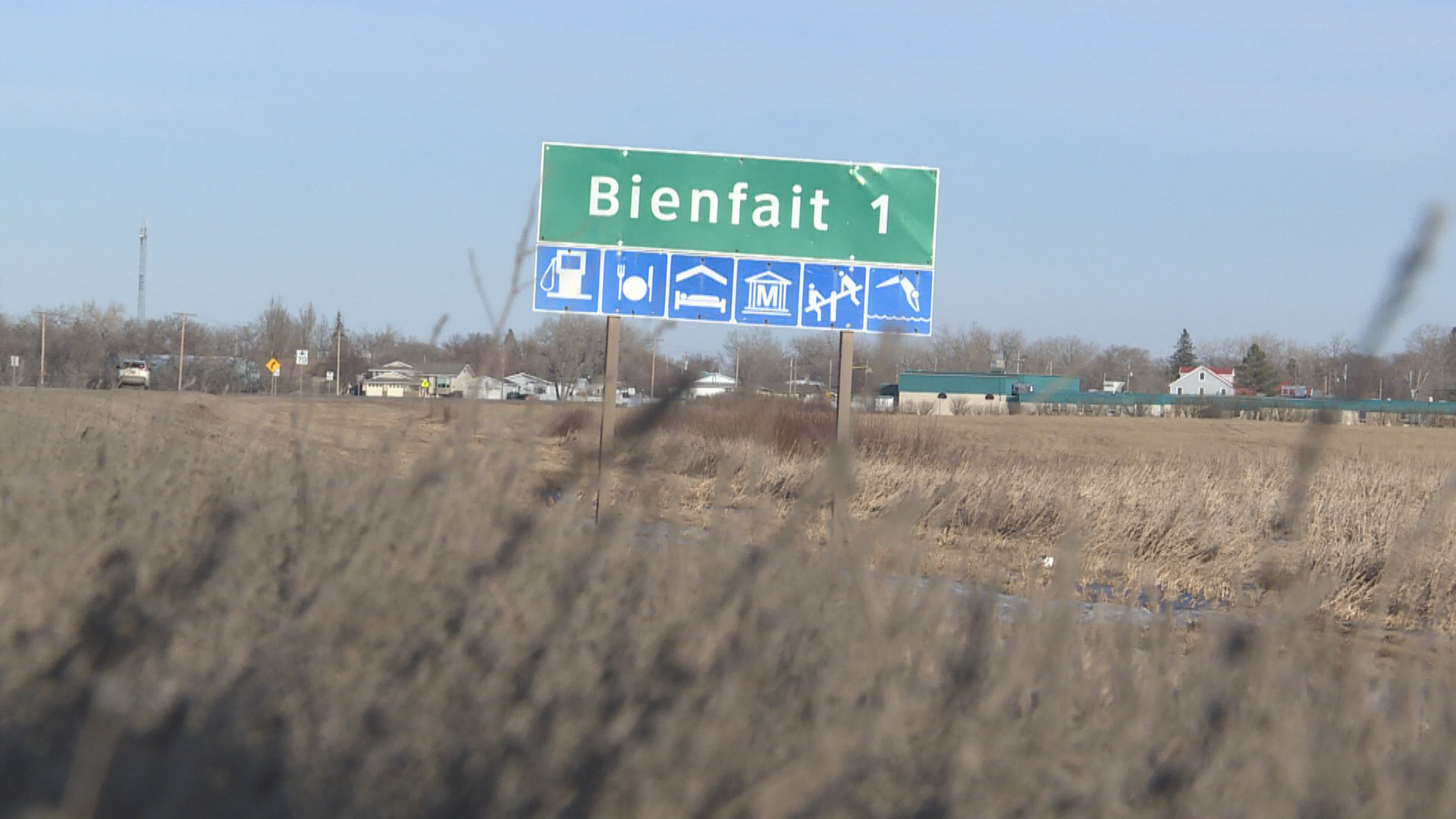
The air in Saskatchewan doesn't just get cold; it turns brittle. It becomes a substance that cracks under your boots and bites at the inside of your lungs. On a morning that felt like any other in the rural quiet, the silence wasn't a comfort. It was a precursor.
Most people see a moose on a postcard or a highway sign and think of a clumsy, oversized deer. They see the bulbous nose and the spindly legs and they smile. They are wrong. In the brush of the Canadian prairies, a moose is a thousand pounds of prehistoric muscle fueled by a nervous system that views the entire world as a threat. When that much mass decides to move, physics takes over. Emotion follows much later.
The incident began with a routine that had been performed thousands of times. A 70-year-old woman stepped outside, perhaps thinking of the chores or the crispness of the light. She didn't see the shadow shifting near the treeline. She didn't hear the rhythmic, heavy huff of a creature that had been agitated by the deep snow or the hunger of late winter.
Then, the world broke.
The Weight of the Wild
When a moose attacks, it doesn't bite. It stomps. It uses its front hooves like pistons, aiming for the head and chest. For a woman in her seventies, the first impact isn't just a blow; it is a structural failure of the world around her. She was on the ground before she could scream, the sheer scale of the animal blotting out the sun.
Her son was nearby.
He didn't have a rifle. He didn't have a plan. Most of us like to believe we would be heroes in the face of a crisis, but the biological reality is usually different. Usually, we freeze. The brain enters a loop of disbelief, trying to reconcile the suburban reality of a backyard with the visceral violence of a wild animal reclaiming its territory.
But he didn't freeze. He heard the sound—a sickening mix of heavy thuds and the sharp, panicked gasps of his mother.
He ran.
Consider the mechanics of that moment. He was sprinting toward a wall of fur and bone that could kill him with a single misplaced kick. There is no "leverage" in a situation like this. There is only the raw, desperate need to intervene between a predator and its prey.
The Geography of Fear
Saskatchewan is a place where self-reliance isn't a personality trait; it’s a survival strategy. When you live miles from the nearest hospital, and the police are a radio call and a forty-minute drive away, the person standing next to you is the only emergency service that matters.
The son reached the animal. He didn't use a weapon. He used his body. He used his voice. He threw himself into the space where the moose was trying to end his mother's life.
It is a terrifying thing to be close enough to a moose to smell it. They smell like wet musk and fermented willow bark. They are louder than you expect. Every movement is a symphony of creaking joints and heavy breath. The son began a frantic, kinetic dance, drawing the animal's attention away from the frail form on the ground.
He became the target.
He took the hits. He felt the impact of the hooves, the kind of force that leaves deep, purple blossoms of trauma on the skin and rattles the teeth in the skull. But every second the moose spent looking at him was a second his mother wasn't being crushed into the frozen earth.
The Thin Line of the Rural Life
We often talk about "human-wildlife conflict" as if it’s a data point on a government spreadsheet. We analyze migration patterns and urban sprawl. We talk about the encroachment of housing into the boreal forest. But those are cold abstractions.
The reality is a man in a winter jacket screaming at a beast that doesn't understand language, his hands stinging from the cold, his heart hammering against his ribs like a trapped bird. The reality is the sight of his mother, motionless in the snow, and the realization that the only thing keeping the moose from finishing the job is his own willingness to bleed.
He managed to drive the animal back. It wasn't a cinematic victory. There were no soaring violins. It was a messy, ugly, desperate struggle that ended with the moose eventually retreating into the trees, perhaps bored or perhaps finally sensing that the "prey" had too much fight in it.
The silence returned to the yard. But it was a different kind of silence now. It was heavy with the scent of blood and the adrenaline-soaked realization of what had almost happened.
The Anatomy of an Aftermath
The injuries were significant. Broken bones, deep lacerations, and the kind of psychological scarring that makes a simple walk to the mailbox feel like a journey through a minefield. The 70-year-old survivor was rushed to medical care, her life saved by the narrowest of margins.
But the story isn't really about the hospital stay. It is about the invisible stakes of living in the wild.
We spend our lives building walls and heating our homes, trying to convince ourselves that we have conquered nature. We use technology to "bridge the gap" and "seamlessly integrate" with our environment. Yet, nature doesn't care about our integration. It doesn't acknowledge our property lines. It is a persistent, grinding force that is always waiting for the moment we forget to look at the treeline.
The son saved his mother, but he also lost something. He lost the illusion of safety. Every time he looks at the woods now, he won't see a scenic vista. He will see the place where the shadow moved. He will hear the huffing breath.
Life in the north demands a specific kind of vigilance. It requires an understanding that we are guests in a landscape that was never meant to be tamed. The bravery shown in that yard wasn't about "unleashing" some hidden potential; it was the ancient, hard-wired reflex of a pack animal protecting its own.
The moose is still out there. The snow will fall again. The air will turn brittle. And in a small house in Saskatchewan, a woman will look out the window at the quiet morning, her ribs aching with the memory of a thousand pounds of wild intent, while her son sits nearby, watching the edge of the trees for the slightest shiver of a branch.
The prairie offers no apologies. It only offers the chance to survive it one more day.
The blood in the snow eventually fades, turned white by the next storm, leaving nothing behind but the knowledge that in the dark of winter, the only thing more powerful than the wild is the person who refuses to let it win.
He stood between his mother and the end of the world, and for one morning, the world blinked first.