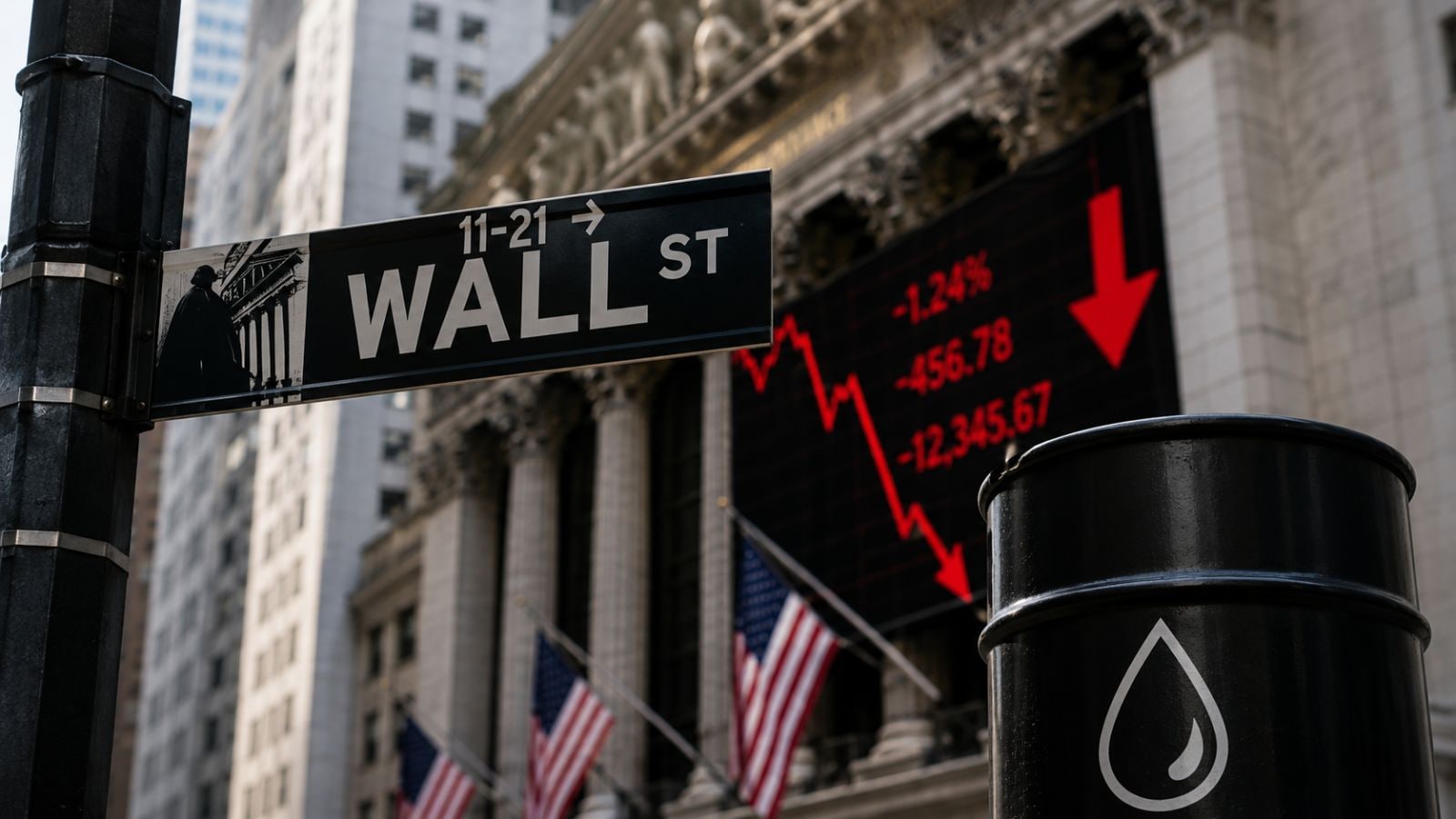
Brent crude is holding above $114 per barrel not because an Israeli election directly controls global oil supply, but because energy markets are pricing in a dangerous vacuum of regional deterrence alongside tightening physical supply constraints. Traders watching the polls in Jerusalem are looking at the wrong board. While political uncertainty in Israel keeps risk desks defensive, the real floor under $114 Brent is built on spare capacity exhaustion, maritime insurance premiums, and algorithmic hedging triggered by diplomatic paralysis rather than ballot outcomes.
Surface-level market commentary loves a clean headline. Oil ticks up, a Middle Eastern government faces an election, and financial wires connect the two with a neat causal ribbon. That narrative sells clicks, yet it fundamentally misunderstands how physical barrels move and how institutional capital prices geopolitical risk. Israel is not a major crude exporter. Its offshore natural gas fields—primarily Leviathan and Tamar—matter deeply to regional electricity grids in Egypt and Jordan, yet they do not move the needle on global seaborne crude balances. In related news, we also covered: Kevin Warsh’s FOMC Overhaul Isn't Modernization—It’s a Dangerous Return to Central Bank Opacity.
The Mechanics of the $114 Floor
To understand why Brent refuses to break below $114, you have to look past the ticker tape and examine the paper market's relationship with physical barrels. Over the past decade, energy trading has shifted away from human floor brokers reading geopolitical tea leaves toward quantitative funds executing volatility-targeting strategies.
When political uncertainty spikes in the Eastern Mediterranean, implied volatility in the options market jumps immediately. Algorithms do not wait for a coalition agreement in the Knesset to calculate risk. They see elevated headline frequency, widen bid-ask spreads, and automatically trigger buying programs in front-month Brent futures to hedge short gamma exposure. This mechanical buying creates a self-reinforcing price floor that looks like fundamental demand to the untrained eye. The Wall Street Journal has analyzed this fascinating subject in great detail.
Physical traders operate on a different clock. Refiners in Rotterdam, Singapore, and Houston care about crack spreads—the profit margin between buying crude and selling refined products like diesel and jet fuel—and the availability of medium-sour grades. Right now, global crude inventories sit well below their five-year seasonal averages. When storage tanks in Cushing, Oklahoma, or Fujairah in the United Arab Emirates run thin, the market loses its shock absorber. Any minor disruption, whether a delayed tanker or a diplomatic stall, forces buyers to bid aggressively for prompt delivery.
The Strait of Hormuz Fallacy
Whenever Middle Eastern politics dominate the news cycle, retail traders immediately price in a blockade of the Strait of Hormuz, through which roughly a fifth of the world's petroleum liquids pass. Veteran energy analysts treat that scenario with extreme skepticism.
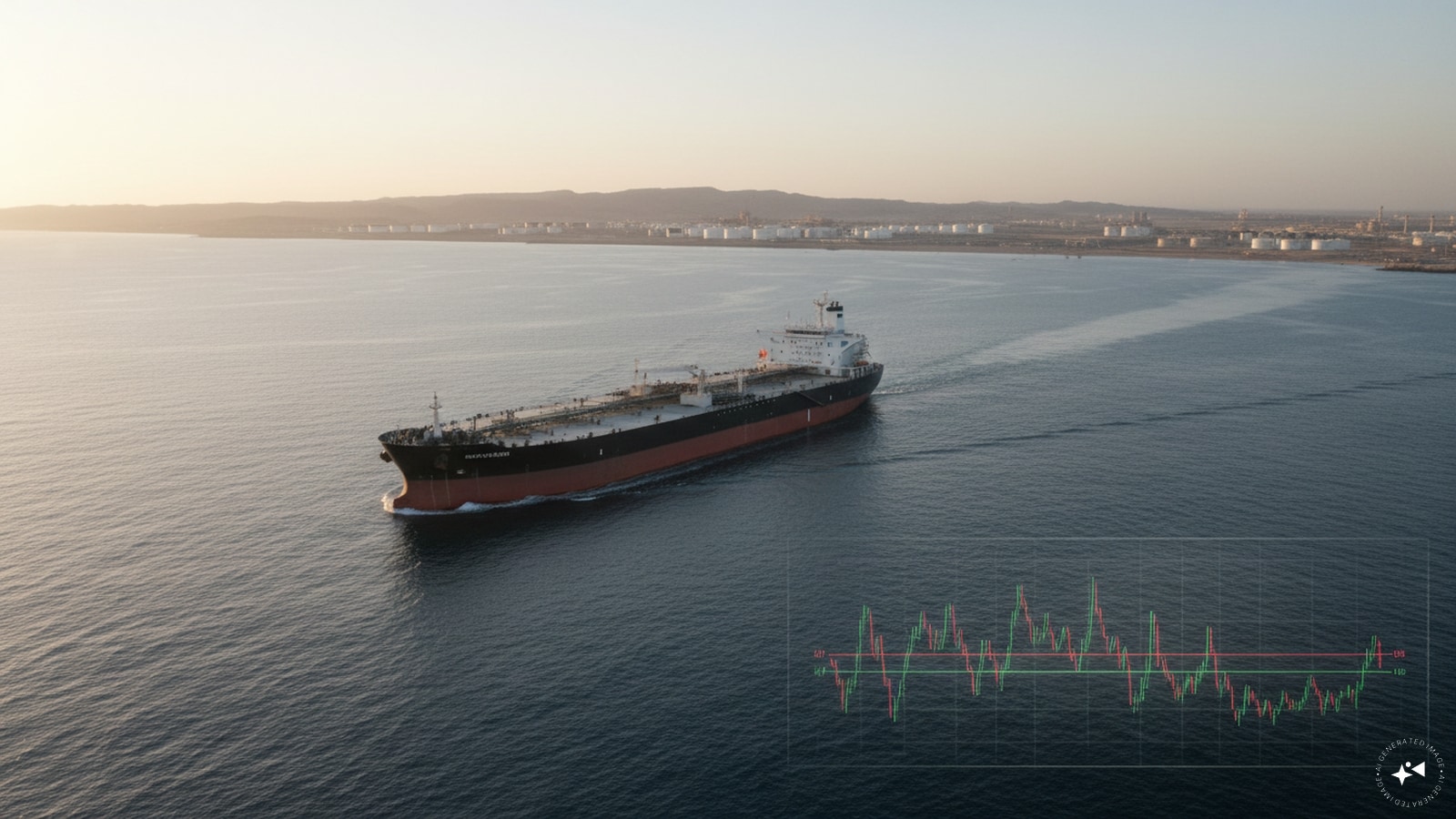
Closing the strait is an act of economic suicide for every regional producer, including Iran, which relies on those exact waters to ship its own discounted barrels to independent refineries in China. Markets rarely price in a total closure because history shows such threats remain rhetorical. Instead, desks price in asymmetric friction. Harassment of commercial vessels, GPS spoofing in the Gulf of Oman, and sporadic drone strikes do not stop oil from flowing, yet they force shipping conglomerates to reroute around the Cape of Good Hope.
Adding ten to fourteen days to a voyage from the Persian Gulf to Europe does not destroy a single barrel of oil. It does, however, tie up millions of barrels on the water, effectively removing them from immediate land-based inventory. That floating storage tightening is what keeps Brent elevated above $114.
What Election Paralysis Actually Changes
If Israel does not export crude and Hormuz remains open, why does an Israeli election keep oil desks on edge? The answer lies in decision-making latency and the collapse of diplomatic backchannels.
During an active election cycle, caretaker governments and campaigning coalitions operate under severe domestic constraints. Political survival overrides long-term strategic signaling. For energy markets, a distracted or fractured Israeli leadership creates two distinct hazards that directly impact regional stability.
First, deterrence becomes unpredictable. Adversaries in Tehran, Beirut, and Sanaa closely monitor domestic Israeli political fractures, often miscalculating how far they can push kinetic provocations before triggering a massive military response. A miscalculation that draws direct strikes on regional energy infrastructure—such as export terminals in the Persian Gulf or pipeline networks across the Levant—would instantly erase the world's remaining OPEC+ spare capacity.
Second, diplomatic off-ramps freeze. Washington typically avoids pushing major regional security frameworks or ceasefire agreements while a key ally is in the middle of a national campaign, knowing that any concession becomes immediate ammunition for opposition parties. Without active diplomatic containment, low-level regional skirmishes fester, keeping a permanent geopolitical risk premium baked into every barrel of Brent.
The Overlooked Factor of Spare Capacity
Geopolitics provides the spark, yet market structure provides the dry timber. Ten years ago, an Israeli election paired with regional border tensions might have added $3 to $5 to the price of crude for forty-eight hours before fading back into the noise. Today, that same uncertainty anchors Brent above $114 because the global oil market has virtually no spare cushion left.
Years of chronic underinvestment in upstream exploration—driven by capital discipline demands from Wall Street and aggressive ESG mandates from European institutional investors—have left global production running flat out. When Saudi Arabia and the United Arab Emirates hold the vast majority of the world's genuine spare capacity, the market becomes hyper-sensitive to any threat within striking distance of their facilities.
Consider a hypothetical scenario to see how thin this margin has become. Imagine global demand sits at 103 million barrels per day, while maximum sustainable production capacity sits at 104.5 million barrels per day. That 1.5-million-barrel buffer represents less than 1.5 percent of daily consumption. If political instability in the Levant triggers a localized conflict that knocks out a single major export terminal in the Gulf for three weeks, that buffer vanishes overnight. Prices would not merely hover at $114; they would spike violently toward $140 or $150 to force demand destruction through economic pain.
Why American Shale Cannot Ride to the Rescue
In previous price spikes, traders counted on U.S. shale producers in the Permian Basin to open the spigots and flood the market whenever Brent crossed $80 or $90. That safety valve is broken.
Publicly traded American exploration and production companies have fundamentally changed their business model. Rather than chasing production growth at all costs, executives now prioritize free cash flow, share buybacks, and dividend payouts. Furthermore, prime Tier-1 drilling locations in the Permian are maturing, meaning companies must drill more wells just to keep output flat. Supply chain bottlenecks for specialized fracking sand, steel tubulars, and skilled labor mean that even if U.S. producers wanted to add a million barrels a day tomorrow, they physically could not execute it for at least nine to twelve months.
Following the Money in the Options Market
If you want to know what institutional traders genuinely believe will happen after the Israeli votes are counted, ignore their television interviews and look at the volatility skew in Brent options.
Normally, oil markets exhibit a slight put skew, meaning downside protection is slightly more expensive than upside bets because prices tend to fall faster than they rise during economic downturns. Currently, that relationship has inverted violently. Call options with strike prices at $125, $130, and $150 are trading at massive premiums relative to out-of-the-money puts.
This call skew reveals how institutional desks are positioned. Very few funds are betting their core portfolios on an imminent regional war. Instead, they are buying cheap, out-of-the-money call options as tail-risk insurance. If the Israeli election passes without incident and diplomatic talks resume, those options expire worthless, costing the funds a fraction of a percent in performance. If the political vacuum leads to a sudden supply shock, those calls pay out fifty-to-one, saving the fund from catastrophic losses.
This dynamic explains the eerie stability of Brent above $114. Market makers who sell those upside call options to hedge funds must continuously buy underlying Brent futures as prices rise to remain delta-neutral. Every time political uncertainty ticks higher, funds buy calls, dealers buy futures, and the price grinds upward without a single barrel of physical oil disappearing from the market.
The Refining Bottleneck Nobody Mentions
While headlines obsess over crude prices, the real pain for consumers and industrial buyers sits downstream in the refining sector. Even if Brent dropped $15 tomorrow on news of a stable Israeli coalition, pump prices for gasoline and diesel would remain stubbornly high.
Over the past five years, global refining capacity has shrunk significantly due to facility closures in North America and Europe, driven by high operating costs and regulatory pressure. Meanwhile, sanctions and logistical rerouting have disrupted the flow of heavy, sour crudes that complex refineries need to maximize diesel output.
When crude trades above $114, refiners face intense margin pressure. If they cannot pass those higher feedstock costs onto consumers through higher diesel and gasoline prices, they cut refinery utilization rates. Lower utilization means less refined fuel hitting the market, which pushes product prices even higher and pulls crude prices back up in a closed feedback loop. Political uncertainty in the Middle East merely exacerbates this fragility by forcing refiners to hold higher working inventories as a precaution against shipping delays.
How Traders Misread Post-Election Scenarios
The prevailing consensus on trading floors assumes that once the Israeli election concludes and a new government forms, the geopolitical risk premium will evaporate and Brent will swiftly retreat below $100. That assumption rests on two flawed premises.
First, coalition building in Israel's proportional representation system is notoriously protracted, often taking weeks of intense horsetrading after the ballots are cast. During that interregnum, the exact policy direction of the incoming cabinet—particularly regarding security posture, intelligence leadership, and relations with Washington—remains opaque. Markets hate ambiguity far more than they hate bad news. A prolonged coalition negotiation extends the period of diplomatic paralysis rather than ending it.
Second, a newly formed government often feels compelled to establish deterrence early in its tenure. Historical precedent shows that incoming administrations frequently adopt a firmer military posture during their first hundred days to project strength both domestically and regionally. For oil traders expecting an immediate post-election peace dividend, a sudden assertion of regional force could trigger a sharp short squeeze.
The Counter-Argument for a Price Collapse
Intellectual honesty requires acknowledging the path by which Brent breaks below $114 and tumbles rapidly. Geopolitical risk premiums are notoriously fragile; they require constant feeding by fresh headlines to survive.
If the Israeli election produces a clear, centrist coalition capable of immediate governance, and that government signals an openness to U.S.-brokered regional security arrangements, the narrative on trading floors will flip within hours. Simultaneously, macroeconomic headwinds are gathering strength. Sustained oil prices above $114 act as a massive regressive tax on global consumers, slowing manufacturing activity in Europe and dampening industrial demand across Asia.
If Chinese economic data disappoints or European central banks maintain tight monetary policy to combat energy-driven inflation, demand destruction will accelerate. In that environment, the moment geopolitical tension eases, dealers who bought futures to hedge call options will dump those contracts simultaneously. Because physical inventories are tight, the drop might not take Brent back to $60, yet a violent washout toward $95 becomes entirely plausible once the algorithmic bid disappears.
Navigating the Blind Spots
Watching Brent hover above $114 requires separating political theater from physical reality. The Israeli election is not the engine driving crude prices; it is merely the focal point for a market terrified of its own lack of spare capacity.
Smart capital is not trading the election polls. It is watching tanker rates out of the Persian Gulf, tracking weekly diesel inventory draws in Europe, and monitoring the steepness of the Brent futures curve—specifically the spread between the first-month contract and the sixth-month contract, known as backwardation. When backwardation widens, it proves that buyers are desperate for immediate physical barrels regardless of who wins a parliamentary seat in Jerusalem. Until that physical tightness resolves through either new supply or severe economic contraction, any dip in Brent below $114 will continue to be bought aggressively by desks that understand the true math of the global energy balance.