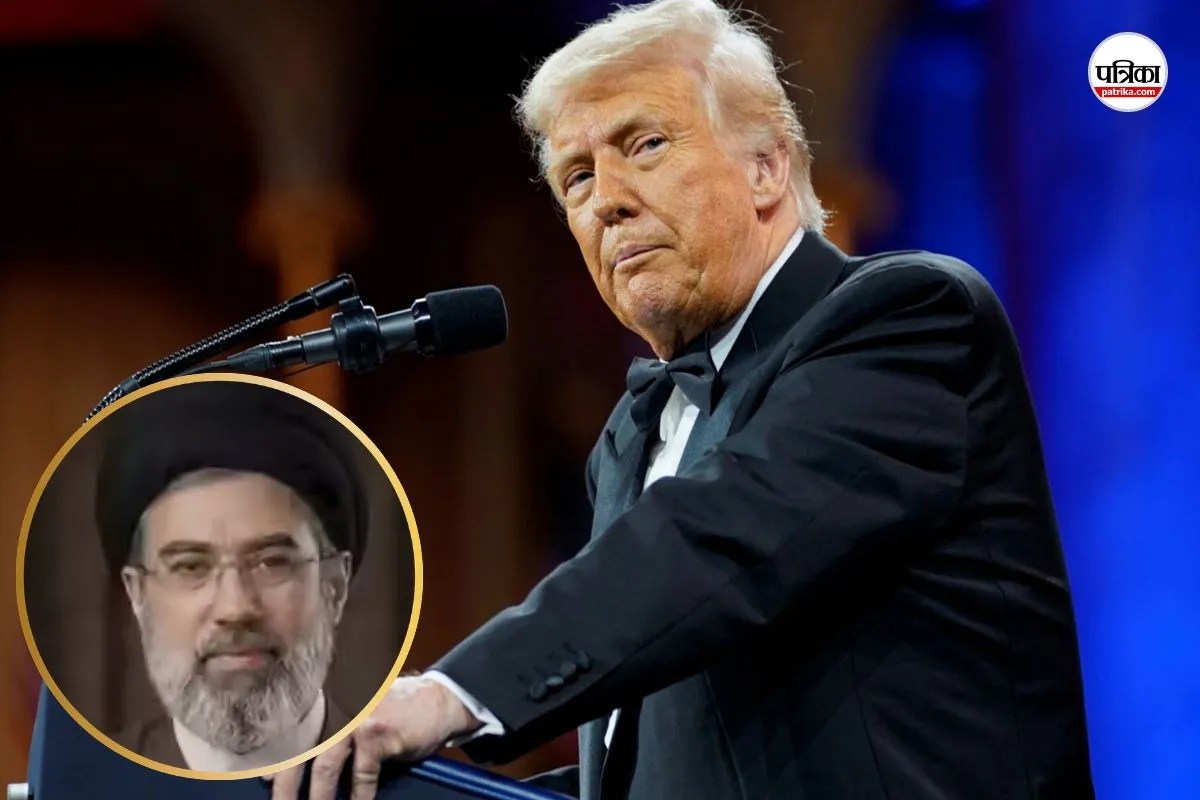
The geopolitical chessboard just shifted. While global markets focus on domestic policy, the escalating friction between a returning Donald Trump and the Iranian regime has reached a fever pitch. Iran’s latest declaration—a defiant vow to expand its nuclear capabilities and strengthen its regional proxy networks—is more than just rhetoric. It is a calculated response to the looming "maximum pressure" campaign that defined the previous Trump administration. Tehran is no longer playing a defensive game of shadows; they are moving their pieces into the light.
The core of the conflict lies in a fundamental miscalculation of leverage. Trump’s team believes that economic strangulation will force Iran to the negotiating table to sign a broader, more restrictive deal than the 2015 JCPOA. Conversely, Supreme Leader Ali Khamenei and the Islamic Revolutionary Guard Corps (IRGC) have spent the last four years insulating their economy and hardening their nuclear infrastructure. They are betting that by shortening their nuclear breakout time—the period required to produce enough weapons-grade uranium for a single bomb—they can create a "fait accompli" that prevents military intervention.
The Mirage of Economic Surrender
For years, the consensus in Washington was that sanctions would eventually break the Iranian back. This view ignores the "resistance economy" model that Tehran has perfected. By pivoting toward trade with Russia and China, Iran has found outlets for its crude oil that bypass the traditional Western financial systems. The recent announcement from Tehran isn't just about defiance; it’s about a newfound confidence in their alternative alliances.
They are not just surviving; they are adapting.
The IRGC now controls a vast shadow economy, ensuring that even as the general population suffers under inflation, the military and clerical elite remains well-funded. This internal structure makes the "maximum pressure" tactic a blunt instrument when a scalpel is required. When Trump issues an ultimatum, the Iranian leadership views it through the lens of survival. To them, a compromise under duress is a death sentence for the Islamic Republic’s ideology.
Hardening the Nuclear Shield
Tehran’s "major announcement" regarding nuclear expansion is the most dangerous variable in this equation. Intelligence reports suggest that Iran is now enriching uranium to 60% purity at its Fordow and Natanz facilities. For context, power grade uranium is roughly 3-5%, while weapons-grade is 90%. The jump from 60% to 90% is technically a small step, not a giant leap.
By increasing the number of advanced centrifuges (IR-6 models), Iran is effectively telling the world that the window for a diplomatic "freeze" has closed. They are building a deterrent that they believe will make them untouchable, similar to the North Korean model.
The Underground Reality of Fordow
- Location: Buried deep inside a mountain to withstand aerial bombardment.
- Capacity: Recently expanded to house thousands of new centrifuges.
- Monitoring: International Atomic Energy Agency (IAEA) inspectors face increasing restrictions, leaving "blind spots" in the global understanding of Iran's stockpile.
This physical hardening of assets means that a "surgical strike" is no longer a simple military option. Any attempt to take out these facilities would require a massive, sustained campaign that would almost certainly ignite a regional war involving Hezbollah in Lebanon, the Houthis in Yemen, and militias in Iraq.
The Proxy Paradox
Trump’s strategy often treats Iran as a centralized state, but the reality is a sprawling network of non-state actors. The "Axis of Resistance" is Iran’s primary defense mechanism. When the U.S. squeezes Tehran, Tehran pulls the strings of its proxies. We saw this with the spike in Houthi attacks on Red Sea shipping and Hezbollah’s calculated escalations on Israel’s northern border.
Tehran uses these groups as "cheap" leverage. They can disrupt global trade and regional stability without ever firing a missile from Iranian soil. This plausible deniability is the cornerstone of their strategy. If Trump attempts to cut off the head of the snake, the tail—scattered across five different countries—will continue to lash out, creating a chaotic environment that the U.S. military is currently ill-equipped to manage simultaneously.
The China-Russia Lifeline
The biggest shift since Trump’s first term is the formalization of the "Triple Alliance" between Moscow, Beijing, and Tehran. Russia, bogged down in Ukraine, needs Iranian drones and ballistic missiles. In exchange, Moscow provides Iran with advanced cyber-warfare capabilities and potentially the Su-35 fighter jets that would modernize the aging Iranian Air Force.
China, meanwhile, remains the primary buyer of Iranian "dark" oil. This relationship provides a constant stream of hard currency that negates the most biting effects of U.S. sanctions. When Trump threatens to "isolate" Iran, he is operating on an outdated map of 2018. In 2026, the world is multipolar. Iran is no longer an island; it is a vital node in an anti-Western bloc that views U.S. hegemony as the primary threat.
Tactical Missteps and Strategic Blindness
The flaw in the current analytical framework is the assumption that Iran wants a deal. The hardliners currently in power in Tehran—the "Paydari" front—have little interest in Western integration. They saw the U.S. withdrawal from the JCPOA as proof that Washington cannot be trusted, regardless of who is in the White House.
Trump’s reliance on personal charisma and "The Art of the Deal" met a brick wall in North Korea. In Iran, the wall is even thicker because it is reinforced by religious conviction and a historical memory of Western intervention dating back to the 1953 coup.
Why Conventional Sanctions Are Failing
- De-dollarization: Iran is increasingly settled in local currencies or via barter systems with sanctioned partners like Russia.
- Technological Parity: Iran’s domestic missile program has advanced to the point where they can hit any U.S. base in the Middle East with high precision.
- Domestic Suppression: The 2022 protests showed the regime's willingness to use absolute force to maintain control, meaning domestic pressure is unlikely to topple the government in the short term.
The announcement of increased enrichment is a direct challenge to Trump’s "red lines." It forces the U.S. into a binary choice: accept a nuclear-capable Iran or go to war. There is no middle ground left. The diplomatic space has been incinerated by years of broken promises and escalating threats.
The Intelligence Gap
We must also address the deteriorating quality of intelligence regarding Iran’s internal politics. The "moderates" in Iran are a spent force. Figures like Mohammad Javad Zarif have been sidelined, replaced by IRGC veterans who view diplomacy merely as a tool for stalling. If the Trump administration enters office expecting to find a "pragmatist" to talk to, they will be disappointed.
The IRGC's influence over the Iranian foreign ministry is now absolute. Every communiqué, every "announcement," and every tactical move is vetted through a military lens. This makes the possibility of a "miscalculation" extremely high. If an Iranian-backed militia kills a U.S. service member, or if Israel decides to go rogue and strike Natanz, the escalatory ladder has no rungs left to climb.
The Burden of Proof
Washington remains fixated on the "deal," but the deal is dead. Iran’s counter-announcement is a signal that they have moved on to a post-Western strategy. They are waiting to see if Trump will follow through on his threats of military action or if his "America First" instinct will lead to a withdrawal from the Middle East, leaving the region to be carved up by local powers.
The reality on the ground is that Iran has already crossed several technical thresholds. They have the knowledge, the material, and the delivery systems. The only thing they lack is the political decision to assemble a warhead. They are using that final step as their ultimate insurance policy against a Trump-led regime change attempt.
The standoff is no longer about oil or regional influence; it is about the fundamental survival of the current global order. If Iran successfully tests a nuclear device under the nose of a U.S. president who promised to stop them, the era of American deterrence is over. This is the stakes of the current "announcement" coming out of Tehran. It is not just a headline; it is an ultimatum delivered in reverse.
The U.S. must decide if it is willing to fight a third Middle Eastern war to prevent a reality that may already be inevitable. The time for "maximum pressure" has passed, replaced by a "maximum risk" environment where every move could be the last one.


