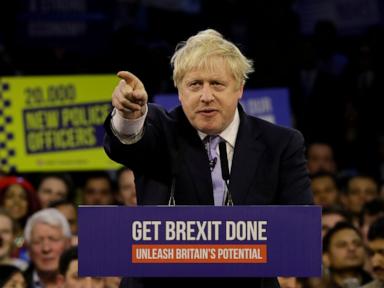
On June 23, 2016, Britain voted to leave the European Union. Exactly ten years later to the day, the country woke up to a familiar, exhausted reality. Prime Minister Keir Starmer had just resigned, leaving the nation hunting for its seventh prime minister in a single decade.
Think about that for a second. Seven prime ministers.
David Cameron, Theresa May, Boris Johnson, Liz Truss, Rishi Sunak, Keir Starmer, and whoever walks through the door next. That isn't a stable western democracy. It looks more like a revolving door at a chaotic corporate headquarters. The promise of the Brexit campaign was simple. We were told leaving the bloc would let the country take back control of its laws, its borders, and its economy. Instead, British politics fractured. The institutional stability that used to define Westminster is gone, replaced by a cycle of short-lived leaders and deep systemic frustration.
If you are trying to understand why the United Kingdom can't seem to find its footing, you have to look past the daily theater in Parliament. The truth is that the 2016 referendum did not settle the debate about Britain's place in the world. It merely turned a foreign policy disagreement into a permanent domestic civil war.
The Collateral Damage of Empty Promises
The leave campaign was brilliant at emotional marketing. Boris Johnson famously talked about looking through a door to see sunlit meadows beyond. He told voters it would be mad not to walk through. Other campaigners promised an immediate windfall for public services, easier trade deals with the rest of the planet, and a swift reduction in immigration.
Then reality hit.
Hard boundaries and global supply chains don't care about campaign slogans. The divorce negotiations dragged on for years, chewing up the political capital of multiple administrations. Theresa May spent her entire premiership trying to find a compromise that a radically divided Parliament would accept. She failed and was pushed out. Boris Johnson took over with a promise to get things done, but his bare-bones trade deal left relations with Europe freezing cold.
When you look at the data a decade later, the economic toll is impossible to ignore. Most independent economists agree that the UK has lost far more than it gained. Trade barriers introduced new friction. Labor shortages hit the agricultural and hospitality sectors hard. Business investment stalled because global firms hate unpredictability.
It turns out that untangling forty years of economic integration is incredibly messy. The UK did manage to sign independent trade agreements with nations like Australia and India. Proponents point to these as victories for sovereignty. But in terms of actual GDP impact, these deals are drops in the bucket compared to the massive loss of frictionless access to the European single market.
How the Left and Right Both Fractured
The original goal of calling the referendum was entirely domestic. David Cameron wanted to silence the Eurosceptic wing of his own Conservative Party once and for all. He thought a remain victory would put the issue to bed. It did the exact opposite.
Instead of healing the rift, the vote blew the party apart. The moderate, pro-EU faction of the Conservatives was systematically purged during the Johnson years. The party shifted further to the right, chasing a populist energy that proved impossible to manage. Liz Truss tried an experiment with radical, unfunded tax cuts that caused an immediate market meltdown, lasting just 49 days in office. Rishi Sunak tried to steady the ship by repairing relations with Brussels, but the internal ideological warfare kept raging.
Labour did not escape the blast radius either. The referendum completely redrew the electoral map. Millions of working-class voters in the north and midlands of England, who had voted Labour for generations, broke for Brexit. They felt ignored by London elites. While Labour eventually won a landslide victory under Keir Starmer, that victory was fragile. Starmer tried to execute a quiet reset with Europe without mentioning the words single market or customs union. He tried to walk a tightrope, terrified of alienating those same working-class voters.
This caution cost him. Two years into his government, with a sluggish economy and crumbling public infrastructure, Starmer found himself cornered. His resignation is proof that the Brexit trap catches leaders on the left just as easily as those on the right.
The biggest winner of this decade of chaos is undeniably Nigel Farage. His political career is a masterclass in capitalizing on discontent. After winning the referendum, he claimed the victory was betrayed by weak politicians. His party, Reform UK, has capitalized on voters who feel disillusioned by both major parties. Farage shifted his target from European bureaucrats to asylum seekers and overall immigration numbers. The strategy works. Traditional party loyalty in Britain is dead, and insurgent parties are filling the void.
A Nation Drowning in Deep Pessimism
The political elite are not the only ones suffering from exhaustion. The British public is deeply cynical about the state of their country.
Recent public opinion data from 2026 paints a grim picture. Only 41 percent of Britons say they feel positive about their personal outlook for the future. That is a massive drop from the optimism seen a decade ago. Even more striking is the collapse in faith toward the democratic system itself. Just 46 percent of people are satisfied with how democracy works in the UK. A mere quarter of the population believes things in the country are moving in the right direction.
When the referendum happened, continental Europe worried that other nations would follow Britain out the door. That didn't happen. The chaotic spectacle of the UK over the last ten years served as an effective warning. Populist movements across France, Italy, and the Netherlands watched Westminster tear itself to pieces. They changed their strategies. Instead of fighting to leave the EU, they now focus on changing it from within.
Inside Britain, polling consistently shows that more than half of voters would now choose to stay in the EU if given a time machine. But there is no real path back. Rejoining would require accepting the Euro, agreeing to free movement of people, and giving up the special rebates Britain used to enjoy. No major British political leader is willing to touch that radioactive topic.
The Real Crisis Under the Surface
While politicians spent ten years arguing about regulatory alignment and fishing rights, the foundational pillars of British society began to rot.
The National Health Service is under unprecedented strain, with waiting lists hitting historic highs. Roads are plagued by potholes. Public transport outside of London is unreliable and expensive. The cost of living crisis squeezed household budgets to the breaking point.
The political system has lost its capacity to build long-term strategies. When you change prime ministers every eighteen months, government departments stop planning for the next decade. They start planning for the next leadership election. Civil servants spend their energy briefing new ministers rather than fixing the social care system or upgrading the electrical grid.
British politics used to be boring, and that was its strength. It was predictable. Investors loved the UK because they knew the rules wouldn't change overnight. Today, the system is volatile. The traditional class-based political divides are gone, replaced by a complex mix of cultural identity and generational resentment. Younger voters who overwhelmingly wanted to remain in Europe feel robbed of opportunities. Older, rural voters feel that the promises of a revitalized, sovereign Britain were never delivered.
What Needs to Happen Next
Britain cannot afford another decade of constitutional navel-gazing. The next prime minister faces a brutal inbox that requires immediate, pragmatic action over ideological purity.
First, the government must abandon the fear of talking to Europe. Acknowledging that trade barriers are hurting British businesses is not a betrayal of the referendum. The UK needs to negotiate specific, sector-by-sector deals to ease the movement of goods and professionals across the English Channel.
Second, the fixation on rapid, headline-grabbing political victories needs to stop. The focus must shift toward long-term domestic investments. That means fixing the planning system to build houses, upgrading transport links in the north, and stabilizing the funding model for the NHS.
Finally, political leaders have to start telling the public the truth. You cannot have American-style low taxes and European-style high-quality public services at the same time. Pretending otherwise is what got Britain into this position in the first place. The country needs to pick a path, stick to it, and accept that rebuilding a nation takes decades of quiet, unglamorous work. The era of believing in magical shortcuts ended the moment the seventh prime minister walked out of Downing Street.