The headlines are breathless. "Robo-taxis hit London streets." "The driverless revolution has arrived in the UK." It is a charming narrative, carefully fed to journalists by PR departments desperate to justify another round of Series C funding. It is also a lie of omission.
What the mainstream media describes as a "rollout" is actually a high-stakes science experiment performed on public infrastructure. We aren't seeing the birth of a new transport industry. We are witnessing the expensive, terminal decline of a tech-utopian fantasy that ignores the messy reality of British civil engineering. Don't forget to check out our earlier post on this related article.
The consensus says that if we just collect enough data, the software will eventually solve the "edge cases." This is the fundamental flaw. In the UK, the edge case is the road itself.
The False Promise of Scalability
Industry cheerleaders point to successful trials in Milton Keynes or specific corridors in Greenwich as proof of concept. Having spent a decade auditing transportation tech, I can tell you exactly why those "successes" are meaningless. If you want more about the context of this, CNET provides an in-depth summary.
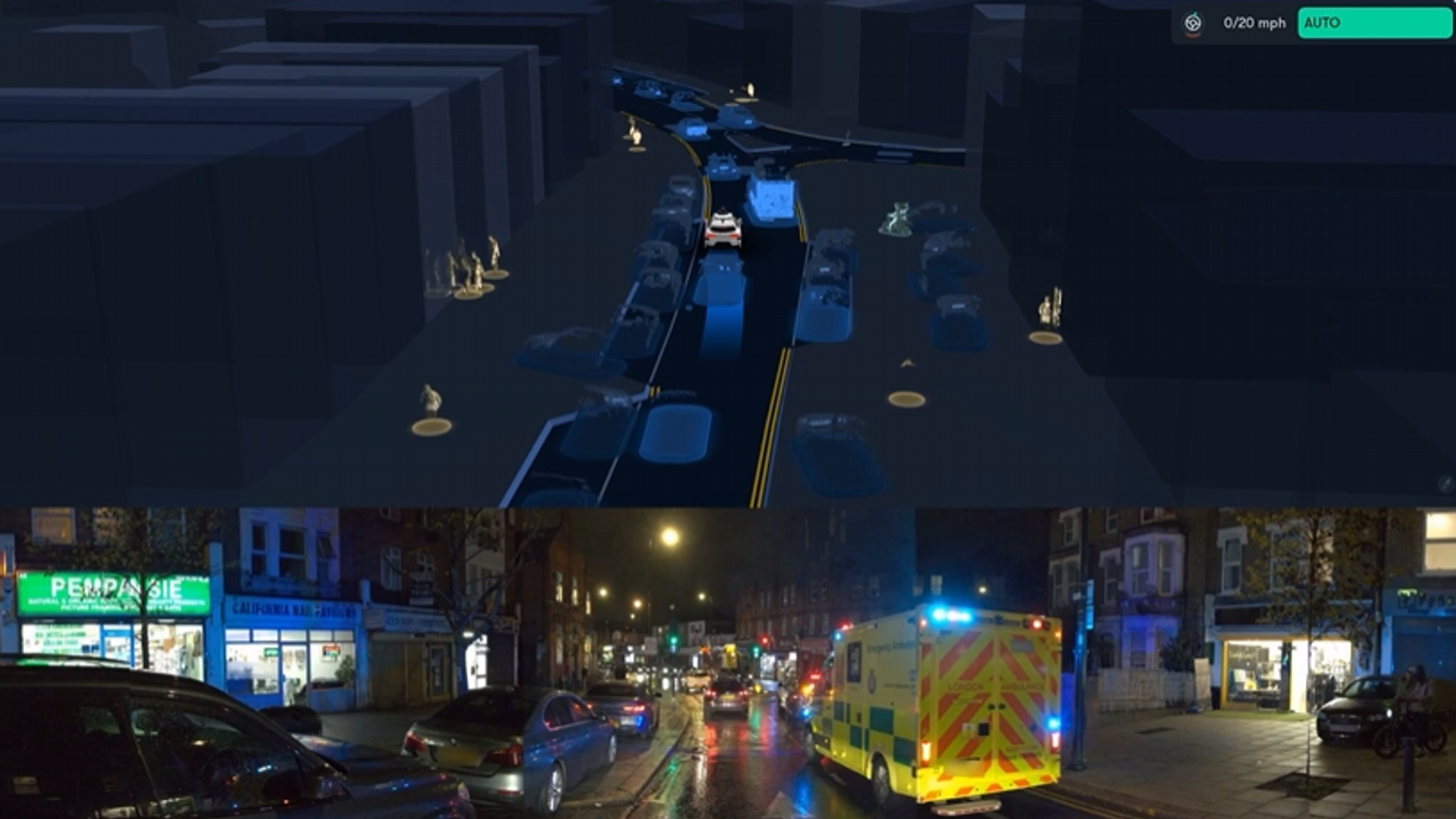
These areas are sanitized. They are the geographic equivalent of a laboratory petri dish. A robo-taxi navigating a pre-mapped, wide-laned suburb is not "driving." It is following a digital rail. The moment you drop that same vehicle into a rain-slicked, chaotic junction in Peckham—where the lane markings haven't been painted since the Thatcher administration and a delivery moped is filtering through a three-inch gap—the system defaults to its "safe state."
In the real world, a "safe state" means the car stops. It freezes. It becomes a $150,000 traffic cone.
The industry calls this "conservative mapping." I call it a failure to launch. We are being promised a fleet of autonomous servants, but we are actually getting a fleet of mobile chokepoints.
The Math of Human-Machine Friction
The current logic assumes that as autonomous vehicles (AVs) increase in number, the roads become safer. This ignores the psychological reality of human drivers.
Imagine a scenario where 10% of the cars on the M25 are programmed to follow the three-second rule and strictly adhere to speed limits. In a simulation, this looks like a dream. In reality, British drivers—notoriously impatient and skilled at aggressive merging—will exploit the AV’s programmed hesitancy. Human drivers will cut off robo-taxis because they know the robo-taxi must yield.
This creates a "bullying effect." The more autonomous cars you add to a mixed-use road, the more you degrade the flow of traffic for everyone else. We aren't building a more efficient system; we are building a system that rewards the most reckless human actors while the silicon-brained taxis sit in a perpetual state of recalculation.
The LiDAR Delusion
Let’s talk hardware. The "autonomous" label suggests the car is an independent thinker. It isn't. It is a slave to its sensors.
British weather is a Tier 1 adversary for LiDAR (Light Detection and Ranging). While Waymo and Cruise flourished in the dry, predictable sunshine of Arizona and California, the UK offers horizontal sleet and thick fog. Water droplets refract laser pulses. Mud splatters over camera lenses.
I’ve seen test data where a heavy British downpour increases the "noise" in a vehicle's perception stack by over 40%. To compensate, the vehicle has to slow down to a crawl. Is the UK ready for a transport revolution that only works on sunny Tuesdays in July?
The hardware cost alone is a barrier to entry that no one wants to admit. To make a car "see" well enough to replace a human eye, you need a suite of sensors that costs more than the car itself. You aren't buying a taxi; you’re buying a mobile server room. The economics of "cheap, ubiquitous travel" disappear the moment you look at the maintenance schedule for a spinning LiDAR unit exposed to British road salt.
Why Infrastructure is the Real Bottleneck
We are trying to solve a 21st-century software problem on 19th-century hardware.
The US has wide, grid-based cities. The UK has cow paths that were paved over and turned into one-way systems. Most autonomous algorithms struggle with "ambiguous geometry." When two lanes merge without a clear line, or when a temporary construction sign is placed six inches to the left of where the map says it should be, the AI enters a logic loop.
The British government talks about "Future Transport Zones," but they aren't talking about the one thing that would actually work: dedicated AV lanes.
Without dedicated lanes, the robo-taxi is just a very expensive way to sit in the same traffic jam as a 2005 Ford Fiesta. If the vehicle has to navigate the same potholes and the same unpredictable pedestrians as a human, it offers zero net gain to the city's throughput.
The Liability Black Hole
The most significant misconception is that we have "solved" the legal framework. We haven't even started.
When a robo-taxi in Bristol inevitably clips a cyclist because the sun was at a specific angle and the sensor mistook the bicycle frame for a shadow, who is at fault?
- The software developer in Palo Alto?
- The safety steward who was distracted?
- The local council for not maintaining the road markings?
- The sensor manufacturer?
The Automated Vehicles Act 2024 attempts to pin this on "Authorized Self-Driving Entities." In plain English, that means the companies. But these companies are built on layers of outsourced code and third-party hardware. The litigation will be endless. Insurance premiums for these fleets will be astronomical, likely far exceeding the cost of just paying a human driver a living wage.
The Uncomfortable Truth About "Safety"
The pitch is always about safety. "Humans are prone to error; machines are not."
This is a category error. Humans are prone to specific types of error—fatigue, intoxication, distraction. Machines are prone to systemic errors. A human driver might miss a stop sign once in a thousand times. A flawed software update can cause ten thousand cars to miss every stop sign simultaneously.
We are trading rare, individual tragedies for the risk of a mass-scale systemic failure. I’ve watched simulations where a simple "ghosting" bug—where the car perceives an object that isn't there—caused a chain-reaction pileup. In a world of 100% AVs, one bad line of code is a national emergency.
Stop Asking "When" and Start Asking "Why"
The "People Also Ask" sections are full of queries like "When can I buy a self-driving car?" and "Are robo-taxis safe?"
You’re asking the wrong questions. The real question is: Why are we pouring billions into making a car drive itself when we could spend that same money on high-frequency rail and automated light-rail systems that actually move people efficiently?
The robo-taxi is a Silicon Valley solution to a problem that doesn't exist in a well-functioning society. It is an attempt to preserve the "private car" model by slapping a high-tech coat of paint on it. It is an ego project for billionaires who hate sitting on buses.
The Actionable Reality
If you are an investor or a policymaker, stop chasing the "Level 5" dragon. It isn't happening in this decade, and probably not in the next.
If you want to actually "disrupt" transport, look at restricted-environment autonomy.
- Mining and Agriculture: Closed loops, no pedestrians, high ROI.
- Dedicated Freight Corridors: Middle-mile delivery on segregated highway lanes.
- Last-mile Pods: Low-speed, lightweight vehicles in pedestrianized zones.
Trying to force a 2-ton metal box to think like a human in the middle of London's West End is a fool's errand. It is a vanity project that will burn through billions more before the bubble finally pops.
The "autonomous revolution" on British streets is a slow-motion car crash of hype meeting reality. The tech is impressive. The engineering is brilliant. But the application is delusional.
The future isn't a robo-taxi picking you up from a pub in Soho. The future is the same one we’ve been ignoring for fifty years: better trains, better buses, and a realization that the car—automated or not—is the least efficient way to move a human being from point A to point B.
The smartest move you can make right now is to ignore the hype and look at the curb. If the paint is peeling and the sensors are covered in grime, the car isn't going anywhere.
The driverless revolution is stalled in traffic. It’s time we stopped pretending otherwise.