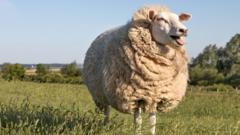
The industry loves a fairy tale. Right now, the story is that British wool has undergone a magical transformation, pivoting from a forgotten byproduct to the holy grail of sustainable fashion and garden fertilizer. You have likely read the fluff pieces—tales of sheep roaming idyllic hills, their fleeces being woven into carbon-neutral jumpers or ground into organic slug pellets. It is a charming narrative. It is also a dangerous oversimplification that ignores the raw, unvarnished economics of a commodity struggling to find its footing.
Let’s dismantle the "back in demand" lie. For a different look, check out: this related article.
The headlines claiming a massive resurgence in British wool are chasing a phantom. What they call a comeback is actually a market correction—a desperate rebound from price levels that were, frankly, insulting to the farmers doing the work. Yes, auction prices have climbed significantly since the post-pandemic lows, but don’t mistake a modest recovery for a structural revolution. Global crossbred wool markets spent years drowning in surplus stock, largely thanks to the disruption of established trade channels during the pandemic. Clearing that backlog isn't a "fashion trend"; it’s basic inventory management.
If you believe your high-street knitwear purchase is an act of environmental heroism, you are the mark. Further coverage on this matter has been provided by Forbes.
The Sustainability Myth
The marketing departments have turned "sustainability" into a meaningless aesthetic. They highlight the biodegradability of wool—which is true—but they gloss over the processing lifecycle. Raw wool is not "green" by default. It is a greasy, contaminated agricultural product that requires significant washing, chemical scouring, and transport before it can be spun into anything resembling a sweater.
When you hear about wool being used for insulation or garden pellets, understand what is actually happening. These are attempts to find low-value utility for coarse, low-grade wool that the fashion industry doesn’t want. Calling it an "innovation" is a polite way of saying the market is struggling to find a buyer for inferior fiber. If the fashion market truly valued British wool as the premium, sustainable material it claims to be, we wouldn't be grinding it up to kill garden pests.
The Economics of the Fleece
I have spent years watching companies dump millions into "traceable wool" initiatives, chasing a premium that the average consumer is largely unwilling to pay. The math is simple: branding costs money. When a brand spends a fortune certifying the supply chain of a wool throw, that cost is passed directly to you. You aren't paying for better wool; you are paying for the badge that makes you feel superior about your purchase.
The industry points to the number of brands joining licensee schemes as evidence of growth. Look closer. It is a race to the bottom of the "green" marketing pool. These brands are not changing their manufacturing methods; they are swapping their tags and inflating their price points. They are commodifying the image of the British farmer while the actual producers continue to operate on margins that haven't kept pace with inflation over the last three decades.
Why You’re Asking the Wrong Questions
People ask if wool is "sustainable" or if it is "better" than synthetic alternatives. This is the wrong question. The real question is: why are we trying to force a niche agricultural commodity to serve as a high-volume industrial staple?
We treat wool as if it’s a limitless, eco-friendly panacea. It is not. It is an animal product bound by the realities of biology, geography, and intensive farming logistics. If we scaled the "sustainable" model of British wool to meet global fast-fashion demand, the environmental impact would be cataclysmic. You cannot scale traditional pastoral farming to satisfy the hunger of a global consumer base that expects a new wardrobe every three weeks.
The Hard Truth
If you want to make a difference, stop buying "sustainable" wool-based gimmicks. Stop buying the "slug pellet" nonsense, which is just a marketing pivot to sell waste products at a premium. If you want to support British farming, buy directly from producers who aren't hiding behind the veneer of massive marketing boards. Cut out the middleman. Pay the price that reflects the actual labor of shearing and maintaining a flock, rather than the markup of a brand that has slapped a "sustainably sourced" sticker on a mass-produced product.
The industry wants you to think the market is booming because they want you to keep buying. They want you to believe the story so they don't have to change the system.
The reality is colder. The wool market is a cycle of supply gluts and temporary price corrections. The "demand" you see is just the system rebalancing itself after years of stagnation. The next time you see a headline about the miraculous comeback of British wool, remember: the only thing actually being produced is a story designed to separate you from your cash.
Don't buy the narrative. Buy the source. Or better yet, look at what you’re actually wearing and realize that your "ethical" choice is just another fashion accessory.


:strip_icc()/GettyImages-904624038-8a3d9763601742258dd48df05e1ce69f.jpg)