You can hear it in the static.
It lives in the space between radio stations, in the weary sigh of a neighbor watching the evening news, in the quiet agreement whispered across dinner tables that somehow, somewhere, the machinery of human connection has thrown a gear. We live on a planet wired for instant grace, capable of bouncing light and voice across oceans in milliseconds. Yet we have never felt more profoundly alone.
Walk through any major city at dusk. Look up at the towers of glass and steel. Behind each illuminated window sits a person staring at a glowing rectangle, consuming an echo chamber meticulously curated to confirm their fears. Across the border, across the ocean, another person sits in an identical room, staring at an opposite rectangle, absorbing a mirror-image narrative designed to paint the first person as an existential threat.
This is not an accident. It is architecture.
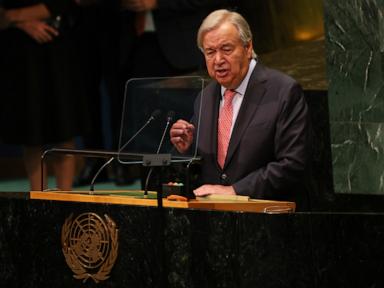
When the United Nations chief recently stepped to the podium and warned that a polarized global power structure is fracturing humanity, he was speaking in the dry, measured cadence of diplomacy. He used words like multilateralism, geopolitical fragmentation, and institutional erosion. But strip away the diplomatic varnish, and the reality is starker, messier, and far more intimate.
Power today is a hoarding game.
Imagine two children sitting in a sandbox, each handed a single bucket and an infinite supply of dry earth. For the first ten minutes, they build together, trading molds, designing rivers, laughing as their towers rise. Then, an adult walks over and whispers a toxic truth into their ears: There is only enough sand for one winner. If they take yours, you are nothing.
Instantly, the atmosphere hardens. The children pull the plastic walls of their buckets tight against their chests. They stop looking at each other's faces and start staring at each other's hands. They pile sand into makeshift barricades, convinced that safety lies in isolation, that every grain given away is a piece of their own survival surrendered.
This is where we are. Only our sandbox is a globe of eight billion souls, and our buckets are nuclear arsenals, supply chains, algorithmic feeds, and sovereign borders.
History tells us how this story ends if no one changes the script. We have run this simulation before. The 1930s were paved with the same defensive brickwork—nations turning inward, erecting tariff walls, retreating behind ideological armor, whispering warnings about the outsider at the gate. The logic of division always feels bulletproof in its infancy. It promises absolute control. It offers the intoxicating comfort of absolute certainty: We are right; they are the storm.
But power concentrated exclusively in the hands of the suspicious is a dry forest waiting for a spark.
Consider the mechanics of modern leverage. When nations or factions treat global survival as a zero-sum contest, every shared challenge becomes a weaponized bargaining chip. A pandemic does not check your passport, yet we fought over vaccine distribution like shipwreck survivors hoarding water casks on a lifeboat. Climate collapse does not care about ideological purity, yet carbon reduction commitments are treated as tactical concessions in a high-stakes poker match.
We are arguing over the seating arrangements on a sinking ship while the water laps quietly at our ankles.
The UN leadership pointed to a fundamental irony at the heart of our era: the problems confronting us are entirely transnational, while our political instincts are intensely parochial. You cannot solve artificial intelligence safety, economic instability, or ecological disruption with a nationalist megaphone. These crises mock borders. They laugh at barbed wire. They demand a collective imagination that we have systematically neglected to cultivate.
Why have we retreated into our tribal corners?
Partly because complexity is exhausting. When the world spins too fast—when algorithms feed on outrage because anger is the most durable fuel for attention—our brains seek the sanctuary of simplicity. Us versus them. Good versus evil. Safe versus dangerous. It takes genuine cognitive labor to hold two opposing truths in your head at once: that your culture is precious, and that your neighbor’s survival is bound to your own.
It is easier to build walls. It is harder to build bridges.
Yet, beneath the noisy theater of global politics, a quieter, more resilient human current exists. Step away from the cable news screen and look at how people actually behave when crisis strikes. When floods swallow villages, neighbors do not check voter registrations before pulling each other from rooftops. When famine strikes, grassroots networks mobilize across political fault lines. Ordinary people understand intuitively what career politicians often forget: community is not a geographic boundary; it is a shared heartbeat.
The true test of leadership today is not who can wield the heaviest stick. It is who possesses the courage to put the stick down.
True cooperation is not an act of naive idealism. It is the most radical, pragmatic form of self-defense available to our species. When leaders choose to cooperate, they are acknowledging a humbling truth: we are too interconnected to conquer one another, and too fragile to survive apart.
The static on the radio will not clear itself. The glowing rectangles will not suddenly start broadcasting nuance. The choice to lift our eyes from our respective sandcastles and look across the barricade is an individual burden, multiplied billions of times over.
It starts with refusing the comfort of hatred. It starts with demanding better stories than the ones designed to keep us afraid.
The wind carries the same salt across every border on Earth. The same stars watch over every capital city, indifferent to our flags, our slogans, and our petty divides. The morning comes for all of us, or it comes for none of us.