The illusion of a permanent peace across the southern Arabian Peninsula has evaporated under the weight of regional escalation. Saudi Arabia has resumed intensive airstrikes inside Yemen, reacting directly to a sweeping Houthi military offensive that threatens to overrun the internationally recognized government's interim capital of Aden. This escalation shatters years of delicate diplomatic maneuvering and exposes the fundamental flaw in Riyadh's long-term exit strategy from a conflict that has bled the kingdom's strategic depth for more than a decade.
To understand why Riyadh felt compelled to fly warplanes back over Yemeni skies, one must look beyond the immediate tactical skirmishes. For months, the kingdom pursued a quiet, pragmatic disengagement. Crown Prince Mohammed bin Salman's modernization agenda demanded a stable neighborhood, prompting direct back-channel talks with the Houthi movement and an eagerness to transition out of an intractable quagmire. Riyadh wanted a negotiated border security arrangement, accepting that total military victory over the movement was a ghost of 2015.
Yet, diplomacy without a durable balance of power on the ground remains an empty exercise. When the broader regional confrontation involving Iran flared, the Houthis did not hesitate to test the limits of Saudi restraint. Daily drone and missile barrages targeting Saudi critical infrastructure, airports, and energy facilities signaled that Tehran's primary non-state proxy viewed diplomacy as a tactical pause rather than a strategic conversion.
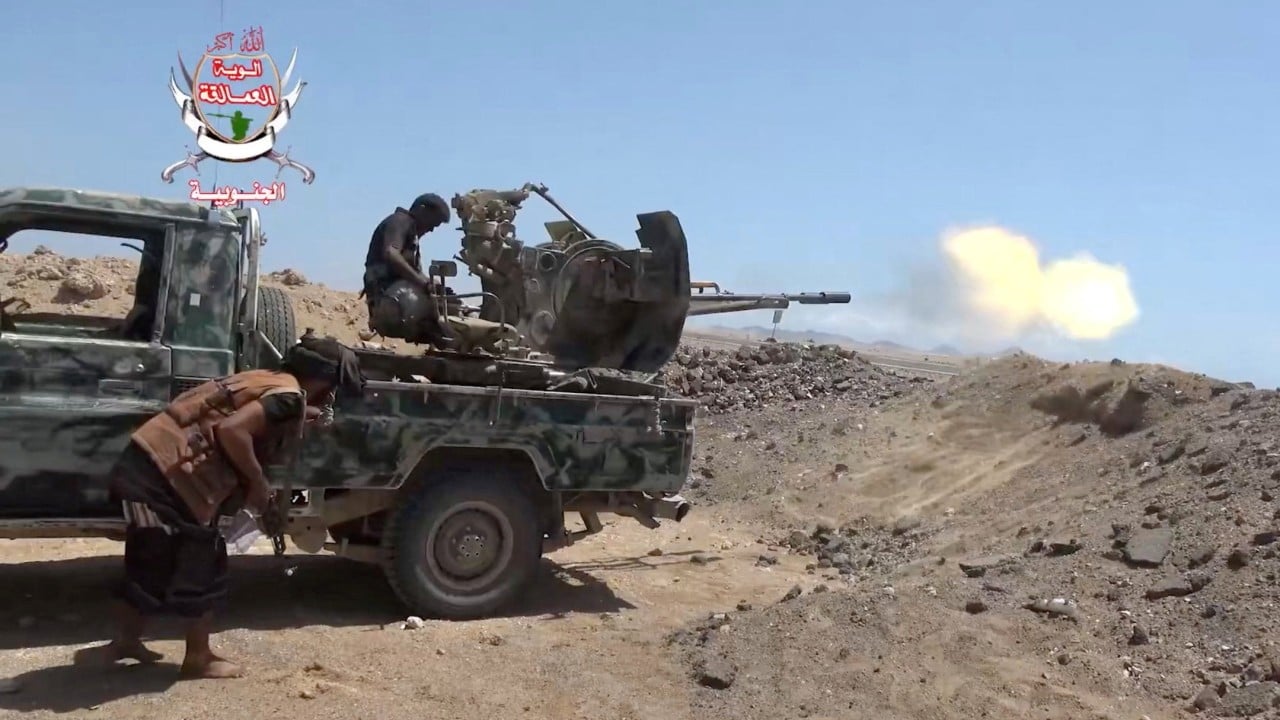
When Houthi ground forces broke through southern defenses, threatening the strategic Bab-el-Mandeb strait and pushing toward Aden, the calculus in Riyadh shifted overnight. Remaining on the sidelines meant accepting a hostile, heavily armed adversary directly controlling the southern maritime gateway of the Red Sea—a geopolitical nightmare for global shipping and Saudi national security alike. The dismissal of the top commander of the Saudi-led joint forces underscored the panic and tactical confusion gripping the military hierarchy as coalition-backed local factions were forced into frantic retreats.
The structural irony of the situation lies in the trap the kingdom built for itself. Riyadh intervened in Yemen in 2015 to roll back Iranian influence and restore a friendly government. Instead, the intervention institutionalized a heavily militarized, resilient adversary that now possesses advanced drone and missile capabilities capable of striking deep inside Saudi territory. Every attempt by Riyadh to construct an exit ramp has been met with maximalist political and financial demands from Sana'a, including substantial reconstruction payments that amount to paying off an enemy that refuses to lay down its arms.
Operating a modern air campaign against an insurgent force wrapped into urban populations yields diminishing returns. Airstrikes can halt a mechanized advance or buy time for defensive perimeter hardening around Aden, but they cannot rewrite the demographic and political realities on the ground. The fractured nature of anti-Houthi forces—plagued by internal rivalries, poor coordination, and shifting loyalties—means that Saudi airpower is constantly propping up a collapsing house of cards.
Meanwhile, the humanitarian toll inside Yemen continues its downward spiral, compounding the security dilemma. Besieged cities like Taiz face acute crises, and displaced populations swell near the southern coast as fighting intensifies. Every bomb dropped in response to Houthi advances deepens the cycle of grievance, ensuring that future generations of Yemenis will view the northern neighbor not as a mediator or a benefactor, but as an enduring hostile actor.
The kingdom's leadership faces a grim set of sub-optimal choices. Committing ground troops anew risks a return to the high-casualty stalemate of the late 2010s, draining financial resources better allocated toward futuristic domestic mega-projects. Conversely, tolerating unchecked Houthi expansion invites permanent strategic encirclement by forces aligned with Tehran.
As smoke rises once again over Hodeida and air defense batteries track incoming projectiles near the Saudi capital, the reality of the region sets in. Wars of intervention are infinitely easier to start than they are to finish, and no amount of diplomatic spin can mask the failure of containment.
The border remains vulnerable, the shipping lanes remain contested, and the war has returned to the exact point where it began, only with higher stakes and a more entrenched enemy.