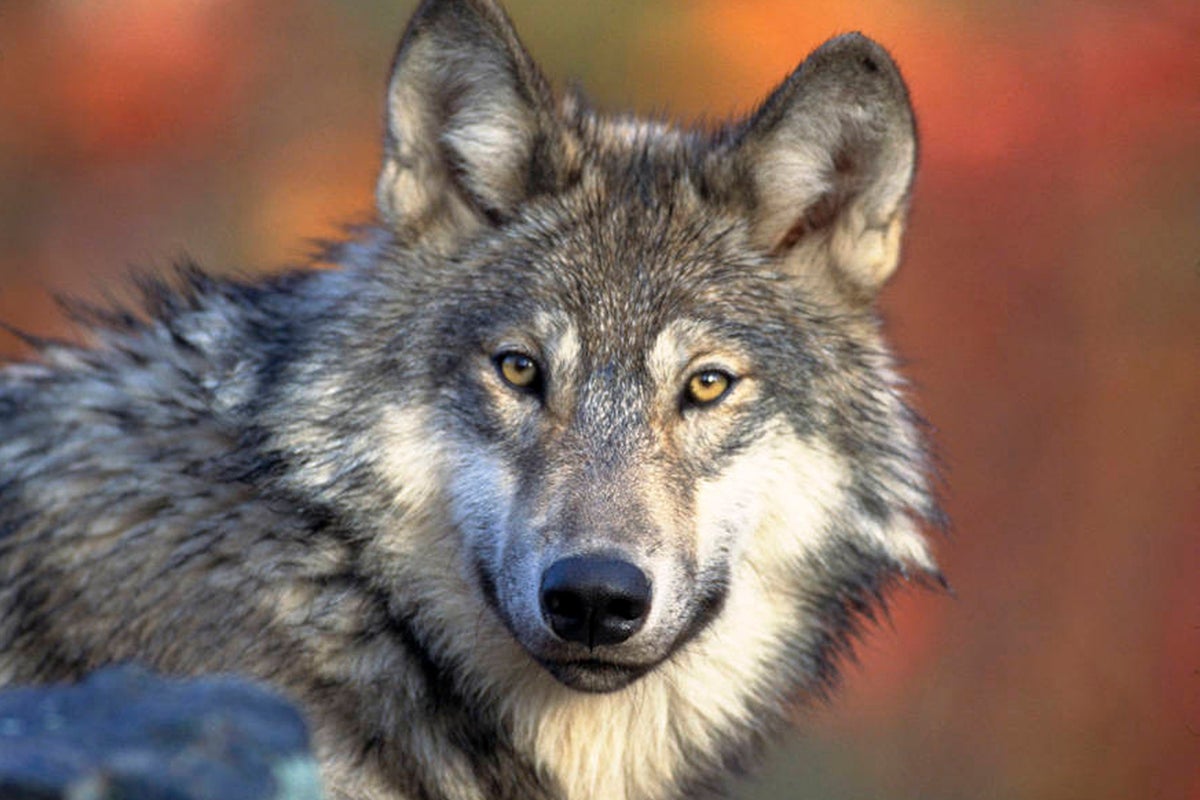
A peaceful afternoon at a wildlife park transformed into a legal and medical nightmare when a toddler breached a secondary safety barrier at ZooAmerica. The incident, which resulted in a wolf biting the child’s hand, has moved beyond the hospital wing and into the courtroom. Local authorities in Derry Township have officially charged the parents with child endangerment, a move that signals a hardening stance on parental supervision in public spaces. This is no longer just a story about a wild animal acting on instinct. It is a case study in the crumbling boundary between controlled entertainment and the inherent danger of the natural world.
The facts of the case are as chilling as they are straightforward. While visiting the North American Wildlife Park in Hershey, Pennsylvania, a two-year-old boy managed to get past the wooden fencing designed to keep guests at a safe distance from the Mexican gray wolf exhibit. He reached through the chain-link mesh of the primary enclosure. A wolf, behaving exactly as a predatory canine does when a foreign object enters its territory, bit the child’s hand. The injuries were significant enough to require immediate transport to the Penn State Hershey Medical Center. Don't miss our recent coverage on this related article.
The Legal Hammer Falls
For years, incidents like these were often chalked up to tragic accidents. Public sentiment usually swayed toward the parents in the immediate aftermath of a crisis. That tide has turned. The Derry Township Police Department conducted an intensive investigation into the moments leading up to the bite, concluding that the lack of supervision reached a level of criminal negligence.
By charging the parents with Endangering the Welfare of Children, prosecutors are sending a message that "accidents" have owners. The legal threshold for this charge requires proving that a guardian knowingly placed a child in a situation where their health or safety was at risk. In this instance, the physical presence of two distinct barriers—a wooden perimeter fence and the heavy-duty enclosure mesh—serves as the primary evidence against the parents. Navigating past one barrier is a mistake. Navigating past two, according to the state, is a failure of duty. If you want more about the history here, Associated Press offers an in-depth breakdown.
The Illusion of the Glass Wall
The modern zoo experience is built on a dangerous paradox. Facilities spend millions of dollars to make enclosures feel "natural" and "invisible." They want guests to feel as though they are standing in the middle of the tundra or the forest. We have traded iron bars for reinforced glass and heavy-duty mesh that disappears into the background of a photograph.
This immersion creates a false sense of security. When an environment looks like a park, people treat it like a park. They forget that the animals inside are not pets, nor are they "ambassadors" with human emotions. They are high-level predators. The Mexican gray wolf is a subspecies that survived near-extinction through extreme territoriality and sharp hunting instincts. To a wolf, a hand through a fence isn't a gesture of curiosity; it is a breach of its domain.
Why Barriers Fail
Safety in wildlife parks relies on a concept known as redundant containment.
- The Primary Barrier: This is the heavy-duty fence or glass that keeps the animal inside.
- The Secondary Barrier: Often a wooden rail, a hedge, or a rope line that keeps the human away from the primary fence.
- The Buffer Zone: The empty space between the two.
When a guest bypasses the secondary barrier, they eliminate the "time buffer" that allows a parent to react or a zookeeper to intervene. Investigative reports from similar incidents across the country show that these breaches usually happen in less than five seconds. That is the time it takes for a toddler to duck under a rail. If a parent is looking at a phone, checking a map, or focusing on another child, those five seconds are an eternity.
ZooAmerica maintains strict safety protocols that meet the standards of the Association of Zoos and Aquariums (AZA). Following the incident, inspectors found no structural failures in the wolf enclosure. The fences were at the correct height, the mesh was intact, and the warning signs were visible. This puts the burden of proof squarely on human behavior rather than facility maintenance.
The Psychological Gap in Public Supervision
We are witnessing a shift in how society views public liability. For decades, the "Attractive Nuisance" doctrine or general negligence laws were used to sue venues when injuries occurred. Now, the lens is flipping. The public and the legal system are increasingly asking why the guardians allowed the proximity to happen in the first place.
There is a psychological phenomenon at play here. In a highly regulated environment like a theme park or a zoo, visitors often experience a "surrender of vigilance." They assume that because they paid for a ticket, the environment is inherently "safe," much like a living room. This leads to parents allowing toddlers to climb on railings or stand on walls they would never permit at a construction site or a busy street corner.
The Predator Instinct
It is vital to understand the biology involved. A wolf does not "attack" a toddler out of malice. In a captive environment, the animal's world is small. Any intrusion into that space triggers a defensive or predatory response. The speed of a wolf's snap is faster than a human's ability to pull their hand back. Once the bite occurs, the damage to a small child's skeletal structure is immediate and often permanent.
The Mexican gray wolf is a particularly sensitive species. They are shy, elusive, and highly attuned to movement. A small child’s erratic movements and high-pitched voice can mimic the distress signals of prey or a competitor. By allowing a child to reach into that space, the parents inadvertently triggered a biological sequence that the animal could not be expected to ignore.
Liability and the Future of Wildlife Tourism
This case will likely set a precedent for how Pennsylvania handles visitor-animal interactions moving forward. If the parents are convicted, it shifts the legal landscape. It provides a shield for institutions that have followed all safety regulations, placing the financial and criminal responsibility on the visitor.
Insurance companies for large-scale attractions are watching this closely. If parental responsibility is codified through criminal charges, we may see a change in how these parks are designed—perhaps moving away from the "open" feel and back toward more obstructive, albeit safer, barriers. We are at a crossroads where the desire for "unfiltered" nature is colliding with the reality of human distraction.
The child is now recovering, but the family faces a long road of court dates and potential jail time. The zoo remains open, the wolf remains in its enclosure, and the wooden fence still stands as a silent reminder of the line that was never meant to be crossed.
The real tragedy is that this was entirely preventable. No amount of engineering can replace the necessity of a parent's eyes on their child. We have spent years making the world feel like a playground, but in the presence of an apex predator, the playground rules do not apply. If you step over the rail, you are leaving the civilized world behind and entering a space where the only law is instinct.
Verify the height of the railings. Read the signs. Keep your hands back. The cost of a moment's distraction is now being measured in both blood and a criminal record.



