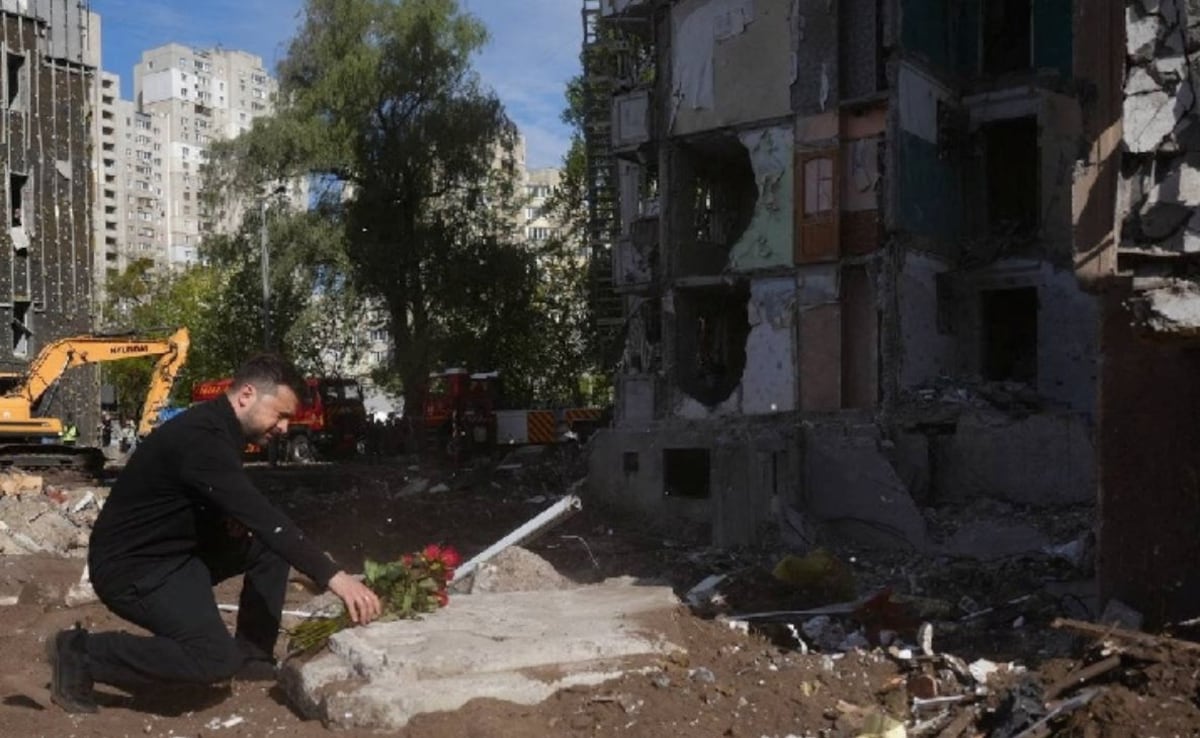
The headlines are predictable. They focus on the optics of the prisoner swap and the tragedy of the strikes on civilian infrastructure in Kyiv. Emotion is the primary currency of modern journalism. It sells. It engages. It also clouds the cold, hard logic of how conflicts actually operate. Most people view a prisoner exchange as a humanitarian breakthrough or a glimmer of hope. They see a missile strike on an apartment block as a senseless act of cruelty.
They are wrong on both counts. You might also find this connected article useful: The Geometry of an Ordinary Tuesday.
In the theater of high-stakes conflict, there are no "senseless" acts, and there are certainly no humanitarian breakthroughs. There is only leverage. The prisoner swap isn't a sign of softening hearts; it is a tactical liquidation of human assets that have reached their maximum depreciation. The strike on Kyiv isn't just a tragedy; it is a calculated calibrated pressure point designed to influence the very negotiations that lead to these swaps.
Stop looking at these events as separate incidents of "good news" and "bad news." They are two sides of the same bloody coin. As discussed in recent coverage by The New York Times, the results are notable.
The Commodity Market of Human Lives
We need to stop pretending that prisoner swaps are about bringing heroes home. In the rooms where these deals are brokered, people are numbers. They are inventory.
I have watched how diplomatic "insiders" talk when the cameras are off. They don't talk about families or homecoming stories. They talk about "exchange ratios." They talk about the intelligence value of a returned officer versus the political fallout of leaving a high-profile medic in a cage.
When Kyiv mourns 24 killed in a strike while simultaneously welcoming back a hundred soldiers, the media calls it a "bittersweet day." That’s a lazy narrative. It’s actually a demonstration of a brutal equilibrium.
Why the "Success" of a Swap is Often a Strategic Failure
- The Incentive Loop: Every time a swap occurs, the "market value" of a captive increases. If you know your enemy will trade a high-ranking official for ten of your conscripts, you are incentivized to capture more high-ranking officials. Swaps don't end the suffering; they subsidize the continuation of the capture-and-trade economy.
- The Domestic Distraction: Governments use swaps as a "venting" mechanism. When the public is angry about civilian casualties—like the 24 people killed in the Kyiv flats—the government "buys" back social capital by announcing a prisoner return. It is a cynical but effective way to reset the narrative clock.
- Information Asymmetry: You are never told who was traded away to get those people back. The names of the Russian soldiers returned are often buried. Why? Because the public wouldn't like the math if they saw the caliber of the killers being sent back to the front lines to reset their rifles.
The Myth of the Senseless Strike
The strike on the Kyiv apartment building is being framed as an act of pure desperation or random malice. This is a dangerous misunderstanding of how modern kinetic warfare functions.
Nothing in a multi-billion dollar war is random. Every missile has a cost-to-benefit ratio calculated by a staff officer.
Dismantling the "Senseless" Narrative
If you think a strike on a residential building is just "hitting the wrong target," you haven't been paying attention to the doctrine of "Strategic Terror." This isn't a mistake. It is an intentional disruption of the civilian psyche.
- Objective A: Overwhelm air defense. By firing at non-military targets, you force the defender to choose between protecting a power plant or a nursery. It is a resource-draining dilemma.
- Objective B: Negotiating Table Pressure. You don't strike a building to kill 24 people; you strike it to make the 2.8 million people in the city feel that their government cannot protect them. This increases the internal pressure on Kyiv to accept a "peace" deal that is actually a surrender.
- Objective C: The Counter-Counter-Narrative. By timing these strikes near prisoner exchanges, the aggressor demonstrates that the exchange is an act of "mercy" from a position of strength, not a concession from a position of weakness.
Stop Asking if the Swap is "Fair"
The most common question on social media and in op-eds is: "Was this a fair trade?"
That is the wrong question. In a war of attrition, "fair" doesn't exist. The only metric that matters is functional utility.
If Ukraine gets back 100 soldiers but Russia gets back 50 specialized drone operators or intelligence officers, Russia won that trade. Even if the optics look like a win for Kyiv because they have more people walking off the bus, the "capability delta" favored the Kremlin.
We are currently seeing a shift where human lives are being traded for time. Ukraine needs their veterans back to train the next wave of conscripts. Russia needs their specialists back to fix their logistical bottlenecks. This isn't a humanitarian act; it's a mid-game trade in a chess match where the board is on fire.
The Cost of the "Mourning" Narrative
When we focus solely on the tragedy of the 24 killed, we fall into a trap. We treat the war like a natural disaster—a hurricane or an earthquake that just "happens" to people.
This framing absolves the political actors of their specific, calculated choices. By focusing on the grief, the media allows the architects of the violence to hide behind the "inevitability" of war.
Let’s be clear: Those 24 people died because they were part of a calculation. Their lives were weighed against the psychological impact their deaths would have on the global perception of the conflict. The strike was a message sent to the West: "We can hit your allies anywhere, anytime, and no amount of 'successful' prisoner swaps will change that."
The Professional’s Reality Check
If you want to understand the current state of the conflict, ignore the crying families on the tarmac. Ignore the candlelight vigils.
Look at the Exchange Value Index.
- Who is being swapped? Are they frontline infantry or specialized assets?
- What was the lead-up? Did a massive strike precede the negotiation? If so, the strike was the "opening offer."
- What is the post-swap rhetoric? If one side is silent, they likely gave up more than they want to admit.
I have seen the way these deals are structured. It is a cold, clinical process. There is no room for empathy in the bunker. When you see a "happy" return of prisoners, remember that for every soldier walking free, a concessions package was signed in blood.
The Uncomfortable Truth
The "lazy consensus" wants you to feel good about the swap and bad about the strike. It wants you to stay in an emotional loop that prevents you from seeing the structural reality of the war.
The reality is that both the swap and the strike are tools of the same machine. One uses hope as a lever; the other uses fear.
If you are waiting for a moment where the "good news" outweighs the "bad news," you are waiting for a fantasy. In this landscape, every "win" is a purchase made with someone else's life, and every "tragedy" is a tactical maneuver designed to lower the price of the next deal.
The prisoner swap isn't the opposite of the missile strike. It is its confirmation.
Stop mourning the 24 killed as if their deaths were a mistake. They were the price of the leverage that made the swap possible in the first place. This isn't a tragedy. It's a ledger. And the ledger always balances.