Switzerland is currently attempting to perform open-heart surgery on its own economy while the patient is still walking around. Following the collapse of Credit Suisse in 2023, the Swiss government has moved to impose significantly higher capital requirements on UBS, the country's sole remaining global banking titan. The logic is simple but the execution is fraught with political tension. By demanding that UBS hold billions more in reserve—estimates suggest an additional $15 billion to $25 billion—Bern is trying to ensure that if the bank ever stumbles, the taxpayer won’t be the one left holding the bag.
This shift isn't just a regulatory tweak. It is a fundamental admission that the previous "Too Big to Fail" (TBTF) framework was a paper tiger. When Credit Suisse spiraled toward oblivion, the rules designed to save it failed completely, forcing the state to broker a shotgun wedding with UBS and provide massive liquidity guarantees. Now, the Swiss Federal Council is pushing for a regime where foreign subsidiaries are backed by more "hard" capital, effectively forcing UBS to lock away more cash rather than using it for buybacks or expansion.
The Ghost of Credit Suisse
To understand why the Swiss government is suddenly so aggressive, you have to look at the wreckage of March 2023. For years, regulators assured the public that capital ratios were healthy. They were wrong. Liquidity can vanish in a weekend in the age of digital banking, where a "bank run" happens via smartphone apps rather than people lining up on the street.
The government’s new report on banking stability identifies a glaring weakness in how capital is calculated for foreign units. Under the old rules, UBS could lean on "parental guarantees" to satisfy the requirements of its subsidiaries in places like New York or London. The new proposal scraps that leniency. It demands that these subsidiaries be backed by real, tangible assets.
If you are a UBS shareholder, this is a nightmare scenario. Every dollar held in reserve is a dollar that cannot be used to generate profit. It lowers the Return on Equity (RoE) and makes the bank less competitive against Wall Street giants like JPMorgan or Goldman Sachs, who operate under different, though also stringent, regulatory umbrellas.
The Arithmetic of Survival
The math behind these reserves is where the real battle lies. Switzerland is considering an increase in the "leverage ratio," which measures a bank's core capital against its total assets without adjusting for risk.
Current international standards under Basel III are often criticized by hawks for being too easily manipulated. Banks use internal models to weigh the risk of their assets; a mortgage might be weighted less heavily than a corporate loan. By shifting toward a stricter leverage ratio and demanding more common equity tier 1 (CET1) capital, Switzerland is moving toward a "belt and braces" approach.
Why $20 Billion Matters
A capital hike of this magnitude changes the math of global banking.
- Reduced Dividends: If UBS has to build up its capital base, it has less excess cash to return to investors.
- Higher Lending Costs: When a bank's cost of capital goes up, that cost is eventually passed down to the consumer or the corporate borrower.
- Strategic Retreat: UBS may be forced to shrink its investment banking arm even further to reduce its "risk-weighted assets."
Critics of the plan, including UBS leadership, argue that over-regulating will drive the bank's headquarters—or at least its core profit centers—out of Zurich. It is a classic case of the "prisoner’s dilemma" for a small nation. If Switzerland makes the rules too tough, its champion leaves. If it makes them too soft, a bank failure could bankrupt the entire country.
The Concentration Risk Nobody Wants to Name
The elephant in the room is the sheer size of UBS relative to the Swiss GDP. Before the merger, the two banks combined were huge; now, UBS's balance sheet is roughly twice the size of the Swiss economy. This is a ratio that would make any central banker lose sleep.
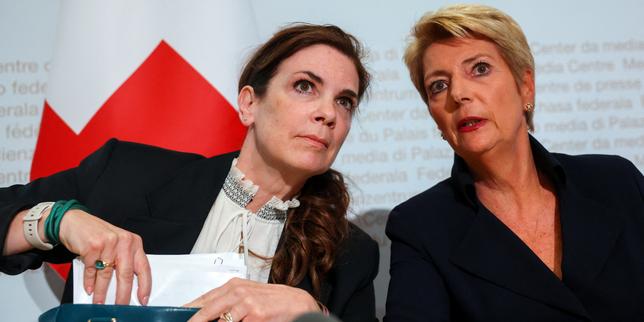
In the United States, the failure of a bank like Silicon Valley Bank is a trauma, but the US economy is large enough to absorb it. In Switzerland, there is no one left to buy UBS if it fails. There is no second "white knight." This total lack of domestic alternatives is why Karin Keller-Sutter, the Swiss Finance Minister, is so insistent on these new measures. She knows that in a crisis, she has no more cards to play.
The False Promise of AT1 Bonds
We must also address the "Additional Tier 1" (AT1) bonds, which were famously wiped out during the Credit Suisse takeover. These instruments were designed to be "loss-absorbing," meaning they convert to equity or are written down when a bank's capital falls below a certain level.
The Swiss government's recent report suggests that these bonds didn't work as intended because they didn't prevent the panic; they actually accelerated it once investors realized they were about to be wiped out. The new regulatory push leans more heavily on "Common Equity," which is the simplest and most honest form of capital. It’s the money the bank actually owns, not debt that pretends to be equity when the weather is good.
The Global Ripple Effect
The Swiss move is being watched closely in Brussels and Washington. If Switzerland, the historic gold standard of banking stability, decides that its banks need significantly more capital, it sends a signal that the global banking system is still undercapitalized.
However, there is a risk of fragmentation. If every country starts demanding that "their" bank's foreign subsidiaries hold massive local reserves, the efficiency of global capital markets collapses. It becomes harder for money to flow where it is needed, as it is constantly "trapped" in local regulatory silos. This is the price of safety in a post-2023 world.
A Cultural Clash in Zurich
There is a profound disconnect between the Swiss political class and the banking elite. The bankers argue that they are the engine of the Swiss economy. The politicians see a liability that could destroy the nation’s credit rating.
The debate has turned surprisingly populist. Many Swiss citizens are tired of seeing their tax dollars used as an ultimate backstop for high-rolling investment bankers. This public sentiment is giving the Federal Council the political cover it needs to ignore the warnings from the UBS boardroom.
The industry is currently lobbying hard to water down the proposals. They argue that "qualitative" measures—like better management and more oversight—are more effective than "quantitative" measures like higher capital. But history shows that when a bank is on fire, "better management" is a theoretical concept, while "cash on hand" is a reality.
The End of the Swiss Model
For decades, the Swiss banking model was built on secrecy and stability. Secrecy was dismantled by international tax pressure years ago. Now, the stability part of the equation is being re-evaluated.
By forcing UBS to hold more capital, Switzerland is effectively turning its national champion into a utility. It will be safer, yes, but it will also be slower, less profitable, and less of a global predator. This is a deliberate choice. The Swiss government has decided that they would rather have a boring, stable bank than a high-flying giant that occasionally threatens to burn the house down.
The coming months will see a fierce legislative battle in the Swiss parliament. UBS will fight for every percentage point of the leverage ratio. They will point to their recent profits and their successful integration of Credit Suisse as proof that they don't need a babysitter.
But Bern isn't looking at the profits of today; they are looking at the potential catastrophe of tomorrow. The memory of the 2023 rescue is too fresh, and the cost was too high. The era of the Swiss bank as an untouchable global behemoth is ending, replaced by a new reality where the state demands a heavy tax in the form of idle capital just for the privilege of existing.
UBS must now find a way to remain relevant on the global stage while carrying a backpack full of lead that its competitors in other jurisdictions might not have to shoulder. It is a test of whether a bank can truly be a global powerhouse while being governed by a nation that has lost its appetite for financial risk.
The ultimate takeaway for the global financial community is clear: "Too Big to Fail" is being replaced by "Too Expensive to Exist." If a bank's presence creates a systemic risk that the host nation cannot afford to backstop, the only logical conclusion is to force that bank to shrink or to pay so much into its own insurance policy that its growth is naturally stunted. Switzerland is simply the first to admit it.
Watch the "Capital Ratio" updates coming out of Zurich this quarter. These numbers aren't just accounting entries; they are the markers of a nation's survival strategy.
/200199910-001-58b9cf5c5f9b58af5ca83533.jpg)