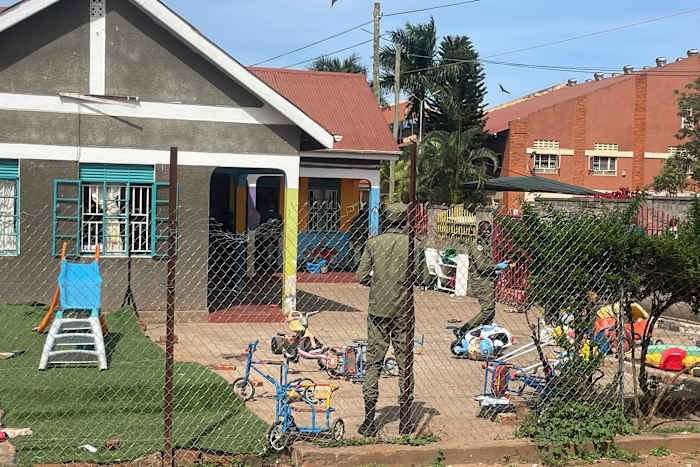
Uganda is reeling from a nightmare that no parent should ever have to imagine. A man armed with a machete walked into a nursery school and killed four children. It’s horrific. It’s senseless. It's the kind of news that makes you want to look away, but we can't afford to do that. When soft targets like schools become sites of extreme violence, it points to a massive breakdown in local security and social monitoring. This wasn't just a random act of madness; it's a wake-up call for how we protect the most vulnerable members of society in regions struggling with stability.
The Tragic Events at the Uganda Nursery School
The attack happened with terrifying speed. In a small village in Uganda, a man entered a nursery school premises brandishing a panga—a heavy machete common in the region. Before anyone could intervene, he targeted the children. Four young lives were extinguished in minutes. Police reports indicate the suspect was a local man, which adds a layer of betrayal to the grief. This wasn't an outside invasion. It was someone from the community turning on the community's future.
Security forces arrived, but for those four families, they were far too late. Local authorities have since taken the suspect into custody, yet the "why" remains a gaping hole in the narrative. While some point to potential mental health crises, others look at the lack of basic perimeter security at rural schools. Most of these institutions are barely more than open clearings with a few structures. They don't have guards. They don't have fences. They have children and teachers who are completely exposed.
Why School Security in Rural Uganda is Nonexistent
We need to talk about the infrastructure. If you've spent any time in rural East Africa, you know that "school" often means a community-built shed or a rented house. Security isn't a line item in the budget because there is no budget. The government struggles to fund books and desks, let alone security personnel.
Parents in these areas are often working in fields miles away. They trust the school to be a safe harbor. But a panga is a tool found in every household in Uganda. It’s used for clearing brush, harvesting matooke, and everyday chores. In the wrong hands, it’s a silent, deadly weapon that doesn't require a permit or a black-market connection. This accessibility makes "crimes of passion" or sudden psychotic breaks incredibly lethal.
The Mental Health Gap
Uganda has a massive shortage of mental health resources. Outside of Kampala, seeing a psychiatrist is basically impossible. People suffering from severe delusions or violent tendencies often go untreated until something snaps. The community usually knows "that guy is acting strange," but there’s no mechanism to report it or get him help before he picks up a blade. We keep seeing these "lone wolf" attacks because the social safety net is shredded.
Breaking Down the Response and Accountability
The police response followed a familiar pattern. Arrest the suspect, make a statement about "law and order," and promise a full investigation. But what does that actually change for the next school? Not much. True accountability starts with local government officials who oversee education. If a school can't provide a basic fence, it shouldn't be operating. That sounds harsh, but the alternative is burying four more children next year.
International NGOs often focus on "learning outcomes" and "literacy rates." Those are great. They're vital. But they mean nothing if the kids aren't alive to read the books. There’s a desperate need for a shift in how aid is distributed. A portion of educational grants needs to be diverted toward physical security—fences, gates, and at least one trained individual to monitor who enters the grounds.
What This Means for Regional Stability
This isn't an isolated tragedy in a vacuum. It feeds into a general sense of insecurity that plagues many rural districts. When people feel the state can't protect their kids at school, they stop sending them. This leads to a drop in enrollment, higher illiteracy, and a cycle of poverty that fuels further violence. It's all connected.
You see the same patterns in neighboring countries. Soft targets are chosen because they're easy. They provide maximum shock value with minimum effort. Whether it's a disgruntled local or something more organized, the result is the same: a community paralyzed by fear.
Immediate Steps to Prevent Another Tragedy
We can't just wait for the Ugandan government to fix this. It moves too slow. Change has to happen at the local level through a mix of community policing and physical upgrades.
- Mandatory Perimeter Fencing: Every nursery and primary school must have a clear, gated boundary. It doesn't have to be a high-tech wall, but it must be enough to slow down an intruder.
- Community Watch Programs: Villages need a rotating "school watch" where parents or elders stay on-site during school hours.
- Mental Health Awareness: Local leaders must be trained to identify signs of violent instability in residents and have a direct line to district authorities to intervene.
- Emergency Communication: Even a basic whistle system or a dedicated mobile phone for the headteacher to alert the village can save lives.
The blood of those children is a stain on the system that failed to protect them. Don't let this story fade into the background of the 24-hour news cycle. Pressure needs to stay on the Ministry of Education and Sports to implement basic safety standards across all districts. Support organizations that prioritize "Safe Schools" initiatives that include physical security, not just curriculum development. Demand that local leaders treat school safety as a matter of national urgency. It's time to stop treating these tragedies as unavoidable acts of fate. They are failures of policy and protection.