Asia’s fuel crisis is not a temporary glitch in the supply chain but a systemic failure triggered by a lethal cocktail of currency depreciation, botched state subsidies, and a desperate over-reliance on volatile spot markets. While headlines focus on long lines at gas stations in Colombo or Hanoi, the real story lies in the emptying central bank vaults of emerging economies. Countries that once buffered their citizens from global price swings have run out of the US dollars required to settle oil tankers, leading to a cascade of rolling blackouts and paralyzed logistics networks.
The situation is deteriorating because the traditional safety nets of the 2010s have shredded. Governments are no longer just managing high prices; they are managing total physical scarcity.
The Dollar Trap and the Death of the Subsidy
For decades, many Asian nations maintained a social contract built on cheap energy. Governments used state funds to keep pump prices artificially low, a move designed to keep inflation in check and the public from rioting. But this model requires two things: a stable currency and a manageable global oil price. Both have vanished.
When the US Federal Reserve raised interest rates, it didn't just affect Wall Street. It sucked liquidity out of emerging markets. As the Thai Baht, the Pakistani Rupee, and the Philippine Peso weakened against the dollar, the cost of importing a barrel of Brent crude skyrocketed in local terms—even if the global price stayed flat.
Consider a hypothetical scenario where a nation’s currency drops by 20% against the dollar while oil prices rise by 20%. The local cost doesn't just go up by a simple addition; the compounding effect creates a fiscal hole that no budget can fill. Governments are forced into a "Sophie’s Choice" scenario. They can either cut the subsidies and let inflation crush the working class, or they can keep the subsidies, drain their foreign exchange reserves, and face a total sovereign default.
The Spot Market Gamble Gone Wrong
Developing Asia has long played a dangerous game with its procurement strategies. Instead of locking in long-term contracts with Middle Eastern producers—contracts that offer price stability but require diplomatic capital—many regional buyers shifted toward the spot market. They wanted to chase the lowest daily price.
This worked during the era of oversupply. Now, it is a noose.
When global supply tightened following geopolitical shifts in Europe, spot prices surged well above contract prices. Large economies like China and India have the bulk to negotiate discounts on Russian or Persian crude. Smaller players like Sri Lanka, Laos, or Nepal do not. They are "price takers" in a market that is currently designed to punish the small.
The result is a fractured continent. You have the giants who are buying at a discount and the smaller nations who are paying a "desperation premium" just to keep the lights on for six hours a day. This isn't just an energy problem. It is a massive transfer of wealth that will set back regional development by a decade.
Why Refineries Are Not the Answer
There is a common misconception that building more domestic refineries will solve the problem. It won't.
Refining is a low-margin, high-complexity business. Most existing refineries in Southeast Asia are aging and configured for specific types of "sweet" crude that are becoming harder to source. Upgrading these facilities costs billions and takes years. More importantly, a refinery does not solve the underlying issue of currency. You still have to buy the raw crude in dollars. If your central bank is empty, a shiny new refinery is just an expensive piece of industrial sculpture.
The Hidden Cost of the Informal Economy
While official data tracks the price at the pump, the "real" price of fuel in crisis-hit Asian zones is found on the black market. This is where the crisis turns from a business problem into a social catastrophe.
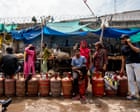
In cities where official stations are dry, an informal shadow economy has emerged. Fuel is siphoned from government vehicles or smuggled across porous borders and sold in plastic jugs at three to five times the regulated price. This shadow inflation is invisible to central bankers but it is the primary driver of rising food costs.
Farmers cannot run tractors. Fishermen cannot start their boat engines. When the cost of moving a cabbage from a rural farm to a metro market triples because of black-market diesel, the entire economy begins to cannibalize itself. We are seeing a reversal of the "Asian Miracle" where the middle class is being pushed back into subsistence living because they cannot afford the basic movement of goods.
The Logistics Collapse
We often overlook the "last mile" of the fuel crisis. Even if a country manages to secure a shipment of fuel, the internal logistics of distribution are failing. In a cruel irony, the trucks needed to deliver fuel to distant provinces often do not have enough fuel themselves to make the round trip.
This creates "fuel deserts" where entire regions are effectively cut off from the national grid. Industry analysts often focus on the macro numbers—millions of barrels per day—but the crisis is won or lost in the provincial depots. When those run dry, the local economy stops. Cold chains break. Medicines spoil. The human cost far exceeds the price per gallon.
The Myth of the Green Pivot as a Quick Fix
Western analysts often suggest that this crisis should accelerate the transition to renewable energy. This is a privileged perspective that ignores the brutal reality of capital expenditure.
Solar and wind require massive upfront investment in hardware and grid modernization. Most of the countries currently suffering from the fuel crisis are also drowning in debt. They cannot borrow more money at high interest rates to build solar farms that will take five years to come online when they need to keep the power on tonight.
Renewables are the long-term solution, but they are not a "fire extinguisher" for a burning economy. In the short term, these nations are actually doubling down on the dirtiest fuels available. We are seeing a return to coal and even wood-burning because they are the only energy sources that can be settled in local currency or gathered for free. The fuel crisis isn't accelerating the green transition; in many places, it is stalling it.
Regional Geopolitics and the New Energy Map
The crisis is redrawing the political map of Asia. Countries that were traditionally aligned with Western trade blocs are being forced to look elsewhere for energy security.
- Russia has become a primary supplier of discounted oil to anyone willing to bypass the dollar-based financial system.
- China is leveraging its "Belt and Road" energy infrastructure to provide credit lines for fuel, essentially trading energy for long-term geopolitical loyalty.
- India is positioning itself as a regional refining hub, buying crude in bulk and re-exporting the refined product to its smaller neighbors at a markup.
This shift isn't just about oil; it's about who owns the debt. Every "rescue" shipment of fuel comes with strings attached. Usually, those strings involve control over ports, pipelines, or sovereign assets.
The Breakdown of Urban Stability
The most dangerous aspect of the current trend is the loss of urban productivity. Asia's rise was built on the efficiency of its mega-cities. When fuel scarcity leads to "load shedding"—scheduled power outages—the digital and service economies grind to a halt.
Call centers in Manila, garment factories in Dhaka, and tech hubs in Bangalore are all dependent on diesel generators to bridge the gap when the grid fails. But when diesel is rationed, the generators go silent. This isn't just an inconvenience; it’s a breach of contract with the global market. Multi-national corporations do not stay in cities where they cannot guarantee 24/7 operations. The flight of capital follows the flicker of the lights.
The Liquidity Wall
By the middle of 2026, several more Asian economies will hit what traders call the "Liquidity Wall." This is the point where the cost of servicing existing debt and the cost of importing essential energy exceeds the total export revenue of the country.
When a nation hits this wall, its credit rating vanishes. It can no longer open "Letters of Credit" (LCs). Without an LC, no international oil trader will let a tanker enter a country's territorial waters. We saw this in the early stages of the Sri Lankan collapse, and the pattern is being mirrored in other South Asian and Southeast Asian frontier markets.
Rebuilding the Energy Social Contract
To survive, Asian nations must abandon the "subsidy trap" and move toward transparent, market-linked pricing. But this is political suicide without a robust social safety net.
Instead of subsidizing the fuel itself—which benefits the wealthy car owner more than the poor laborer—governments must shift to direct cash transfers. This ensures that the limited dollars available are used to protect the most vulnerable while allowing the market to dictate the true cost of energy. It is a painful transition. It involves short-term inflation and likely political unrest.
However, the alternative is a slow-motion collapse of the state.
Diversification Beyond the Dollar
The ultimate "how" of fixing this involves a move away from the petrodollar. We are seeing the early stages of bilateral trade agreements where fuel is traded for commodities—rice for oil, palm oil for gas. This "barter" system is inefficient and archaic, but it is the only way to bypass the dollar scarcity that is strangling the region.
Bilateral currency swaps between central banks are no longer a theoretical exercise; they are a survival mechanism. If Malaysia and Indonesia can trade energy in their own currencies, they insulate themselves from the whims of the US Federal Reserve. This is the beginning of a fragmented global energy market where the price you pay depends entirely on whose "club" you belong to.
Stop looking at the price of oil. Watch the foreign exchange reserves of the mid-tier Asian economies. That is where the next explosion will happen. When the reserves hit zero, the fuel stops moving, the lights go out, and the government falls. The crisis isn't about what's in the tank; it's about what's in the bank.
Secure your own supply chains by diversifying away from single-source logistics. If your business depends on a stable grid in a frontier market, you are already behind the curve. Invest in onsite storage and off-grid power now, because the state is not coming to save you.