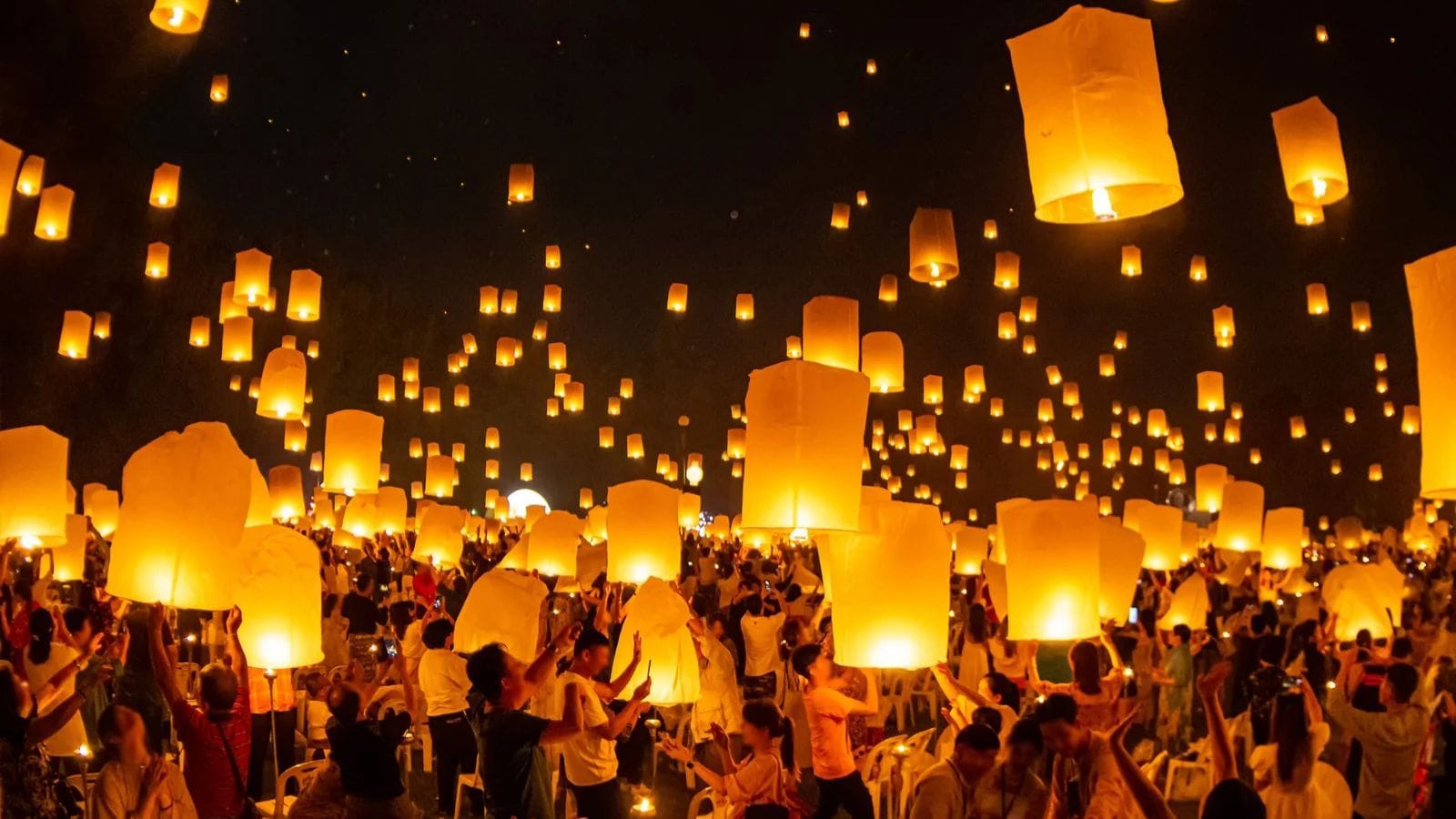
Most travelers book flights to Asia’s premier lantern festivals expecting silent spiritual transcendence, only to find themselves trapped in shoulder-to-shoulder crowds, choked by paraffin smoke, or staring at restricted municipal release zones. If you want to experience the authentic glow of lantern festivals across Asia—from Thailand’s Yi Peng and Taiwan’s Pingxi to Japan’s Nagasaki and Vietnam’s Hoi An—you must separate commercialized tourist traps from genuine local traditions. True immersion requires navigating strict municipal bans, fire hazards, and hyper-inflated VIP ticketing schemes that glossy travel brochures conveniently omit.
Travel journalism has spent two decades sanitizing these events into effortless bucket-list checkboxes. They show you a long-exposure photograph of ten thousand glowing orbs ascending into a velvet Chiang Mai sky, yet they crop out the five thousand tripods jostling for position on a muddy riverbank, the $200 ticket price for a privatized release, and the municipal fire trucks idling just beyond the frame. Understanding what actually happens on the ground is the difference between a transformative cultural encounter and an expensive, claustrophobic logistical nightmare.
The Economics and Ecology of the Sky Lantern
The mass release of sky lanterns—known as khom loi in Thailand and tiandeng in Taiwan—looks ethereal, yet it operates as a complex intersection of ancient folk ritual, modern aviation hazards, and aggressive event monetization. Originally used for military signaling in ancient China before evolving into Buddhist merit-making rituals, sky lanterns rely on a simple hot-air balloon mechanism. A bamboo frame holds a thin oiled rice paper shell, suspended above a fuel cell typically made from wax-soaked cardboard or cloth. When lit, the trapped air heats up, becomes less dense than the surrounding atmosphere, and lifts the structure upward.
That physics is precisely why governments across Asia have spent the last decade cracking down on mass releases. Once a lantern leaves your hands, you surrender all control over an open flame drifting at altitudes of up to 1,000 meters.
In northern Thailand, the consequences of unchecked Yi Peng celebrations became impossible for authorities to ignore. During peak years prior to strict zoning laws, Chiang Mai International Airport had to cancel or reschedule dozens of flights annually because stray lanterns were getting sucked into jet turbines. Simultaneously, local farmers dealt with burned roofs, scorched orchards, and livestock tangled in wire frames left behind after the wax burned out.
Today, if you show up in downtown Chiang Mai expecting to launch a lantern from the Nawarat Bridge alongside thousands of locals, you will be met by municipal police enforcing strict no-launch zones. The famous mass-release photographs you see on social media almost exclusively come from private, ticketed events held outside the city limits—such as the Chiang Mai CAD Khomloy Sky Lantern Festival—where organizers pay hefty permits, station firefighting crews, and charge foreign tourists anywhere from $150 to $300 per entry. You are not witnessing a spontaneous community gathering; you are attending a highly choreographed, privately produced spectacle engineered for international cameras.
Pingxi’s Railway Dilemma in Taiwan
Taiwan’s Pingxi Sky Lantern Festival, held during the Lunar New Year season in New Taipei City, offers a study in contrasts. Unlike Chiang Mai’s heavily gated private venues, Pingxi remains a civic event rooted in the town’s history as a coal-mining hub in the Shifen district. Historically, bandits raided these isolated mountain villages during the winter; villagers would flee into the hills, and those left behind would release lanterns to signal that the coast was clear and it was safe to return home.
Modern Pingxi operates on an industrial tourism scale. Visitors buy massive four-sided paper lanterns directly along the active Pingxi Branch Line railway tracks, paint their wishes in black ink—red for health, yellow for wealth, blue for career—and light them directly between passing trains. When the train whistle blows, thousands of people press themselves flat against shopfronts to let the diesel cars rumble past, then immediately flood back onto the tracks.
The environmental reality here is unavoidable. While local authorities promote "eco-friendly" paper lanterns designed to burn completely in mid-air before hitting the forest canopy, damp mountain humidity frequently snuffs out the flame prematurely. The surrounding hillsides of New Taipei City are perpetually littered with soggy paper and bamboo frames. Local NGOs and municipal crews spend weeks conducting mountain cleanups, and residents openly debate the trade-off between the economic lifeline tourism provides to a post-mining town and the ecological toll on the surrounding watershed. If you go, skip the chaotic main launch at Shifen Plaza—where crowd control barriers corral visitors hours in advance—and walk ten minutes down the tracks to quieter settlements like Jingtong, where the rhythm feels closer to its mining-town roots.
Grounded Splendor in Nagasaki and Seoul
Not every iconic Asian lantern tradition relies on sending open flames into the stratosphere. Some of the most visually arresting and culturally intact festivals keep their light firmly anchored to the earth, eliminating the aviation conflicts and wildfires that plague sky-lantern destinations.
Nagasaki Lantern Festival in Japan
In southwestern Japan, the Nagasaki Lantern Festival transforms the city’s Shinchi Chinatown and surrounding parks into a labyrinth of more than 15,000 vibrant silk lanterns over fifteen days during the Lunar New Year. What makes Nagasaki unique is its origin story: it is not an ancient Japanese Shinto or Buddhist rite, nor is it an imported tourist gimmick. It began in the late 1980s as a modest celebration by Nagasaki’s Chinese merchant community—descendants of traders who lived in the city during Japan’s centuries of national isolation—and expanded in 1994 into a citywide municipal festival.
Because the lanterns are structural installations suspended over streets, canals, and temple courtyards rather than disposable airborne objects, the artistry is vastly superior. Master craftsmen construct towering, multi-story displays depicting Chinese mythological figures, zodiac animals, and imperial barges, illuminated from within by warm bulbs rather than open flames. You walk beneath a canopy of crimson and gold silk while watching traditional mask-changing performances (bian lian) and acrobatics. The atmosphere is dense and festive, yet completely free of the frantic rush to light a fuse before the wind shifts.
Seoul Lotus Lantern Festival in South Korea
Similarly, South Korea’s Yeon Deung Hoe (Lotus Lantern Festival), inscribed on the UNESCO Intangible Cultural Heritage list, replaces commercial spectacle with deep, participatory religious devotion. Held in May to celebrate Buddha’s Birthday, the festival traces its lineage back over 1,200 years to the Silla Dynasty.
For weeks leading up to the main weekend, temples across Seoul—most notably Jogyesa Temple—hang thousands of vibrant, geometric paper lotus lanterns across their courtyards, each tagged with the names and prayers of individual donors. The centerpiece is a massive evening parade running from Dongdaemun through Jongno to Jogyesa, where tens of thousands of practitioners carry handmade lotus lanterns alongside towering illuminated floats shaped like white elephants, dragons, and traditional Korean drums.
Unlike commercial sky-lantern events where spectators are passive consumers buying a photo op, Yeon Deung Hoe belongs to the Buddhist community. Tourists are welcome to line the streets and join lantern-making workshops, yet the energy remains grounded in collective spiritual expression rather than social media performance.
The Commercialization Trap of Hoi An
Few destinations illustrate the friction between heritage preservation and overtourism better than Hoi An’s Lantern Festival in central Vietnam. Every 14th day of the lunar month—when the moon is at its fullest—the Ancient Town shuts off its electric streetlights, bans motorized vehicles, and illuminates its mustard-yellow French colonial facades and Japanese Covered Bridge solely with silk lanterns and floating river candles.
On paper, it sounds magical. On the ground, it has become an aggressive gauntlet of micro-transactions.
As dusk falls over the Thu Bon River, the banks become nearly impassable. Hundreds of sampan boat rowers and elderly vendors aggressively hawk tiny cardboard lotus candles and ten-minute boat rides. The river surface, intended to reflect a serene tribute to ancestors, routinely turns into a traffic jam of wooden boats bumping hulls while tourists lean precariously over the gunwales to take flash photography—which instantly ruins the ambient darkness that makes the festival special in the first place.
To experience Hoi An without losing your patience, you have to invert the standard tourist schedule. Avoid the An Hoi Bridge and the main Bach Dang riverfront between 7:00 PM and 9:00 PM, when tour buses dump thousands of day-trippers from Da Nang into the narrow alleys. Instead, walk deep into the residential backstreets off Phan Boi Chau or cross over to Cam Nam Island, where families still place modest offerings outside their doorsteps without trying to sell you anything. Better yet, stay until 10:30 PM, when the day-trippers leave, the hawkers pack up their cardboard candles, and the ancient town finally exhales into quiet, lantern-lit stillness.
Taiwan’s Yanshui Beehive Fireworks and the Anti-Lantern
If you want to understand the raw, unfiltered end of the Lunar New Year light spectrum, look south from Pingxi to Tainan’s Yanshui District. While the rest of Taiwan releases peaceful sky lanterns during the Lantern Festival, Yanshui hosts the Beehive Fireworks Festival (Yanshui Fengpao), one of the most dangerous religious rituals on earth.
Born in the late 19th century when locals fired massive barrages of firecrackers to drive away a devastating cholera epidemic, the festival centers on towering wooden racks—known as "beehives"—packed with tens of thousands of bottle rockets aimed outward at crowd level. As palanquins carrying statues of Guan Yu, the god of war, are carried through the streets, these towers are ignited. Rockets shriek horizontally into the tightly packed crowd at blistering speeds, exploding against helmets, flame-retardant jackets, and thick cotton towels wrapped tightly around participants' necks.
There is no VIP viewing platform here. If you stand in the street without full motorcycle gear, you will get burned. Yet for all its visceral chaos, Yanshui possesses an authenticity that heavily manicured events lack. Nobody is curating the experience for foreign influencers; locals participate to purge bad luck for the coming year, enduring bruises and singed clothing as a badge of spiritual resilience.
Planning Around Lunar Calendars and Crowd Dynamics
The single biggest mistake travelers make when chasing Asian lantern festivals is booking flights based on Western Gregorian calendar dates. Nearly every major lantern celebration—with the exception of Seoul’s Yeon Deung Hoe and seasonal winter illuminations—follows the traditional lunisolar calendar. Dates shift by up to three weeks every single year.
| Festival | Location | Timing Basis | Primary Mechanism | Core Friction Point |
|---|---|---|---|---|
| Yi Peng | Chiang Mai, Thailand | Full moon, 12th Thai lunar month (Nov) | Airborne hot-air sky lanterns | Strict city bans; expensive private venues |
| Pingxi | New Taipei, Taiwan | 15th day, 1st lunar month (Feb/Mar) | Airborne sky lanterns on active tracks | Severe overcrowding; mountain litter |
| Nagasaki | Nagasaki, Japan | 1st–15th day, 1st lunar month (Feb/Mar) | Stationary silk & structural displays | High hotel demand; chilly winter weather |
| Yeon Deung Hoe | Seoul, South Korea | Weekend before 8th day, 4th lunar month (May) | Handheld parade lanterns & temple canopies | Massive street closures along Jongno |
| Hoi An | Quang Nam, Vietnam | 14th day of every lunar month | Floating river candles & shopfront silk | Aggressive boat hawkers; river congestion |
| Mid-Autumn | Hong Kong (Tai Hang) | 15th day, 8th lunar month (Sep/Oct) | Incense-studded fire dragon & park lanterns | Extreme heat/humidity; dense neighborhood alleys |
Beyond calendar math, timing your arrival within the festival window dictates your entire experience. In Hong Kong, the Mid-Autumn Festival features both family-oriented lantern displays in Victoria Park and the visceral Tai Hang Fire Dragon Dance, where 300 performers maneuver a 67-meter dragon bristling with tens of thousands of burning incense sticks through narrow residential streets. Arriving on the main night means staring at the back of someone’s smartphone from three blocks away; arriving on the rehearsal night or the final evening cuts crowd density nearly in half while delivering the exact same spectacle.
How to Witness the Glow Without Getting Burned
If you are determined to build an itinerary around these celebrations, abandon the passive tour-bus mindset and treat each destination like a tactical operation.
- Verify municipal launch laws before buying anything: In Chiang Mai, launching a sky lantern inside prohibited city zones carries steep fines and potential arrest. Do not buy lanterns from street vendors near Tha Phae Gate who claim "police look the other way"—they are looking to offload inventory before patrols sweep the moat.
- Respect fire safety in dense crowds: Synthetic fabrics melt onto skin when hit by stray sparks from overhead sky lanterns or horizontal fireworks. Wear natural fibers like heavy cotton or denim whenever you are standing beneath open-flame releases in Pingxi or Chiang Mai.
- Skip the river boats in Hoi An: The view of the floating candles is significantly better from the stone steps along the south bank of the Thu Bon River than from inside a jostling wooden sampan, and you avoid contributing to the traffic bottleneck choking the waterway.
- Book accommodation at least six months out: Cities like Nagasaki and Chiang Mai experience total hotel sell-outs during peak festival weekends, with rates doubling or tripling within a two-kilometer radius of the main venues.
Stop chasing the sterile, wide-angle drone shot you saw on a travel aggregator's homepage. Pick one festival whose underlying mechanics—whether Nagasaki’s stationary silk craftsmanship, Seoul’s living Buddhist procession, or Pingxi’s chaotic railway launches—actually align with your tolerance for crowds and smoke, arrive two days before the main event, and watch how the local community prepares the light before the tourists arrive.