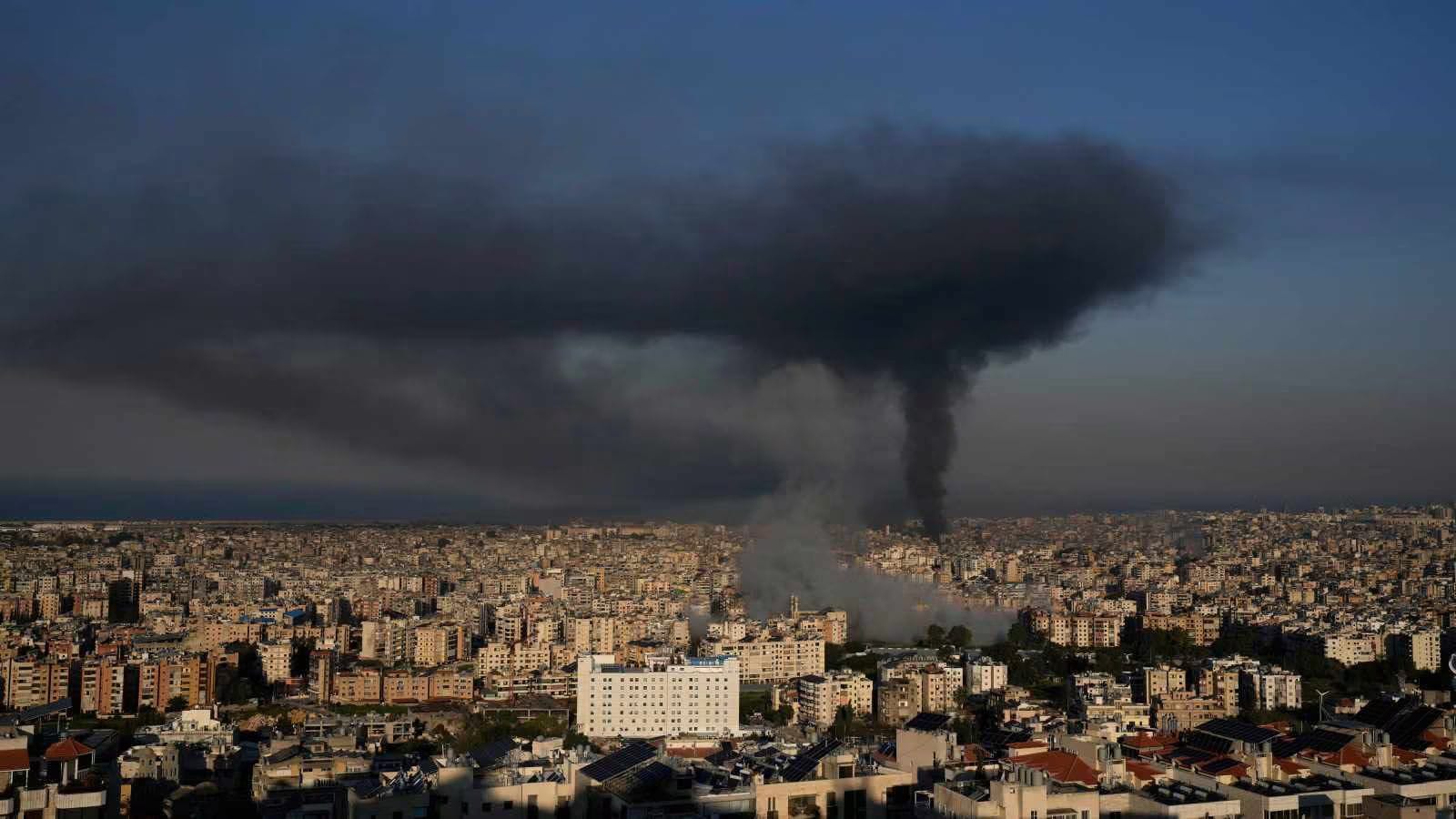
The shadow war in the Persian Gulf has finally stepped out of the darkness and into the critical infrastructure that keeps millions of people alive. On the morning of April 5, 2026, the strategy changed from symbolic strikes to a systematic attempt to dismantle the basic utility of existence in the desert: water and power.
While the world watches the high-profile dogfights over the Strait of Hormuz, the real story is unfolding at the water distillation plants and turbine halls of Kuwait. Iranian drone and missile strikes have shifted their crosshairs away from purely military or oil targets toward "soft" infrastructure. It is a calculated move to weaponize the climate and the geography of the Gulf against its own residents.
The Engineering of a Humanitarian Crisis
Kuwait's Ministry of Electricity, Water, and Renewable Energy confirmed that at dawn, a wave of Shahed-type drones struck two major facilities. This was not a random barrage. The precision suggests a deep understanding of the facilities' "choke points"—the specific nodes where a single explosion can shut down an entire desalination train.
Desalination is not a luxury in Kuwait; it is the absolute baseline for survival. Roughly 90% of the country's potable water comes from these distillation plants. By targeting the heat exchangers and the intake pumps, the aggressors are effectively turning off the tap for the entire population. This isn't just about darkness; it is about thirst.
One of the strikes resulted in the tragic death of an Indian national, a technician who was part of the skeleton crew keeping the turbines spinning. This highlights a grim reality often ignored in tactical briefings: the Gulf’s critical infrastructure is maintained by a global workforce of expatriates who are now finding themselves on the front lines of a war they did not choose.
Why Kuwait and Why Now
To understand the "why," you have to look at the regional chessboard. Iran’s retaliation follows the massive U.S. and Israeli air strikes on Tehran that began in late February. Since then, the conflict has bled across every border. Kuwait has tried to maintain a precarious neutrality, but its geography and its hosting of Western interests make it an unavoidable target.
The logic of targeting Kuwaiti utilities is two-fold:
- Overwhelming Defense Systems: By launching "cheap" drones at civilian infrastructure, Iran forces the deployment of multimillion-dollar interceptors like the THAAD and Patriot systems. It is an economic war of attrition where the defender pays $2 million to stop a $20,000 drone.
- Psychological Destabilization: Attacking an oil refinery hurts the treasury. Attacking a water plant hurts the kitchen table. It creates a sense of domestic instability that no amount of military posturing can fix.
The Fragility of the Desalination Monopoly
The technical vulnerability here is staggering. In a hypothetical scenario where a nation’s desalination capacity is reduced by even 30%, the resulting water pressure drop would trigger a cascade of failures in sewage systems and hospital cooling.
Kuwait operates eight major power and water plants. Most of these are clustered along the coast, making them easy to track and hit from the sea or the air. When a service building or a distillation unit is hit, it isn't just a matter of "fixing a pipe." These are highly specialized components with lead times of months or years. In a full-scale regional war, the global supply chain for these parts is effectively severed.
Beyond the Official Press Releases
While official government spokespersons like Fatima Abbas Johar Hayat emphasize that "operational efficiency remains intact," the ground reality is more nervous. Internal reports suggest that rolling blackouts are being prepared to preserve the remaining units. The Ministry is operating under a Level 3 contingency plan—the highest state of emergency for the nation's energy sector.
This isn't an isolated incident. In the UAE, debris from intercepted missiles has already struck residential areas in Abu Dhabi and Dubai, damaging landmarks and disrupting the global aviation hub at DXB. The "shield" provided by Western missile defense is robust, but it is not a bubble. Physical debris must fall somewhere, and in the densely packed urban corridors of the Gulf, that "somewhere" is often a roof, a street, or a power substation.
The Impending Grid Collapse
The most overlooked factor is the interconnected nature of the GCC's power grid. If Kuwait’s capacity drops below a certain threshold, it begins to draw from its neighbors. But with the UAE and Bahrain also facing drone swarms targeting their own aluminum plants and data centers, the "safety net" is fraying.
We are witnessing the first modern war where the primary objective isn't to hold territory, but to render that territory uninhabitable. If you cannot provide water and power to a city of four million people in 45-degree heat, the city ceases to function as a modern society.
The move to target distillation plants is a declaration that the "rules" of regional engagement have been discarded. The focus has moved past the military bases and the oil fields; it is now a direct assault on the life-support systems of the Gulf.
The immediate action step for regional stakeholders is no longer just "defense," but the rapid decentralization of water production—a task that is virtually impossible to achieve while the drones are still in the air.