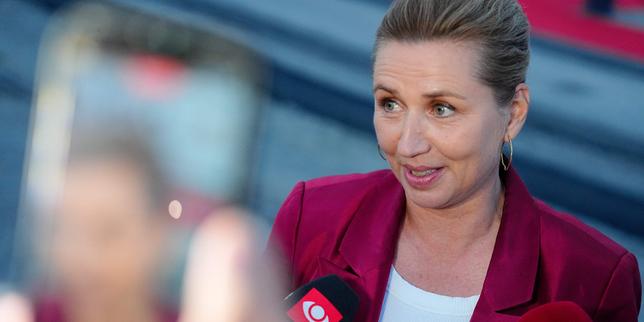
Mette Frederiksen defied decades of Danish political tradition by dismantling the country's rigid bloc system to form a rare coalition crossing the left-right divide. While superficial news reports framed this as a tedious process of standard coalition building, the reality is a calculated, high-stakes gamble designed to fundamentally reshape the Nordic welfare model. Frederiksen deliberately walked away from her traditional left-wing allies to forge an alliance with her historic rivals, the Liberal Party (Venstre) and the newly formed Moderates led by former Prime Minister Lars Løkke Rasmussen. This move was not born out of political desperation, but out of a shared realization among the centrist elite that Denmark’s celebrated welfare state is facing systemic collapse due to demographic pressures and severe labor shortages.
To understand why this happened, one must look past the public theater of prolonged negotiations. For decades, Danish politics operated like a pendulum. The "Red Bloc" of the left and the "Blue Bloc" of the right took turns governing, using minor populist parties on the fringes to prop up their slim majorities. This system created stability, but it also bred stagnation. Ideological purity prevented either side from tackling structural economic vulnerabilities. Frederiksen saw that the traditional model could no longer sustain the heavy economic demands of the 21st century. By forcing a marriage of convenience between the center-left Social Democrats and the center-right Liberals, she effectively neutralized the obstructive veto power of radical fringe parties on both the far-left and the far-right.
The Realities of a Manufactured Crisis
The coalition justified its existence on the premise of an economic emergency. Critics argued that the country's finances were perfectly healthy, pointing to low unemployment and solid credit ratings. However, the government's focus was not on the immediate balance sheet, but on a looming structural deficit in human capital. Denmark simply lacks the workers required to sustain its massive public sector while maintaining a competitive private economy.
The new administration immediately targeted the sacred cows of Danish society to fund its ambitions. The most controversial move was the abolition of Great Prayer Day, a public holiday that had been celebrated since 1686.
Estimated Fiscal Impact of Abolishing Great Prayer Day:
- Additional working hours: 7.4 million hours per year
- Structural tax revenue increase: 3 billion DKK ($430 million USD) annually
- Main objective: Funding a massive expansion of the national defense budget
The public backlash was immediate and fierce. Tens of thousands of citizens took to the streets of Copenhagen in some of the largest protests the country had seen in a generation. Trade unions felt betrayed by the Social Democrats, a party historically built on labor rights. Yet, the government stood firm. The administration proved that this centrist alliance was willing to absorb massive public anger to execute long-term fiscal adjustments that a traditional, fragile minority government would never dare to attempt.
The Erosion of Ideological Identity
For the Liberal Party, entering this coalition was an act of political survival that quickly turned into a slow-motion disaster. Historically the champions of free markets, tax cuts, and deregulation, the Liberals found themselves serving as junior partners to a formidable Social Democratic Prime Minister.
The party's core base felt alienated. Farmers, small business owners, and rural voters watched in disbelief as their leaders agreed to carbon taxes on agriculture and expansionist state spending. The center-right compromise was framed as national responsibility, but voters viewed it as a betrayal of core principles for the sake of ministerial cars and offices.
Consequently, the Liberals saw their poll numbers crater to historic lows. This shift exposed a fundamental truth of modern European politics. When the center-left and center-right merge to govern from the middle, the traditional opposition space is vacated. This dynamics gives rise to new, hyper-focused political factions that slice the electorate into narrower, more volatile interest groups.
Re-engineering the Nordic Welfare Model
The true objective of the Frederiksen experiment is a radical overhaul of the welfare apparatus. For generations, the Danish system operated on the principle of universalism. Everyone paid high taxes, and everyone received identical, high-quality public services. The coalition is quietly dismantling this assumption.
Faced with a severe shortage of nurses, teachers, and eldercare workers, the government has begun shifting toward decentralization and market-driven metrics. They are introducing reforms that allow greater autonomy for local municipalities, but this comes alongside an implicit acceptance that the state can no longer be all things to all people.
The Hidden Risks of Centrist Monopolies
The dangers of this political experiment extend far beyond dipping poll numbers. By creating a grand coalition that encompasses the traditional center, Frederiksen has inadvertently transformed the political landscape into a dangerous binary choice.
- The Erasure of Mainstream Alternatives: When the two largest opposing forces govern together, voters who want change are forced to look to the extremes.
- The Rise of Populist Factions: Anti-establishment parties on the far-right and green-socialist factions on the left gain traction by positioning themselves as the only true opposition to an entrenched political cartel.
- Democratic Apathy: If voting for the left or voting for the right results in the exact same coalition cabinet, citizens begin to view elections as meaningless exercises in optics rather than choices about the country's direction.
This configuration creates an environment where economic policies can be passed with ruthless efficiency, but at the cost of eroding public trust in democratic institutions. The government can pass tax reforms and defense bills overnight, yet it remains fundamentally detached from the cultural and emotional pulse of the electorate.
The Deflation of Executive Authority
Mette Frederiksen’s leadership style has shifted from a populist, protective "Mother of the Nation" persona during global crises to that of a cold, technocratic CEO. The centralization of power within the Prime Minister’s Office has reached unprecedented levels in modern Danish history. Decisions that once required broad consultation across society are now made by a small circle of top advisors and ministers behind closed doors.
This concentration of power has successfully broken legislative deadlocks, but it has created a brittle governance structure. The coalition functions less like a partnership of shared values and more like a corporate merger managed through strict enforcement of voting discipline. When individual members of parliament express dissent, they are swiftly sidelined. This heavy-handed approach keeps the government stable in parliament, but it leaves it exposed to sudden, unpredictable external shocks. If an economic downturn hits or if the promised benefits of these structural reforms fail to materialize in ordinary citizens' lives, the backlash will not just target a single party. It will engulf the entire political establishment that chose to stake its reputation on this historic gamble. The experiment continues to run, but the foundation is cracking beneath the weight of its own technocratic arrogance.