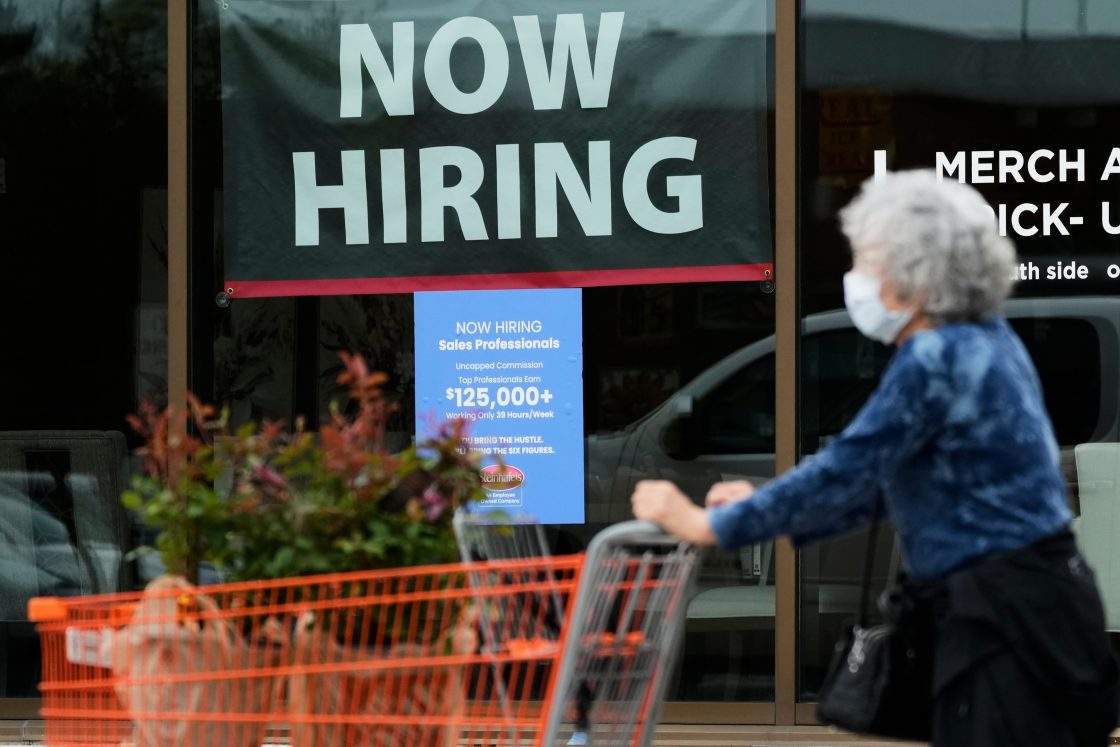
The United States economy shed 23,000 jobs in July, accompanied by a staggering downward revision of 103,000 jobs for May and June combined, yet financial headlines fixated on a comforting illusion: the unemployment rate ticked down to 4.1 percent.
This metric is a mathematical sleight of hand.
When you peer beneath the headline statistics published by the Bureau of Labor Statistics, a far more abrasive reality emerges. The drop in joblessness did not stem from a hiring boom or an influx of dynamic corporate expansion. It happened because 264,000 discouraged workers simply packed up their briefcases, stopped looking for employment, and vanished from the labor force entirely. Consequently, the labor force participation rate slumped to 61.4 percent, hitting its lowest watermark since early 2021.
The Anatomy of a Stalled Expansion
For months, Wall Street analysts have debated the inflection point of the post-pandemic recovery cycle. July provided a definitive answer, though not the one optimists wanted. The slowdown is no longer a localized cooling trend or a minor statistical anomaly. It is a structural stall.
Consider where the losses occurred. Local government education plummeted by 50,000 positions, partially driven by shifting school-calendar seasonal adjustments that routinely wreak havoc on mid-summer data. Retail trade shed another 19,000 roles, while financial activities dropped 14,000 positions, continuing a quiet bleeding spell across banking intermediaries and insurance carriers. Even healthcare, the indomitable engine that powered American payrolls for years, decelerated to a modest 22,000 additions.
When the primary pillars of job creation stutter while administrative overhead and white-collar sectors contract, the underlying health of the labor ecosystem is compromised. The three-month average payroll gain has collapsed, turning what used to be a steady expansion into a flatline.
The Phantom Menace of Structural Dislocation
Economists love to lean on seasonal adjustments to explain away summer labor weakness. They tell us that school calendars and the fading tailwinds of events like the FIFA World Cup distort the ledger. But this argument treats systemic symptoms as temporary weather patterns.
A deeper transformation is quietly devouring middle-management and professional service roles. Corporate boardrooms are no longer waiting for economic downturns to right-size their workforce. Automation and algorithmic deployment have crossed a threshold where routine white-collar tasks—from preliminary financial analysis to baseline legal compliance and customer routing—are absorbed by software architectures. Outplacement firms tracking corporate filings note that organizational restructuring tied to software efficiency tools continues to claim a dominant share of layoff justifications.
Workers displaced from these sectors do not easily slide into alternative employment. A former commercial banking administrator cannot seamlessly pivot to a healthcare support role without retraining, capital, and time. Many choose exit instead. They retire early, lean on household reserves, or drift into informal gig arrangements that evade traditional nonfarm payroll tracking.
The Mirage of Falling Joblessness
Politicians and central bankers often point to a low headline unemployment rate as proof of economic resilience. It is an increasingly dangerous misread.
When a labor force participation rate slides downward while payrolls contract, the labor market is shrinking, not healing. A lower unemployment rate achieved by attrition means fewer people are participating in the productive economy. This dynamic suppresses aggregate wage growth, which cooled to an annual pace of 3.2 percent in July—its slowest rate of the year.
While wage gains still nominally outpace consumer price inflation, the velocity of that advantage is evaporating. Households feel the squeeze. Consumer confidence has grown brittle as white-collar job seekers report sending out dozens of applications without receiving a single human response, let alone an interview. The competition for entry-level and mid-tier corporate slots has turned cutthroat, marked by an explosion in application density per open posting.
The Federal Reserve Crossroads
The Federal Reserve now faces an agonizing policy dilemma. For the past two years, monetary architects balanced the tightrope of cooling inflation without inducing a mass-layoff recession. With payrolls shrinking and participation sliding, the justification for maintaining restrictive interest rates grows thinner by the month.
Yet cutting rates too aggressively risks reigniting price pressures in asset markets that never truly cooled. The central bank can no longer rely on simplistic heuristics like a 4.1 percent unemployment rate to guide its hand. Doing so ignores the millions of sidelined Americans who want a job but have given up the hunt because the apparatus of modern corporate recruitment is fundamentally broken.
The July data serves as an unvarnished audit of an exhausted economic cycle. The expansion built on post-lockdown rebound momentum has officially run its course, leaving behind a scarred landscape where fewer people work, fewer businesses hire, and the official metrics mask the quiet retreat of the American worker