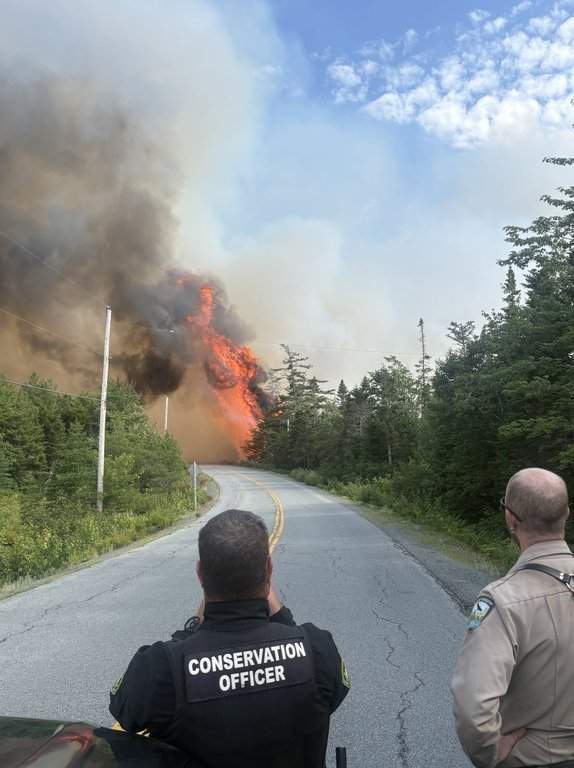
Nova Scotia faces a escalating battle against out-of-control wildfires northeast of Halifax, a crisis driven by a dangerous confluence of prolonged drought, shifting climate patterns, and legacy forest management practices. While emergency crews work tirelessly on the ground to contain the immediate flames, the underlying reality is that the province's landscape has become fundamentally more volatile. Suppressing the current blaze is only a temporary fix for a structural environmental deficit. The real challenge lies in addressing the systemic vulnerabilities that turn routine seasonal ignitions into unmanageable, fast-moving threats to communities and infrastructure.
The Anatomy of an Uncontrollable Burn
Wildfires require three basic elements to thrive: fuel, oxygen, and heat. When a fire breaks out northeast of Halifax, it encounters an environment primed for extreme behavior. Years of uneven precipitation have left the forest floor packed with dense, dried-out organic matter. This duff layer acts like a tinderbox, allowing fires to burrow deep into the ground and bypass traditional water drops.
Ground crews face immense physical hurdles. The terrain in this region is notoriously rocky and thick with underbrush, making it exceedingly difficult to cut effective firebreaks. Heavy machinery cannot easily navigate the boulder-strewn landscape, leaving much of the brutal labor to hand crews wielding chainsaws and pulaskis.
Wind behavior complicates containment efforts significantly. In coastal provinces, localized weather patterns can shift rapidly, turning a predictable flank into a raging head fire within minutes. When erratic winds catch embers and loft them ahead of the main front, they create spot fires. This process renders standard containment lines useless and forces incident commanders to constantly reposition their limited resources.
The Legacy of the Forest Canopy
To understand why these blazes defy control, one must look at the composition of the forest itself. Decades of selective harvesting and natural regeneration patterns have altered the Acadian forest. What remains in many areas is a high concentration of coniferous stands—specifically black spruce and balsam fir.
These species are highly flammable. They contain volatile resins and oils that ignite easily and burn with intense heat. Unlike deciduous trees like maples or birches, which act as natural fire breaks due to their higher moisture content, crowded softwood stands allow fire to transition from the ground into the canopy.
Once a fire becomes a crown fire, the mathematical probability of immediate containment drops to near zero. The energy released by a crowning forest fire creates its own localized weather systems, including convective columns that draw in more oxygen and drive the flames forward with terrifying speed.
The Logistics Crisis on the Front Lines
Suppression strategy relies heavily on aerial support, but air tankers and helicopters have hard operational limits. Thick smoke blankets the impact zones, severely reducing visibility. Pilots cannot safely drop water or retardant if they cannot see the terrain or the ground crews operating beneath the smoke layer.
Water availability presents another hidden operational bottleneck. While Nova Scotia boasts numerous lakes, accessing them with massive water bombers requires specific depths and clear approach paths. Smaller helicopters using monsoon buckets can utilize smaller water bodies, but they carry a fraction of the payload. The logistics of moving thousands of gallons of water to remote, roadless areas remains a constant battle against geography.
Mutual aid agreements bring in firefighters from neighboring provinces and international partners, yet integration takes time. Different agencies use varying radio frequencies, command structures, and operational protocols. Every hour spent aligning these systems on the ground is an hour where the fire dictates the terms of the engagement.
Infrastructure and the Wildland Urban Interface
The risk is no longer confined to remote wilderness. Population growth has pushed residential developments deeper into forested areas, creating an expansive wildland-urban interface. Houses are built directly alongside highly flammable fuel loads, vastly complicating the tactical choices faced by fire chiefs.
When a wildfire threatens a community, the priority shifts instantly from containment to structure protection and life safety. Incident commanders must divert scarce resources from stopping the perimeter advancement to defending individual homes. This defensive posture allows the main body of the fire to grow unchecked in the surrounding bush.
Many homes in these interface zones lack basic fire-safe landscaping. Fire wood piles stacked against wooden decks, vinyl siding that melts under radiant heat, and uncleaned gutters filled with dry pine needles turn residential properties into secondary fuel sources. The pressure on local infrastructure becomes unsustainable when hundreds of homes require simultaneous defense.
Rethinking Mitigation and Risk Management
Relying solely on suppression is a losing strategy. The cost of fighting fires after they break out strains provincial budgets and pushes crews to the brink of exhaustion. A shift toward proactive fuel management is necessary, though it comes with political and social friction.
Prescribed burning is a highly effective tool for reducing fuel loads, yet it remains underutilized. Conducting controlled burns requires precise weather windows to prevent escapes and minimize smoke impacts on populated areas. Public anxiety regarding intentional fires often stalls these initiatives, leaving dangerous fuel accumulations untouched year after year.
Silvicultural practices must also evolve. Encouraging the growth of mixed-wood and deciduous stands can create natural speed bumps within the landscape. This requires a long-term commitment that clashes with short-term economic interests in traditional forestry, representing a difficult trade-off between immediate commercial yields and long-term ecological resilience.
Community zoning laws represent another critical lever. Restricting dense residential development in high-risk zones or mandating fire-resistant building materials would significantly reduce the vulnerability of the wildland-urban interface. However, municipalities often resist these measures due to concerns over property values and development revenues, demonstrating the complex economic forces at play behind the fire line.
The Reality of Prolonged Fire Seasons
Fire seasons are starting earlier and lasting longer, compression recovery windows for both the land and the personnel who protect it. The compounding fatigue on volunteer fire departments—which form the backbone of rural emergency response—is a growing vulnerability that receives little public attention. These individuals balance full-time jobs with grueling shifts on the fire line, and the system is fraying under the weight of recurring, extreme seasons.
As crews continue to battle the blaze northeast of Halifax, the focus inevitably centers on daily containment percentages and weather forecasts. But the long-term trajectory is clear. Without a fundamental reassessment of how forests are managed and how communities are built, out-of-control blazes will cease to be anomalous emergencies and instead become the baseline reality of the landscape.