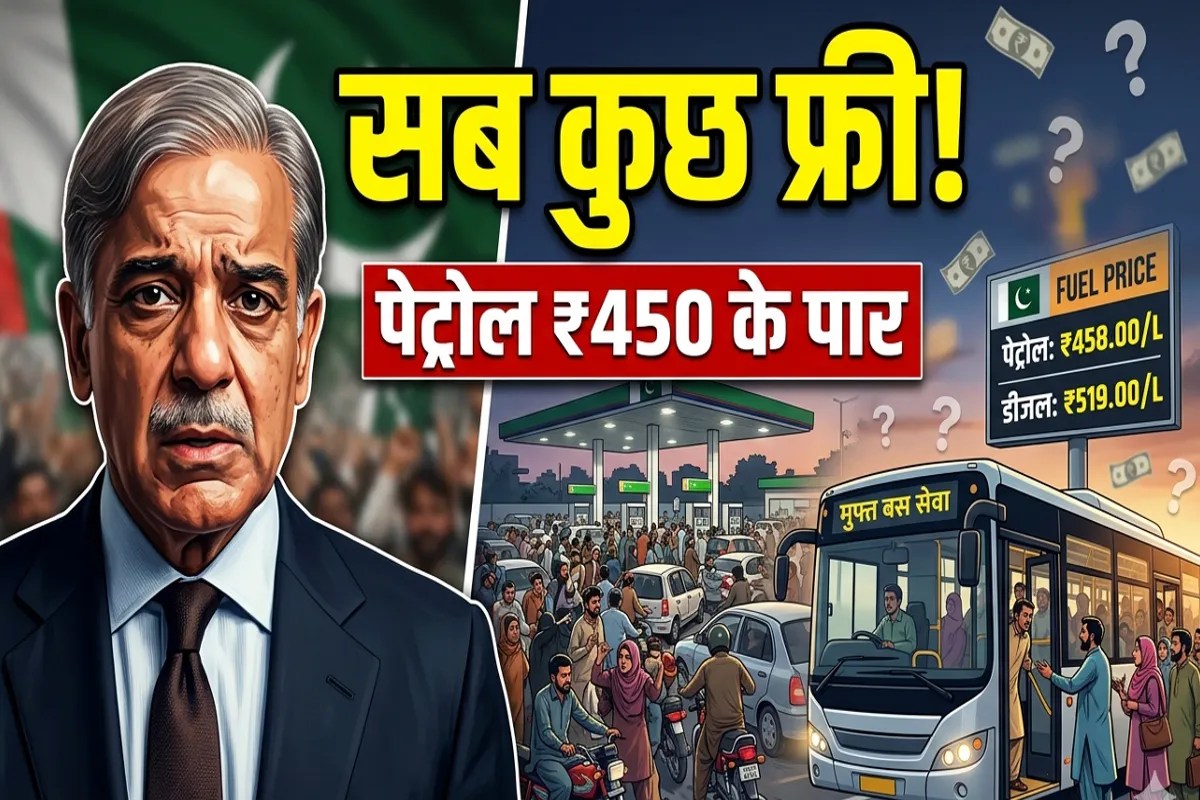
The Shehbaz Sharif administration recently blindsided the public with a mandate for thirty days of free public transport. On the surface, it looks like a rare win for the struggling working class. In reality, this is a desperate triage maneuver designed to mask a catastrophic breakdown in the national fuel supply chain triggered by the escalating conflict involving Iran. The government is not giving away free rides out of generosity. It is doing so because the alternative is a total paralysis of the workforce that would likely spark uncontrollable civil unrest. By consolidating commuters onto state-run buses, the state is attempting to slash the aggregate demand for petrol and diesel as reserves hit critical lows.
The arithmetic of survival for Pakistan has always been precarious. Now, it is becoming impossible.
The Invisible Pipeline Collapse
Pakistan relies heavily on a complex, often informal network of energy imports. While official channels account for the bulk of refined petroleum, the border regions—particularly Balochistan—have long functioned on a "grey market" of Iranian fuel. This unofficial supply serves as a pressure valve for the national economy. When the Middle East slides into kinetic warfare, that valve snaps shut.
International sanctions and border volatility have turned the flow of Iranian oil into a trickle. This has forced the state to compete on the open market at a time when the Pakistani Rupee is historically weak. We are seeing a pincer movement. On one side, the physical supply is physically restricted by regional blockades and shipping risks in the Gulf. On the other, the financial capacity to buy from alternative sources like Saudi Arabia or the UAE is being gutted by skyrocketing insurance premiums and freight costs.
The free transport initiative is a strategic rationing tool. If the government can force a significant percentage of motorbike and small car owners to leave their vehicles at home, they can stretch a ten-day fuel reserve into twenty. It is a gamble on time, hoping that the regional temperature cools before the pumps completely run dry.
The Fiscal Mirage of Subsidies
Critics are already asking how a government currently under the strict thumb of IMF mandates can afford to waive transport fees. The answer is that they cannot. This is not a funded program; it is a debt-deferred emergency measure.
The Cost of Silence
Every kilometer traveled by a state-owned bus costs money in maintenance, driver wages, and, ironically, the very fuel the state is trying to conserve. By making these trips free, the government is essentially moving money from one empty pocket to another. They are betting that the cost of providing free transit is lower than the cost of a nationwide strike or a complete halt in economic productivity.
The IMF Friction
The International Monetary Fund generally views broad-based subsidies as a "red line." However, Islamabad is framing this as a temporary security measure rather than a permanent social welfare shift. There is a quiet, frantic negotiation happening behind closed doors. The administration is trying to prove that without this intervention, the risk of a "Sri Lanka-style" economic meltdown is not just possible, but imminent.
Why the Private Sector is Panicking
While the public cheers for free tickets, the logistics and manufacturing sectors are in a state of high alert. Moving people is one thing; moving freight is another. You cannot put a container of textiles or a ton of wheat on a public bus.
The scarcity of diesel is hitting the trucking industry with surgical precision. We are seeing reports of transport companies grounding up to 40% of their fleets. This creates a secondary inflation spike. When the cost of moving food increases, the price of the food itself follows within forty-eight hours. The government’s free transport scheme does nothing to address this. In fact, by prioritizing fuel for public buses, they may inadvertently be stripping it away from the trucks that keep the grocery store shelves full.
The "Iran factor" complicates this further. In previous years, local distributors could pivot to cross-border smuggling to fill the gaps. Now, with the border militarized and surveillance at an all-time high due to the conflict, that shadow economy has evaporated. The safety net is gone.
The Infrastructure Trap
Even if the government wanted to sustain this model, the physical infrastructure is not built for it. Pakistan’s public transit systems in major hubs like Karachi and Lahore were already operating at over-capacity.
Imagine a system designed for a million riders suddenly asked to carry three million. The result is a rapid degradation of the vehicles. Engines are being run longer, loads are heavier, and maintenance schedules are being ignored to keep the buses on the street. This is a short-term fix that creates a long-term wreckage. Within three months, many of these "free" buses will be sidelined for major repairs, leaving the public in a worse position than they were before the crisis began.
Geopolitical Hostage Taking
Pakistan finds itself in a unique and unenviable position. It shares a border with Iran, maintains a "strategic" yet strained relationship with the United States, and relies on the Gulf monarchies for financial bailouts.
When Iran is involved in a conflict, Pakistan is forced to walk a tightrope. If they lean too heavily into Iranian energy, they risk Western sanctions. If they distance themselves too much, they lose a vital, cheap energy source and face potential border skirmishes. The current fuel crisis is the physical manifestation of this diplomatic deadlock. The free transport announcement is a signal to the world that the country is at a breaking point. It is a plea for intervention disguised as a populist policy.
The Logistics of a Ghost Economy
We are witnessing the beginning of a "ghost economy." This occurs when people are physically moving—facilitated by free transit—but the underlying trade is stagnant. People go to work, but the factories lack the fuel to run generators. Shopkeepers open their doors, but the delivery trucks never arrived with the inventory.
The Shehbaz government is trying to maintain the appearance of normalcy. They need the streets to look busy. They need the urban centers to feel active. Empty streets lead to protests, and protests lead to political turnover. By filling the buses, they are keeping the optics of a functioning state alive, even as the energy heart of the nation beats slower and slower.
The Reality of the Thirty-Day Countdown
The government has put a clock on this crisis. By naming a thirty-day window for the free transport, they have effectively told the markets exactly how much time they think they have before the situation becomes unmanageable.
This creates a self-fulfilling prophecy of hoarding. Anyone with a storage tank is currently sitting on their supply, waiting for the thirty-day mark when they expect prices to double or triple. This hoarding further starves the market, making the government's rationing efforts even more difficult. It is a vicious cycle that few administrations in history have successfully managed without massive external intervention.
The focus must shift from the ticket booths to the ports. Unless a massive influx of crude oil or refined product arrives within the next three weeks, the end of the "free transport" period will coincide with a complete halt of the private automotive sector.
The strategy is clear: survive the month. The methods are desperate: subsidize the movement of the masses while the industrial engines stall. The stakes are total: the stability of a nuclear-armed nation in the middle of a regional war zone.
Investors and citizens alike should stop looking at the free bus passes and start looking at the tanker schedules in the Port of Karachi. That is where the real story is written. If those ships don't dock, the free rides lead nowhere.
Ensure your private reserves are secured and prepare for a shift toward a localized, low-energy lifestyle. The era of cheap, reliable movement in the region has ended for the foreseeable future.