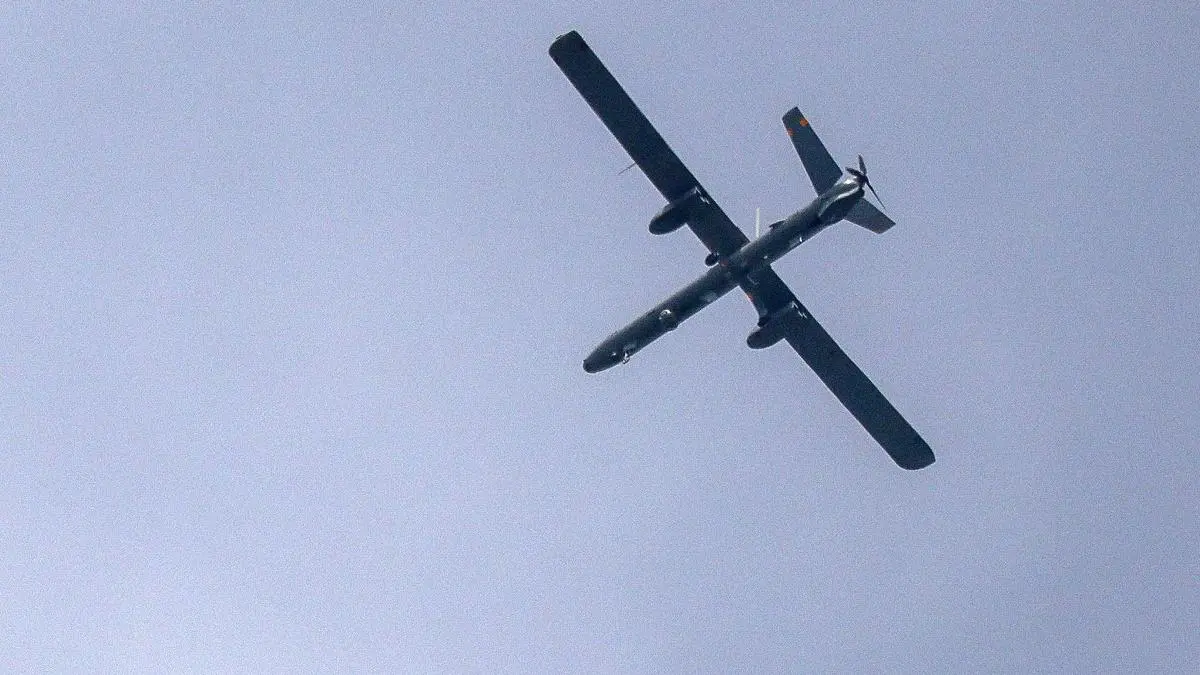
The fragile April ceasefire in the Middle East effectively vaporized early Monday morning as Iranian suicide drones swarmed U.S. Navy assets in the Sea of Oman. This aggressive kinetic response followed a high-stakes Sunday operation where the USS Spruance intercepted, disabled, and seized the Iranian-flagged cargo vessel Touska. While Washington frames the seizure as a necessary enforcement of a standing naval blockade, Tehran has branded the move "armed piracy," signaling a total collapse of the Pakistan-mediated peace efforts.
The escalation is not a random skirmish. It is the predictable outcome of a "maximum pressure" blockade meeting an Iranian military doctrine that has been decapitated but not disarmed. Following the late February air war that claimed the lives of Supreme Leader Ali Khamenei and IRGC Commander Mohammad Pakpour, the Iranian military has shifted toward decentralized, retaliatory strikes. These drone launches serve a singular purpose: to prove that despite the loss of their top leadership, the IRGC can still blindside the world’s most advanced navy in a geostrategic choke point.
The Seizure of the Touska
The catalyst for the current firestorm began when the Touska, an Iranian container ship reportedly inbound from China, entered the Gulf of Oman. According to U.S. Central Command (CENTCOM), the vessel ignored repeated maritime warnings to change course. When the Touska maintained its heading toward Bandar Abbas, the USS Spruance engaged.
U.S. forces didn't just shadow the ship; they fired several rounds into its engine room to disable its propulsion. This was a deliberate act of maritime surgery intended to stop the vessel without sinking it. Marines then boarded the ship and took "full custody," a move President Donald Trump quickly touted on social media as a victory for the blockade.
Tehran’s version of events is predictably different. The Khatam al-Anbiya Central Headquarters claims the U.S. disabled the ship’s navigation systems before the physical attack, effectively "luring" it into a vulnerable state. By the time the IRGC naval units arrived to provide a "rapid response," the Touska was already under American tow.
The Drone Swarm as Doctrine
Iran’s response—launching unmanned aerial vehicles (UAVs) at U.S. warships—is a classic application of asymmetric warfare. Iran cannot win a broadside-to-broadside naval battle against a carrier strike group. Instead, they use low-cost, expendable drones to saturate Aegis combat systems.
The drones used in these Monday morning strikes are likely variants of the Shahed family, designed to loiter and strike with high precision. While CENTCOM has yet to confirm the extent of the damage to the fleet, the psychological objective has already been achieved. Iran has demonstrated that no ceasefire, especially one mediated under the shadow of a blockade, will be respected if their commercial lifelines are severed.
The "why" behind this specific timing is rooted in the looming expiration of the Islamabad ceasefire. The two-week truce, brokered by Pakistan on April 7, was supposed to lead to a second round of negotiations. By attacking the Touska, the U.S. signaled that the blockade remains non-negotiable. By launching drones, Iran signaled that the cost of that blockade will be measured in American hulls and sailors' lives.
A Ghost Command and the New IRGC
One of the most overlooked factors in this crisis is the state of the Iranian command structure. Since the February strikes killed the Supreme Leader, the IRGC has been operating as a "ghost command." Units in the Sea of Oman are acting on broad, standing orders to retaliate against "any violation of sovereignty" rather than waiting for direct authorization from a central hub that may no longer exist in a functional capacity.
This makes the situation infinitely more dangerous. When a military is decentralized, there is no single "off switch" for a conflict. A local commander in Bandar Abbas can authorize a drone strike without checking with a diplomat in Islamabad.
The U.S. gamble is that by seizing ships like the Touska, they can starve the Iranian economy into a total surrender. However, history suggests that maritime blockades often lead to the "cornered rat" syndrome. If Iran cannot export oil or import goods through the Strait of Hormuz, they have little incentive to keep the waterway open for anyone else.
The Economic Fallout
The Sea of Oman is the porch to the Strait of Hormuz, through which 20% of the world’s oil flows. We are already seeing the immediate results of this weekend's violence:
- Shipping Insurance: Risk premiums for hulls transiting the region have jumped 300% in the last 24 hours.
- Vessel Reversals: Satellite data shows at least 35 tankers have performed U-turns since the drone launches were reported.
- Fuel Prices: Global energy markets, already reeling from the February air war, are bracing for another spike as the "Hormuz Toll" becomes a reality.
Iran has already experimented with charging "tolls" of up to $1 million per ship for safe passage. If the U.S. continues to seize Iranian vessels, expect those tolls to be replaced by sea mines and "swarm" attacks on any tanker not flying a friendly flag.
The Islamabad Deadlock
Negotiations in Pakistan were already on life support before the Spruance opened fire. Iran had already stated it would not attend the second round of talks, citing "excessive demands" from the Trump administration. The U.S. demand is simple: total dismantling of the Iranian nuclear program and a cessation of all regional proxy activity. Iran's counter-offer is a return to the pre-February status quo.
The two positions are irreconcilable. The U.S. believes it has "won" the war by taking out the leadership; Iran believes it is in a fight for its very existence and has nothing left to lose.
The seizure of the Touska wasn't just an enforcement action. It was a test of the ceasefire's boundaries. Iran’s drone response provided the answer: there are no boundaries left. We are no longer in a period of "controlled tension." We are in a rolling maritime war where the rules of engagement are being rewritten by local commanders and suicide drones.
The U.S. Navy now faces a grueling choice. They can escalate by striking the drone launch sites on the Iranian coast—a move that would effectively end the ceasefire—or they can continue to play "catch" with Iranian swarms while holding the Touska in custody. Neither option leads to a stabilized global economy or a peaceful Hormuz.
The drones are still in the air. The Touska is still in American hands. The ceasefire is a memory.