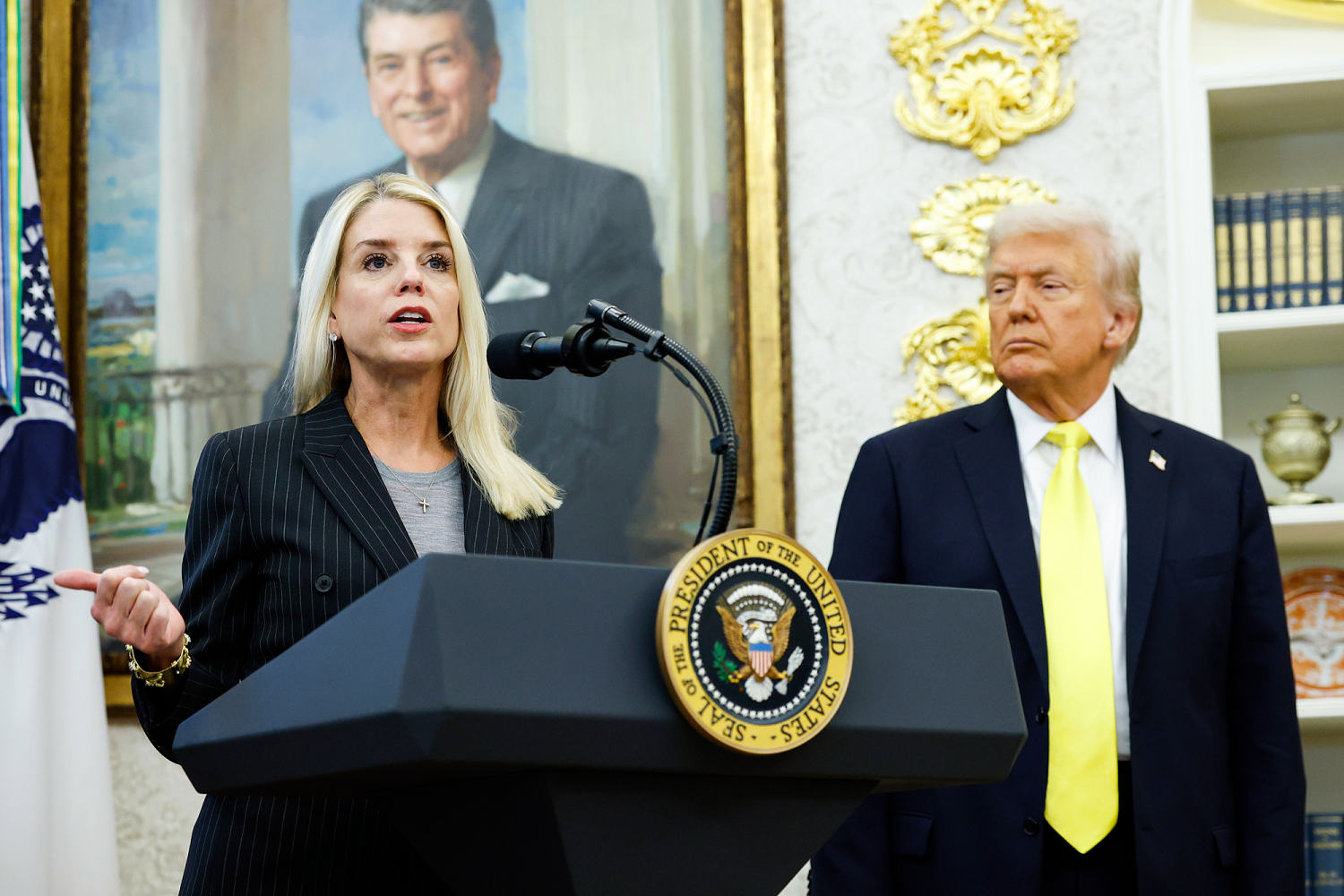
The relative calm of the second Trump administration has evaporated, replaced by a ruthless "recalibration" that treats Cabinet-level job security as a relic of the past. Within the last month, the ousting of Homeland Security Secretary Kristi Noem and Attorney General Pam Bondi has sent a tectonic shudder through the West Wing. This isn't just a routine personnel shuffle; it is a calculated survival mechanism triggered by plummeting approval ratings and the looming shadow of the 2026 midterm elections.
By removing high-profile figures who failed to meet specific, often aggressive, benchmarks, the President is signaling that loyalty is no longer enough to guarantee a seat at the table. Results, as defined by the Oval Office, are the only currency that matters now.
The Bondi Execution and the Epstein Files
The removal of Pam Bondi on April 2, 2026, was not the result of a single policy disagreement. It was the culmination of months of internal friction. Sources close to the administration indicate that the President grew tired of what he perceived as a lack of "offensive" maneuvers. Specifically, Bondi’s handling of the Jeffrey Epstein files became a flashpoint. While the public expected a controlled release, the internal demand was for a weaponized rollout that could be used against political adversaries. When Bondi hesitated to bypass certain legal protocols, her fate was sealed.
Todd Blanche has stepped in as Acting Attorney General, but he is widely viewed as a placeholder. The real eyes are on Lee Zeldin, the current EPA Administrator, who has earned a reputation for bureaucratic efficiency and a willingness to dismantle regulations with surgical precision. Moving Zeldin to Justice would be a move toward a more combative legal strategy, aimed directly at the heart of the "Deep State" rhetoric that fueled the 2024 campaign.
Why Noem Was Only the Beginning
Kristi Noem’s departure in March was framed as a transition to a "Special Envoy" role, but the reality was far grittier. Her tenure at the Department of Homeland Security was marred by the fallout from the shooting deaths of two protesters in Minneapolis by federal agents. The incident sparked a firestorm of litigation and congressional subpoenas that Noem struggled to contain.
The President’s decision to replace her with Senator Markwayne Mullin was a move toward a "hard-man" image for the DHS. Mullin, a former MMA fighter and a staunch loyalist, was brought in specifically to project strength during a period of civil unrest. However, the Noem exit revealed a deeper pattern: when a Cabinet member becomes a political liability rather than a shield, they are discarded.
The Gender Gap in the Chopping Block
A disturbing trend has emerged that even administration allies are struggling to ignore. So far, the only major Cabinet-level firings have targeted women. While male officials like Defense Secretary Pete Hegseth and Health Secretary Robert F. Kennedy Jr. have weathered their own storms—ranging from procurement scandals to controversial public health directives—they remain in their posts.
This discrepancy has fueled accusations of a "misogynistic" firing policy. Critics argue that female officials are being held to a standard of perfection not required of their male counterparts. Whether this is a deliberate strategy or a statistical anomaly, it has created a toxic atmosphere of "whack-a-mole" where female leaders feel they are operating on much thinner ice.
The Next Names on the List
If the current momentum continues, the purge will not stop at Justice and Homeland Security. High-level whispers suggest the following officials are currently under the microscope:
| Official | Position | Primary Risk Factor |
|---|---|---|
| Tulsi Gabbard | Director of National Intelligence | Perceived "softness" in congressional testimony regarding Iran. |
| Kash Patel | FBI Director | Internal friction with career intelligence officers and slow-walking specific investigations. |
| Lori Chavez-DeRemer | Labor Secretary | Failure to suppress union-led disruptions in the manufacturing sector. |
| Howard Lutnick | Commerce Secretary | Tensions over the implementation of aggressive tariff structures. |
Gabbard, in particular, is reportedly in the most precarious position. Her skeptical stance on certain military engagements has put her at odds with the more hawkish elements of the National Security Council. In this administration, being an outlier is often the first step toward the exit.
The Midterm Math
The urgency behind these firings is rooted in cold, hard electoral math. With the 2026 midterms approaching, the Republican majority in the Senate is thin. If Democrats retake the chamber, the window for confirming "loyalist" candidates slams shut. The President is currently rushing to install a "War Cabinet"—a group of officials who are not just ideologically aligned, but who are willing to execute orders with zero hesitation before the legislative landscape shifts.
Every firing is a gamble. Each vacancy requires a Senate confirmation process that grows more contentious by the day. By ousting Bondi and Noem now, the administration is betting that they can push through replacements like Markwayne Mullin while they still hold the gavel. If they wait too long, they risk leaving these critical agencies in the hands of "acting" officials who lack the permanent authority to enact sweeping changes.
The End of Stability
For the first year of the second term, the administration enjoyed a veneer of stability that the first term lacked. That era is over. The "recalibration" is a return to the chaotic, high-stakes management style that defined the 2017-2020 period, but with a more focused objective. The goal isn't just to govern; it's to dominate the narrative and clear the path for a legacy-defining second half of the term.
Those remaining in the Cabinet are no longer looking at their calendars in terms of years, but in weeks. The message from the Oval Office is clear: if you aren't advancing the front line, you are in the way.


