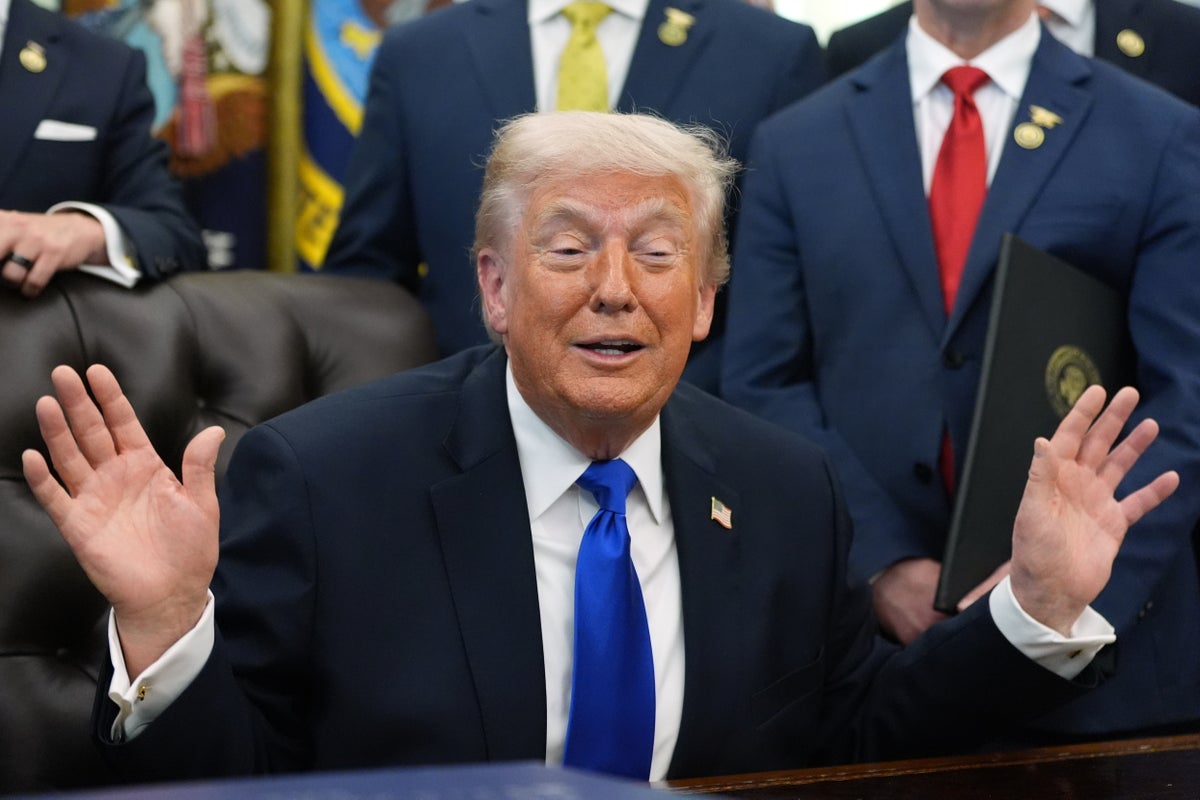
Donald Trump is currently weighing a "short and powerful" wave of military strikes designed to shatter the month-long stalemate in negotiations with Tehran. This "final blow" strategy, presented by CENTCOM Commander Admiral Brad Cooper in the Situation Room on Thursday, aims to force Iran’s new leadership into a definitive non-nuclear agreement by targeting the nation’s remaining infrastructure and military assets. While the administration publicly claims the war has been "terminated" to bypass congressional deadlines, the reality on the ground is a high-stakes standoff defined by a crippling naval blockade and a closed Strait of Hormuz.
The White House sees these potential strikes as the ultimate closer for a deal that has remained elusive despite the February 28 invasion and the subsequent killing of Supreme Leader Ali Khamenei. You might also find this related coverage insightful: The Brutal Truth About the United Nations Debt Crisis.
The Mirage of a Terminated War
The administration’s current legal posture is as aggressive as its military one. By declaring the hostilities started in February as "terminated" due to the April 8 ceasefire, the White House is effectively resetting the clock on the War Powers Resolution. This maneuver allows the President to avoid seeking formal congressional approval for a conflict that has technically surpassed its 60-day limit.
Defense Secretary Pete Hegseth argued before the Senate that the ceasefire "effectively paused" the war, yet the U.S. Navy continues to enforce a total blockade of Iranian ports. Iran has responded by maintaining its own chokehold on the Strait of Hormuz, through which 20% of global oil and gas once flowed. It is a war by every definition except the legal one used by the State Department. As highlighted in recent reports by NPR, the results are notable.
The "final blow" options now on the table suggest that the "pause" is nothing more than a tactical interval. Admiral Cooper’s briefing included the potential use of the "Dark Eagle" hypersonic missile system, a weapon capable of striking targets from 2,000 miles away with such speed that interception is nearly impossible. The goal is simple: convince Tehran that the cost of holding out is the total erasure of their remaining state capacity.
The Strait of Hormuz Gambit
Central to the deadlock is the Strait of Hormuz. Shipping traffic has plummeted to a mere 5% of its pre-conflict levels, sending global energy prices to four-year highs. Iran has proposed a deal to reopen the waterway, but there is a catch. They demand an end to the U.S. naval blockade first, with nuclear negotiations postponed to a later date.
Trump has already signaled his lack of interest in this sequence. To the President, the blockade is his "primary leverage," and he is unwilling to trade it for anything less than a full, verifiable surrender of Iran's nuclear ambitions.
Military Options for Reopening the Strait
- The Ground Component: One option presented to the President involves a ground operation to seize key coastal points along the Strait, physically preventing Iranian forces from harassing commercial vessels.
- Special Operations: Plans exist for elite units to secure Iran’s stockpile of highly enriched uranium, much of which is currently entombed at sites near Isfahan following earlier bombings.
- The Infrastructure Wave: A massive aerial campaign targeting Iran’s power grid and remaining command centers to break the regime's will to resist the blockade.
The Nuclear Reality Check
The core of the conflict remains the "zero enrichment" demand. Vice President JD Vance has stated that the U.S. requires an affirmative commitment that Iran will never again seek the tools for a nuclear weapon. This includes not just the material, but the technical knowledge and missile technology.
However, the IAEA warns that the situation is more volatile than it appears. Director General Rafael Mariano Grossi recently noted that while the enriched uranium is buried under rubble from February’s strikes, it remains "accessible if there's a wish to go there." Satellite imagery suggests the material has not been moved, but without boots on the ground or a signed agreement for inspections, the U.S. is essentially flying blind.
The President’s son-in-law, Jared Kushner, and Special Envoy Steve Witkoff are reportedly maintaining back-channel communications with IAEA officials, but an agreement without physical verification is being viewed by the West as a dangerous illusion.
The Succession Struggle in Tehran
The death of Ali Khamenei has not led to the immediate collapse the West hoped for. Instead, the elevation of his son, Mojtaba Khamenei, has hardened the regime’s rhetoric. Mojtaba’s recent social media posts claim that U.S. bases in the region are "flimsy" and incapable of defending themselves.
This defiance is partly fueled by the economic benefits Russia is reaping from the prolonged closure of the Strait. With Iranian and Middle Eastern oil restricted, Russian energy has become the global fallback, creating a geopolitical incentive for Moscow to encourage Iranian recalcitrance.
The Brink of the Final Blow
The U.S. military is already moving the pieces into place. B-1B Lancer bombers, capable of carrying massive payloads of hypersonic munitions, have increased their presence in the region. The rhetoric from the Oval Office has shifted from negotiation to ultimatum.
Trump’s recent Truth Social posts, featuring stylized imagery of himself in a combat zone with the caption "No more Mr. Nice Guy," are not just for his domestic base. They are a psychological operations tactic intended for the leadership in Tehran.
The strategy is clear: the blockade stays until the nuclear program goes. If the blockade doesn't work, the "short and powerful" wave of strikes will begin. The President is betting that the Iranian regime would rather survive without a nuclear program than vanish with one.
He is currently waiting for Tehran to "get smart," but the window for a diplomatic exit is closing as fast as a hypersonic missile. Regardless of the legal definitions provided to Congress, the war is far from over. It is simply entering its most violent phase.
The command centers are ready, the targets are locked, and the order for the final blow is now a single signature away.