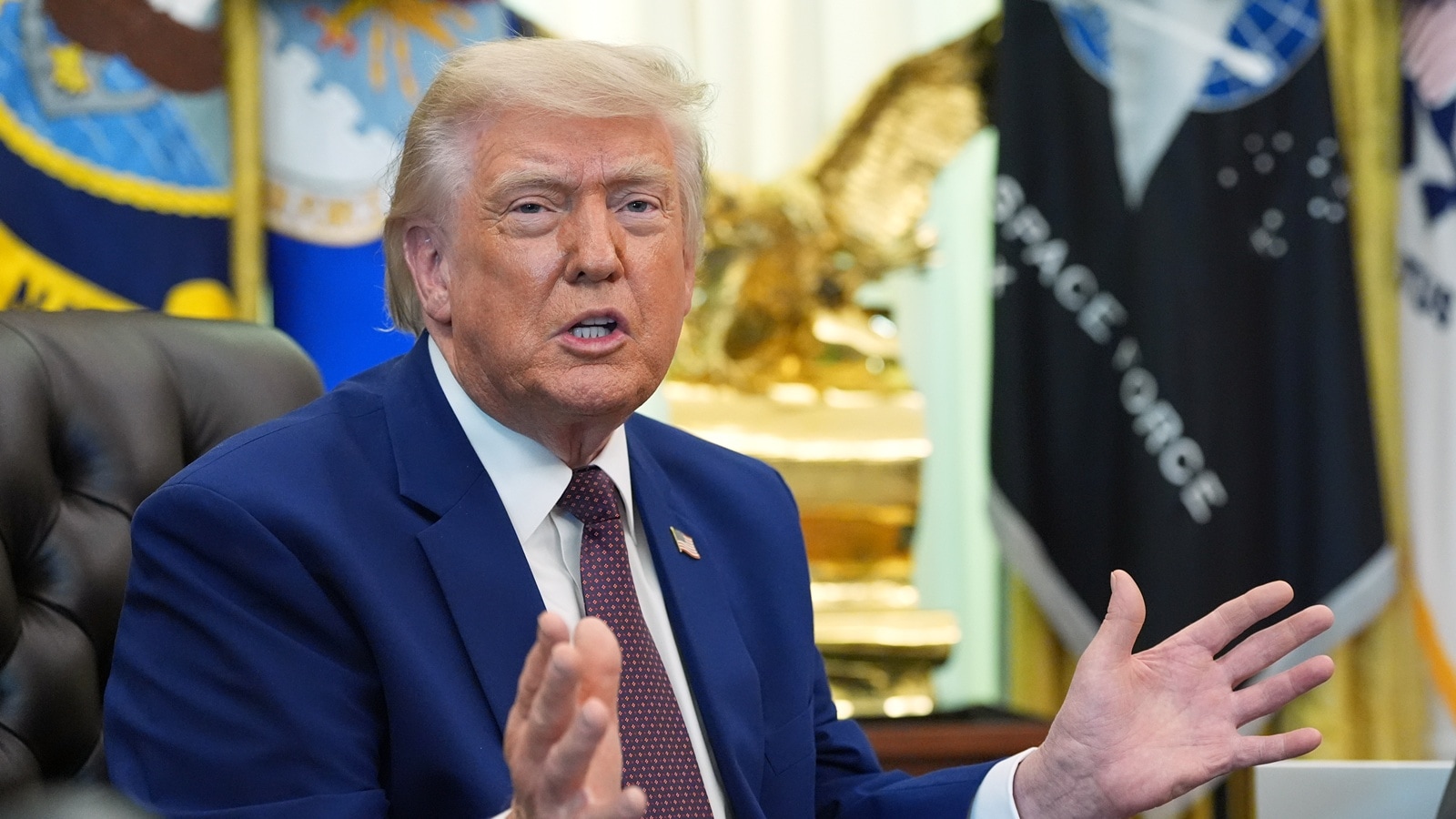
Donald Trump recently redefined the vocabulary of global diplomacy from the Oval Office, telling reporters that in the Middle East, a ceasefire simply means "shooting in a more moderate manner." This candid admission exposes the central reality of current American foreign policy. The highly publicized truce between Washington and Tehran is not a peace framework, but a managed conflict designed to prevent total war while allowing both sides to trade tactical blows. By treating active skirmishes as a successful ceasefire, the administration is attempting to lower the bar for diplomatic success, buying time to extract sweeping nuclear concessions from a deeply fractured Iranian regime.
The strategy is high-stakes improvisation masquerading as grand strategy. While the White House circulates draft agreements and proclaims a breakthrough is near, the reality on the ground contradicts the optimism. Over the past forty-eight hours, American forces launched heavy airstrikes against Iranian assets. Tehran responded with maritime maneuvers in the Strait of Hormuz. In traditional diplomacy, this sequence of events signifies a collapsed treaty. In the current geopolitical environment, it is considered normal business.
Understanding this dynamic requires looking past the rhetorical eccentricities of the commander-in-chief. The administration is pursuing an aggressive dual-track policy. It couples devastating military pressure with an explicit demand for total Iranian capitulation on its nuclear program. The objective is no longer the containment or managed postponement of Iran's nuclear ambitions. The White House wants the complete eradication of Iran's enriched uranium stockpile.
The Arithmetic of Moderate Shooting
The current conflict stems from the escalation of 2025, which culminated in the Twelve-Day War. That brief but intense kinetic exchange featured direct American strikes on Iranian nuclear facilities and a retaliatory Iranian missile barrage against Al Udeid Air Base in Qatar. The subsequent truce managed to halt large-scale conventional warfare, but it did not stop the structural friction between the two nations.
Washington has maintained a strict naval blockade on Iranian ports, choking off the country's vital oil and petrochemical exports. The economic pressure has pushed the Iranian rial into freefall and triggered rolling blackouts across major Iranian cities. Tehran has responded by utilizing the only major geopolitical lever it has left: its geographic dominance over the Strait of Hormuz.
Iran recently established the Persian Gulf Strait Authority, a nascent regulatory body designed to impose control over the waterway. The Islamic Revolutionary Guard Corps (IRGC) navy has begun demanding that commercial vessels and oil tankers seek explicit permission before transiting the strait. Ships attempting to pass with their transponders turned off have been intercepted and forced to turn back.
This maritime friction illustrates why the administration is redefining what a ceasefire looks like. If the White House acknowledges that these naval standoffs and subsequent U.S. airstrikes constitute a breach of the truce, the entire diplomatic track collapses. By framing these actions as "moderate shooting," the administration preserves the political space required to keep negotiations alive.
The Secret Memorandum and the Redlines
Behind the public bluster, U.S. and Iranian negotiators have drafted a tentative memorandum of understanding mediated by Qatar and Pakistan. The document reveals the staggering scale of American demands. Washington is offering a temporary sixty-day extension of the fragile ceasefire and a gradual lifting of the maritime blockade. In return, the United States expects concessions that would effectively dismantle Iran's strategic sovereignty.
- Total Nuclear Disarmament: Iran must agree to allow the United States, in coordination with the International Atomic Energy Agency (IAEA), to physically unearth and destroy its highly enriched uranium stockpile. This material is buried deep beneath three nuclear sites that were heavily damaged during last year's airstrikes.
- Absolute Freedom of Navigation: The draft agreement explicitly bars Iran from imposing tolls or tariffs on vessels passing through the Strait of Hormuz. It also requires the Iranian military to clear all sea mines from the waterway within thirty days.
- Regional Disengagement: The United States is demanding a halt to Iranian support for regional proxy networks, a condition that has become complicated due to the parallel conflict between Israel and Hezbollah in Lebanon.
The scale of these demands explains the intense friction within the administration. Vice President JD Vance recently acknowledged that while a general framework exists, the specific language regarding the enriched uranium stockpile remains a critical sticking point.
The strategy hinges on an economic calculation. The administration believes that Iran's internal economic distress is so severe that the clerical establishment will eventually accept these humiliating terms to avoid state collapse. However, this calculation overlooks the deep ideological commitments of the IRGC and the hardline factions in Tehran.
The Omani Threat and Regional Realities
The administration's aggressive approach is also fracturing traditional diplomatic relationships in the Persian Gulf. Oman has long served as the primary backchannel mediator between Washington and Tehran. Yet, the sultanate was recently caught in the crossfire of American coercive diplomacy.
When intelligence indicated that Iran was attempting to negotiate a separate bilateral agreement with Muscat to coordinate "navigational services" and fees in the Strait of Hormuz, the response from Washington was immediate and severe. The White House publicly warned Oman that any move to share control of the strategic waterway with Iran would result in direct American military action against those assets.
This aggressive stance shocked senior diplomats in Muscat. Oman has spent decades cultivating a reputation for neutrality and conflict resolution. The threat of American kinetic action against a loyal regional ally demonstrates the administration's willingness to abandon traditional diplomatic niceties to enforce its blockade.
Meanwhile, the internal dynamics within Iran are becoming increasingly volatile. The supreme leader, Mojtaba Khamenei, is facing growing dissent from hardline elements within the parliament and the IRGC who view any negotiation with Washington as a betrayal. While Khamenei has publicly urged officials to maintain unity and focus on alleviating domestic economic suffering, the IRGC navy continues to assert its authority in the Gulf, independent of the diplomatic track.
The Illusion of Control
The current strategy rests on the assumption that the United States can precisely calibrate its military pressure. The administration believes it can launch periodic airstrikes to punish Iranian provocations without triggering a broader regional conflagration. This is a dangerous assumption.
A managed conflict is inherently unstable. When oil tankers are being intercepted in the Strait of Hormuz and precision munitions are being dropped on mainland targets, the margin for error is non-existent. A single miscalculation, an errant missile, or an overauthorized local commander could transform "moderate shooting" into a full-scale regional war in a matter of hours.
Furthermore, the diplomatic clock is ticking. European allies, led by France, Britain, and Germany, have warned that they are prepared to trigger the snapback mechanism to permanently reinstate United Nations sanctions before the original nuclear framework provisions completely expire. This moves the timeline forward, forcing both Washington and Tehran into a dangerous game of brinkmanship.
The administration’s redefinition of a ceasefire is an exercise in managing public perception. It allows the White House to project an image of diplomatic progress and military dominance ahead of domestic political cycles. But a truce that requires regular bombardment to sustain itself is not a peace strategy. It is an acknowledgment that the United States is locked in an escalating war of attrition, with no clear exit strategy short of the total capitulation or destruction of its adversary.