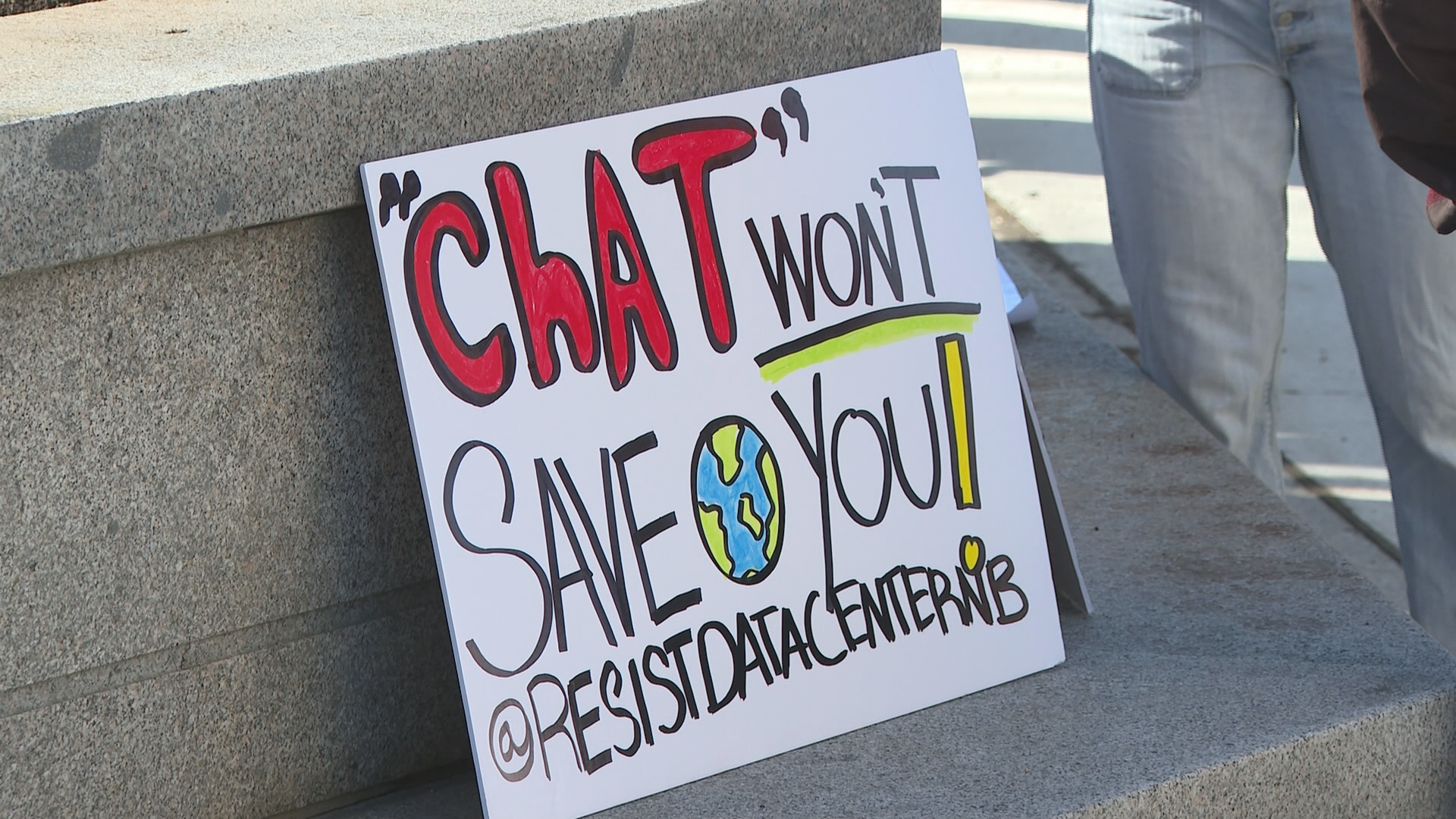
The outrage machine has found its latest target in New Brunswick.
A proposed AI data center slated for construction near the boundary of the Stonehammer UNESCO Global Geopark has local activists, environmental groups, and heritage purists up in arms. The narrative is as predictable as it is tired: a greedy, power-hungry tech giant is invading pristine, ancient geological sanctuaries, threatening to ruin our collective inheritance for the sake of processing microtransactions and training large language models.
It is a beautiful story. It is also entirely wrong.
The loudest voices protesting this project are operating on a fundamental misunderstanding of what a UNESCO Geopark actually is, how modern data centers operate, and what real environmental stewardship looks like in the 21st century. They are fighting a 1970s battle against a 2026 reality.
Preventing modern industrial infrastructure from touching designated heritage zones does not preserve them. It dooms them to economic stagnation and eventual decay. The proposed Stonehammer data center is not a threat to the geopark. It is the only viable lifeline the region has to fund, study, and actually protect it.
The Geopark Myth: It is Not a Wilderness Reserve
To understand why the outrage is misplaced, we must dismantle the central premise of the protest: the idea that a UNESCO Global Geopark is a fragile, untouched ecological sanctuary.
It is not.
Organizations like the International Union for Conservation of Nature (IUCN) make sharp distinctions between strict nature reserves and geoparks. A UNESCO Geopark is not a national park. It is not a wilderness reserve where human footprint is legally barred.
By UNESCO’s own definition, a Global Geopark is a geographical area where heritage sites and landscapes are managed with a holistic concept of protection, education, and sustainable development. The keyword is development. Geoparks are explicitly designed to co-exist with active populations, local industries, and economic engines. They are working landscapes, not glass museum cases.
Protesters talk about Stonehammer—a region spanning 2,500 square kilometers across southern New Brunswick—as if a single data center will bulldoze a billion years of history. In reality, the geopark territory already contains highways, oil refineries, active quarries, pulp mills, and bustling urban centers like Saint John.
Adding an AI data center to this mix does not violate the spirit of a geopark. It aligns perfectly with it.
The Myth of the Monolithic, Polluting Data Center
Critics paint data centers as smoke-belching, water-guzzling monsters. They visualize coal-fired turbines screaming to keep servers cool while local rivers are drained to negligible trickles.
This view is decades out of date.
Over the last decade, I have watched enterprise infrastructure evolve from inefficient, localized server closets to hyper-scale facilities. The efficiency gains are staggering. Today’s top-tier developers design facilities with a Power Usage Effectiveness (PUE) ratio approaching 1.1 or lower. For the uninitiated: a PUE of 1.0 is absolute perfection, meaning every watt of utility power goes directly to the computing equipment.
Furthermore, modern data centers are increasingly turning to closed-loop liquid cooling systems. Unlike the evaporative wet-cooling towers of the past that consumed millions of gallons of municipal water daily, closed-loop systems recycle their coolant continuously. The net water consumption of these facilities can be brought down to virtually zero.
But what about the power grid?
New Brunswick's grid is already heavily anchored by non-emitting sources, including the Point Lepreau Nuclear Generating Station and a growing portfolio of wind energy. Data center developers are not stupid. They do not build multi-million dollar facilities to run them on volatile, expensive fossil fuels. They seek out regions with surplus clean energy, and when that energy is not readily available, they sign Power Purchase Agreements (PPAs) that directly fund the construction of new utility-scale solar and wind projects.
Building this facility in New Brunswick does not lock the province into a dirty energy future. It forces the local utility, NB Power, to accelerate its grid modernization to meet the demands of a high-paying, credit-worthy anchor tenant.
Why Isolationist Conservation is a Dead End
Let's look at the financial reality of heritage preservation.
Who pays to keep the trails open? Who funds the geologists who catalog the rock formations? Who pays for the educational signage, the field trips for local schools, and the upkeep of visitor centers?
It is not the federal government, which has been systematically squeezing conservation budgets for years. It is certainly not the local municipality, which is already struggling with a eroding tax base and rising infrastructure costs.
Without economic vitality, heritage sites die. They become overgrown, unmonitored, and vulnerable to vandalism and decay.
An AI data center represents a massive, stable source of municipal property tax revenue. We are talking about millions of dollars poured directly into local coffers year after year. A fraction of that tax revenue could fund Stonehammer’s operations for decades, securing its UNESCO status far more effectively than any petition ever could.
The Hypocrisy of the "Not In My Backyard" Tech Consumer
There is a glaring hypocrisy at the heart of this protest.
The very people organizing opposition to this data center are doing so using smartphones, cloud storage, and social media networks—all of which are powered by the exact same infrastructure they are protesting.
They want the benefits of the algorithmic age. They want instant search results, seamless navigation apps, and generative tools. But they want the physical reality of those tools—the concrete, the fiber optic cables, and the cooling fans—to exist somewhere else.
Preferably in a low-income community in another province, state, or country where environmental regulations are laxer and local voices are easily ignored.
This is environmental colonialism disguised as local activism. If we believe in the utility of digital infrastructure, we must be willing to host it. Building it in a highly regulated jurisdiction like New Brunswick, under the watchful eye of Canadian environmental laws and UNESCO oversight, is the most responsible way to scale this technology.
The Trade-offs We Must Admit
A truly honest argument requires admitting the downsides.
Yes, data centers create a lot of upfront construction noise. Yes, they require land clearing. Yes, they create relatively few permanent, high-paying jobs relative to their physical footprint once they are operational. If you are expecting a data center to single-handedly solve local unemployment, you will be disappointed.
But comparing a data center's job-to-footprint ratio to a traditional manufacturing plant is a flawed analysis. The value of a data center to a community is not in its payroll; it is in its capital expenditure, its tax contribution, and its role as an anchor tenant for green energy infrastructure.
The Real Danger: Doing Nothing
The real threat to southern New Brunswick is not industrial modernization. It is economic irrelevance.
For decades, the Atlantic provinces have suffered from youth migration, brain drain, and a reliance on seasonal, low-wage industries. The digital economy has largely passed the region by, concentrating wealth in Toronto, Montreal, and Vancouver.
An AI data center is a flag planted in the ground. It signals to the global technology sector that New Brunswick is open for digital infrastructure. It attracts fiber optic routing, talent, and secondary tech investments.
If local activists succeed in blocking this project, the developer will not stop building. They will simply take their hundreds of millions of dollars of investment, their green energy commitments, and their tax revenues to another jurisdiction that understands the value of the 21st-century economy.
Stonehammer will remain quiet, pristine, and entirely broke.
Stop treating industrial development and heritage conservation as a zero-sum game. They are partners. If you want to save the geopark, build the data center.