Most front-yard Halloween displays look like an inflatable clearance aisle exploded on a lawn. You've seen them. A six-foot cartoon ghost leaning awkwardly against a maple tree, tethered down with plastic stakes that snap the second an October wind gust hits Michigan.
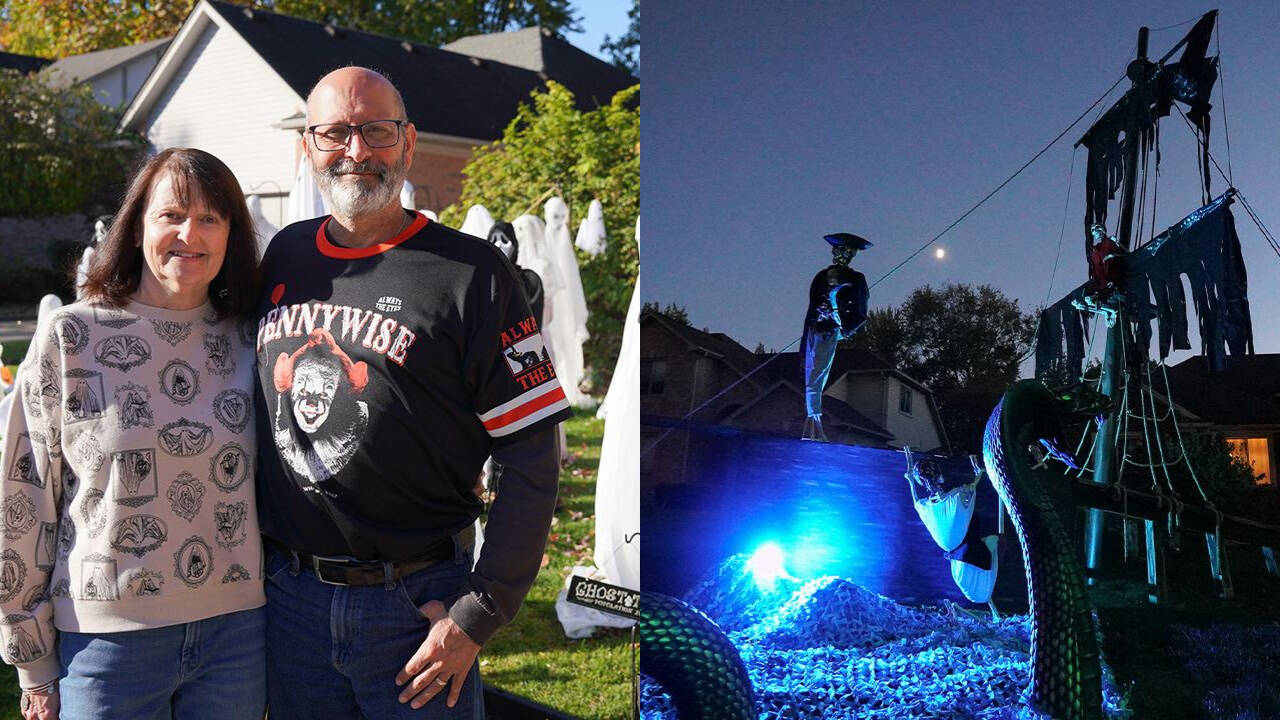
Then you walk past a house where an entire pirate ship rises out of the grass, complete with rigging, weathered timber textures, and live actors working the deck on Halloween night. That's the difference between buying a holiday and actually creating an experience.
Across Michigan—from suburban cul-de-sacs in Oakland County to historic neighborhoods in Grand Rapids and lakeside towns along Lake Huron—families have increasingly turned their front yards into theatrical sets. Building a pirate ship Halloween display with live actors on October 31 isn't just about showing off carpentry skills. It's about turning a two-hour trick-or-treat window into a neighborhood landmark that kids remember well into adulthood.
What Makes a Pirate Ship Yard Build Work So Well
A pirate ship solves the biggest visual problem in yard decorating. Most props sit flat on the grass, which means crowds block the view the moment ten trick-or-treaters line up on the sidewalk.
Height changes everything. When a hull rises four or five feet off the ground and a mast climbs another ten or twelve feet above that, the entire street can see the silhouette from two blocks away. Even better, a raised deck gives live actors a natural stage. Instead of standing awkwardly beside the porch light handing out fun-size candy bars, actors get to pace the rails, shout warnings to approaching kids, and lower candy down via pulley systems or PVC chutes.
There's also a practical reason pirate themes dominate ambitious DIY builds in the Midwest. Late October in Michigan is unpredictable. You might get 65 degrees and crisp sunshine, or you might get freezing rain and 30-mph gusts blowing off the lakes. A pirate ship is supposed to look battered. Peeling paint, frayed rope, uneven planks, and tattered canvas sails only look more authentic after a week of autumn drizzle.
The Core Anatomy of a Yard-Scale Ship
You don't need naval engineering skills to pull off the illusion, because theatrical set design relies on forced perspective rather than literal replication. Anyone who has built haunted attraction sets knows that three visual elements sell the entire concept instantly:
- The Bow and Hull Framing Using standard 2x4 lumber and exterior-grade plywood or rigid foam insulation boards, builders create a pointed prow that juts toward the sidewalk. Painting foam boards with exterior latex and dry-brushing gray and dark brown over a base coat mimics sun-bleached oak without weighing five hundred pounds.
- Masts and Rigging Schedule 40 PVC pipe painted dark brown makes an inexpensive, lightweight mast. Running thick sisal or jute rope from the top down to the hull edges creates the classic web of ratlines that catches uplighting after dark.
- Tattered Sails Drop cloths from a hardware store, tea-stained or misted with diluted black paint and slashed along the bottom edges, catch the October breeze and give the whole structure movement.
Why Live Actors Transform a Static Display on October 31
Static props hold a visitor's attention for roughly fifteen seconds. Add human performers in full costume, and families will linger on the sidewalk for ten minutes watching the interaction unfold.
Live actors bring unpredictability that no animatronic motor can match. A skeleton on a timer repeats the exact same three-second jaw movement every half minute. A neighbor dressed as a ship's quartermaster can spot a hesitant four-year-old dressed as a princess, drop the scary voice instantly, and invite her aboard to claim "treasure" from a wooden chest. That kind of real-time calibration keeps the display fun for toddlers while still letting performers turn up the theatrical tension for middle schoolers.
Structuring Roles for Halloween Night
When families recruit friends, neighbors, or theater students from a local high school to staff the ship on October 31, clear role division prevents chaos once the sidewalk gets crowded.
- The Captain or Quartermaster stays elevated on the main deck. This person anchors the banter, directs attention toward hidden props, and controls the pace of the crowd.
- The Deckhands work the perimeter near the sidewalk or driveway. They handle crowd flow, keep kids from climbing onto fragile foam railings, and distribute candy so the elevated actors never have to break character to refill buckets.
- The Sound and Fog Operator manages the atmosphere from behind the hull. Timing a burst of low-lying fog with a recorded cannon blast makes the ship look like it just emerged from sea mist.
Honestly, the best performers aren't the ones screaming at passersby. Anyone can yell "boo" from behind a bush. The actors who steal the show commit to dry, gravelly pirate dialogue, argue with each other about missing doubloons, and treat every trick-or-treater like a rival crew trying to board their vessel.
Planning Timeline and Weatherproofing for Michigan Octobers
If you start cutting lumber on October 25, you're going to hate your life by October 30. Experienced yard builders treat a major Halloween installation like a community theater production, working backward from Halloween night so the final week is reserved for lighting tests and costume fittings rather than emergency hardware store runs.
August and September Structural Prep
Late summer is when the framing happens in the garage or driveway. Cutting plywood ribs, assembling modular wall sections with carriage bolts instead of permanent nails, and pre-drilling holes for stakes saves massive headaches later. Modular panels mean you can store the ship flat against a garage wall in November instead of renting a storage unit.
Early October Yard Assembly and Anchoring
Most ambitious displays go up during the first or second weekend of October. In Michigan, ground anchoring is non-negotiable. Driven rebar stakes—at least 24 to 36 inches deep—clamped directly to the internal 2x4 frame keep a tall hull from turning into a giant kite during autumn storms. Guy-wires secured to heavy spiral ground anchors stabilize the PVC masts without cluttering the visual sightlines.
Lighting and Sound That Carry After Sunset
Trick-or-treating in Michigan usually peaks between 6:00 PM and 8:00 PM, right as dusk drops into full dark. Overhead porch lights ruin theatrical sets by washing out shadows and exposing zip ties and brackets.
Instead, smart builders kill the porch light entirely and use low-voltage LED floodlights tucked behind bushes or inside the hull. Amber and deep teal gels mounted over basic outdoor spotlights make cheap plywood look like carved mahogany and cast dramatic shadows across the sails. For audio, hiding a weather-resistant Bluetooth speaker inside a wooden barrel on deck lets creaking timber sounds and ocean waves play at a conversational volume—loud enough to set the mood on the front walk without triggering noise complaints three streets over.
Safety, Permits, and Neighbor Relations
Turning a residential front yard into a live-action attraction comes with real responsibilities. Once word spreads on local Facebook groups or Nextdoor, foot traffic can jump from fifty kids to five hundred in a single evening.
Keep every structural element completely clear of the public sidewalk and utility easements. Municipalities across Michigan generally allow temporary seasonal structures on private property without building permits, provided they don't obstruct street sightlines at corners or block emergency access to the house. If actors are standing on a raised platform, keep the deck height under 30 inches or build solid, code-compliant guardrails so nobody takes a bad step in the dark while wearing a tricorn hat and boot covers.
Extension cords are another common failure point. Every cable crossing a walkway needs heavy-duty rubber cable protectors, and every outdoor connection should run through a GFCI-protected outlet wrapped in weatherproof junction boxes. Wet leaves plus exposed plugs is an easy way to trip a breaker right in the middle of peak trick-or-treat hours.
Talk to your immediate neighbors by mid-October. Let them know you're expecting heavier foot traffic on October 31, ask where they prefer overflow cars to park, and invite their kids to be the first ones to tour the deck before the crowds arrive. Good will on your block turns neighbors into allies who help direct traffic rather than people calling the city code office.
Turning a Yard Display Into a Neighborhood Tradition
The families who pull off unforgettable pirate ship displays rarely start with a thirty-foot galleon in year one. Most start with a simple bow section jutting out from the front porch, a single mast, and two people in costume handing out candy. Each year, they add another section—a crow's nest, a working cannon prop with an air compressor and baby powder, a plank extending over a blue tarp moat, or a bigger crew of actors.
If you want to build your own live-action display this year, pick your focal point first, sketch the footprint on graph paper against your actual yard measurements, and build modular frames you can bolt together in an afternoon. Start framing in September, anchor everything against the wind, kill the white porch light, and put real people in character on the deck when dusk hits on October 31.