Blaming a collapsing school roof on a single bad contractor is the easiest story in the world to print. It is also the fastest way to guarantee the next tragedy happens on schedule.
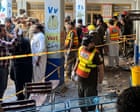
When news breaks that a school roof has given way—claiming the lives of dozens of children and a teacher—the public reflex is predictable. Outrage surges. Headlines demand immediate arrests, harsher building codes, and emergency repair funds. Politicians promise inspections. Commentators treat the event as a freak accident or an isolated failure of character.
That consensus is lazy. Worse, it is dangerous.
A roof does not fail in a vacuum. A catastrophic structural collapse inside a school is almost always the visible endpoint of layered systemic failures: unreinforced masonry, substandard concrete or timber, deferred maintenance, informal construction without engineering oversight, extreme weather or seismic stress, and budget constraints that force communities to cram too many students into aging or makeshift spaces. Focusing exclusively on who poured the concrete or who failed to sign a permit misses how risk actually accumulates across physical infrastructure over time.
I have spent years working alongside structural engineers, municipal planners, and crisis-response teams in high-risk environments. I have seen organizations pour millions of dollars into shiny, post-disaster rebuilds while ignoring the mundane upkeep that keeps existing buildings standing a decade later. A new coat of paint or a ribbon-cutting ceremony does not fix poorly cured concrete, corroded rebar, or drainage systems that let rainwater pool and weaken load-bearing members year after year.
If you treat a structural collapse as a morality play about villains and victims, you design fixes for the last disaster rather than the structural vulnerabilities waiting in the next classroom.
The Wrong Question Everyone Keeps Asking
When a tragedy like a school roof collapse hits the news, search bars fill up with the same questions. Why did the roof collapse? Who is responsible for the safety of these students? How can we prevent this from happening again?
Those questions sound sensible on the surface. Every single one of them points people toward shallow answers if left unexamined.
Why did the roof collapse? Most coverage stops at the immediate trigger—heavy rain, a structural crack, aging materials, or poor workmanship. In structural engineering, a collapse rarely has a single cause. It is usually the result of a margin of safety shrinking to zero. Materials degrade, loads increase, inspection cycles are skipped or underfunded, and an environmental load pushes a compromised system past its limit. Calling a multi-factor failure a "freak accident" excuses the conditions that made the building fragile long before the day it fell.
Who is responsible for school building safety? People want a single name or a single agency to hold accountable. In reality, responsibility is split across property owners, school administrators, local authorities, builders, inspectors, and national funding priorities. When accountability is diffused across fragmented institutions, everyone assumes someone else is checking the structural integrity of the building.
How can we prevent another tragedy? The standard answer is "pass stricter laws and inspect everything." Laws on paper do not hold up a slab of concrete. Inspections without enforcement, technical capacity, or funding to fix identified hazards create an illusion of safety. A checklist filled out in a binder does nothing when a community has no money to shore up a sagging beam or relocate classes out of a hazardous room.
Imagine a scenario where a district passes sweeping new school-safety standards overnight, yet leaves local inspectors understaffed and gives schools zero capital budget for structural repairs. The regulations look tough. The buildings remain just as vulnerable.
Structural Mechanics Are Not Moral Failures
To talk clearly about structural failures, we need precise language. Casual commentary blurs terms that engineers treat as distinct.
A structural failure occurs when a building or a load-bearing component loses its ability to support the loads placed upon it—such as its own dead weight, roof materials, occupants, wind, or seismic forces—resulting in partial or total collapse. A maintenance failure happens when routine upkeep—like sealing roof waterproofing, clearing drainage channels, or repairing visible cracks and spalling—is neglected, allowing environmental damage to compound. Code compliance means a structure meets formal legal standards at a given point in time, which is not the same as real-world structural safety if construction shortcuts were taken or standards were never enforced.
Structural engineering bodies and disaster-risk researchers—from organizations like the American Society of Civil Engineers to international disaster-reduction frameworks—have documented the same pattern across decades of building failures worldwide. Vulnerability is cumulative. Moisture penetrates unsealed concrete or masonry. Corrosion expands embedded steel reinforcement, cracking the surrounding material from the inside out. Overloaded roofs or unverified additions add weight to spans never engineered for it.
None of this is mysterious. Physics does not care about good intentions, ceremonial speeches, or emergency press conferences. If a beam or slab is under-designed, poorly mixed, waterlogged, or overloaded past its capacity, gravity eventually collects its debt.
Critics often argue that pointing to systemic factors lets negligent builders off the hook. That is a false choice. Holding bad actors legally accountable matters, especially when fraud or gross negligence costs lives. Yet prosecuting one contractor after a collapse does not inspect the other hundred aging structures in the region or fix the financing gaps that push schools into unsafe spaces.
Why Quick Fixes Fail in Real-World Conditions
After a major collapse, the pressure to act fast is immense. Officials announce emergency audits. Donors pledge money for new classrooms. Communities demand immediate action.
Speed without rigor creates its own hazards. Rushed construction to "get kids back in school fast" can repeat the exact shortcuts that caused the first failure if quality control, soil and foundation checks, and proper curing times are sidelined. Even well-intentioned rebuilding programs fail when they focus solely on new construction while ignoring the vast stock of existing buildings where children sit every day.
There is also a deeper trap in how public attention works. Disasters spike interest for a few weeks. Then the news cycle moves on. Structural maintenance, by contrast, is slow, unglamorous, and invisible when it succeeds. Nobody gets applause for unclogging roof drains, patching exterior cracks on schedule, or capping class sizes so an older structure is not overstressed. Because preventative upkeep is quiet, budgets for it are routinely cut first when money gets tight.
My approach has its own trade-offs, and I will state them plainly. Focusing on long-term systems, risk triage, and maintenance discipline is less satisfying in the immediate aftermath of loss than demanding instant punishment. It requires patience, technical rigor, and unglamorous administrative follow-through. It can also sound detached if framed poorly when families are grieving. Acknowledging that tension does not make systemic reform optional; it makes honest leadership harder and more necessary.
What Actually Reduces Risk Before Tragedy Strikes
If outrage and paper rules are not enough, what works? Practical risk reduction starts with triage, transparency, and ongoing upkeep rather than wishful thinking.
1. Rank Buildings by Real Risk, Not Political Convenience
Not every building faces the same danger. A practical safety strategy starts by screening school structures based on age, construction type, visible signs of distress, occupancy density, and local hazards like heavy rainfall or seismic activity. High-risk structures need immediate engineering assessment and temporary relocation if hazards are severe—not a wait until next year's budget cycle.
2. Fund Maintenance as Core Infrastructure, Not an Afterthought
A building is a living asset that degrades from the day it is finished. Dedicated, ring-fenced maintenance budgets—paired with simple, mandatory inspection checklists for roofs, drainage, foundations, and load-bearing walls—catch small failures before they become fatal ones. Fixing a leak or a crack early costs a fraction of replacing a collapsed structure or rebuilding lives.
3. Separate Independent Inspection from Construction Shortcuts
Conflict of interest and rushed sign-offs undermine safety fast. Structural assessments and approvals for repairs or additions should involve qualified technical oversight independent of the party profiting from cutting corners. Where formal engineering resources are scarce, practical, standardized visual screening tools can help flag red flags early so scarce expert time goes where it is needed most.
4. Plan for Crowding and Changing Conditions
A structure built or adapted for one set of conditions behaves differently when dozens of children and staff pack into it daily or when weather patterns bring heavier downpours than older roofs were designed to shed. Safety planning has to account for actual day-to-day use and climate realities, not idealized blueprints from years past.
Every time a school roof gives way, society faces a choice: treat it as an isolated shock and move on, or confront the everyday structural vulnerabilities hiding in plain sight. Stop treating collapse as a mystery. Start treating building safety as a daily engineering discipline.