Paper.
So much paper. For a different view, consider: this related article.
Inside a dimly lit, air-conditioned hall miles away from any border post, stacks of translated communiqués sit waiting to be signed by men in tailored suits whose voices echo through headsets in six languages at once. Outside, on high mountain ridges where wind carves ice into razor-thin blades and soldiers pull guard duty with numb fingers, nobody reads a communiqué. A young rifleman shivering near a high-altitude pass does not warm his hands over a newly minted charter. A border villager watching a convoy rumble past does not sleep safer simply because another secretariat opened in a distant capital.
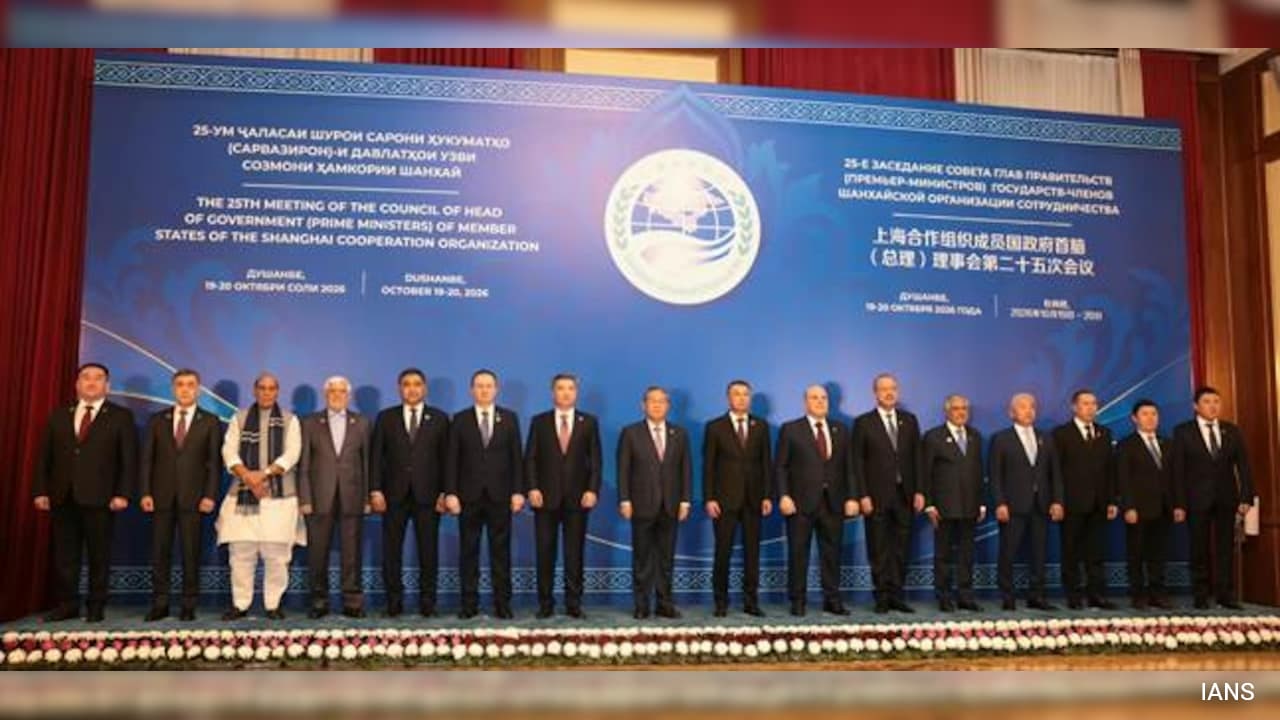
That quiet collision—between diplomatic architecture and lived reality—is what makes Rajnath Singh’s blunt warning at the Shanghai Cooperation Organization so hard to shake. When India’s defense minister stood before fellow representatives of the SCO and argued that multiplying institutions does not automatically produce real achievements, he was poking a hole in one of diplomacy’s favorite illusions. We love building rooms. We love naming committees. We love counting summits as proof of progress while the hard, unglamorous work of keeping peace, curbing extremism, and respecting sovereignty remains half-finished. Similar reporting on this matter has been provided by The New York Times.
I have sat in enough briefing rooms and watched enough diplomatic transcripts roll across screens to know how seductively neat a press release looks compared to the messy truth on the ground. In theory, every new working group, task force, or regional mechanism looks like momentum. On paper, a thicker binder feels like a heavier shield. Yet anyone who has ever watched a stalled negotiation drag into its fourth year knows the feeling of watching clever people polish furniture in a room with a drafty roof.
Let me be honest right here: international security and multilateral diplomacy can feel bewildering, even exhausting, to follow from the outside. Acronyms stack up until ordinary people tune out. You hear about regional bodies, counter-terrorism structures, defense meetings, and joint statements, and it is easy to wonder whether any of it touches daily life—or whether it is all theater for diplomats who fly in, smile for cameras, and fly home. I have asked myself that exact question more than once while tracing how border tensions, cross-border militancy, and rival national interests play out behind polite diplomatic phrasing.
To make sense of what is really happening when a senior leader challenges institutional bloat at a forum like the Shanghai Cooperation Organization, it helps to step back from the conference table and look at the human stakes underneath.
The Illusion of Progress on Paper
Imagine a hypothetical mid-level analyst—let’s call her Farida—working inside a regional policy office in New Delhi. (Note: Farida is a composite, hypothetical character created to illustrate how diplomatic work is experienced on the ground, though the policy dilemmas she confronts reflect real pressures faced by regional officials.)
It is 10:30 p.m., and Farida is staring at a draft joint statement on regional stability. Her desk lamp throws a warm pool of light over two printed pages covered in bracketed edits. One delegation wants softer language on cross-border terrorism; another wants stronger praise for a newly expanded secretariat; a third wants to add a reference to an upcoming symposium. By midnight, every disputed word has been smoothed into diplomatic cotton—round, harmless, and vague enough that everyone can claim victory in tomorrow’s morning newspapers.
Farida rubs her eyes, thinking about a news clip she saw earlier that evening: a family mourning after a violent attack along a volatile frontier, and a mountain highway closed by landslides and security alerts. Down on the map, those places are just coordinates and names. Up close, they are kitchens that went cold too soon, school buses that never arrived, and young men whose names end up carved into stone memorials.
When Rajnath Singh pushes back against the idea that more institutions equal greater achievements, he is speaking directly to that gap between diplomatic form and substantive results. An institution is a vessel, not a cure. You can launch ten new councils, panels, and observatories, and still leave the core threats untouched if member states refuse to align on basic rules—especially on zero tolerance for terrorism, respect for territorial integrity, and genuine transparency.
Think of it like buying extra toolboxes for a garage when nobody has agreed on how to fix the engine. A shiny red chest with twelve drawers looks impressive on a Saturday morning. It does not turn a single bolt on its own.
Why Multilateral Rooms Get Crowded While Trust Stays Thin
History teaches a sobering lesson about international groupings: size and structure do not automatically create shared purpose. From older security pacts to modern regional forums, organizations often expand their membership and bureaucratic reach precisely when their underlying disagreements grow sharper. Adding another sub-committee can become a way to look busy without resolving a deadlock.
Within the Shanghai Cooperation Organization—which brings together major Eurasian powers with overlapping ambitions, rival histories, and very different security priorities—that tension is built into the walls. When countries share vast borders, deep economic ties, and sharp strategic friction all at once, diplomacy becomes a high-wire act. One side sees a mechanism as a platform for regional stability and connectivity; another watches closely to ensure sovereignty is not compromised or double standards are allowed to pass under high-minded slogans.
Consider what happens next when a forum prioritizes expansion over accountability:
The language grows grander while the enforcement grows thinner. Communiqués talk about peace, prosperity, and counter-terrorism in sweeping strokes, yet the hardest questions—who funds proxies, who shelters militants, who respects red lines—get buried under procedural compromises. Over time, the public grows cynical. People stop believing grand declarations because reality keeps contradicting the brochure.
That skepticism is not a failure of public understanding. It is a rational reaction to watching process masquerade as outcome.
What Real Achievement Actually Demands
If multiplying institutions is a distraction, what does genuine progress look like?
It looks smaller, sharper, and far less photogenic.
First, it demands consistency over convenience. A principle only means something when it costs you something to uphold it. If a grouping condemns extremism in one breath while excusing or downplaying militant networks elsewhere, its credibility erodes from the inside out. Real security requires holding the same standard whether an attack happens in a crowded market, a border outpost, or a distant capital.
Second, it demands respect for sovereignty and practical cooperation. Shared challenges—whether radicalization, narcotics trafficking, cyber threats, or volatile border zones—cannot be solved by lecturing neighbors or building parallel bureaucracies that duplicate existing work. Practical trust is built slowly: through clear communication channels during crises, concrete steps against shared dangers, and an unwillingness to turn multilateral platforms into echo chambers for one-sided narratives.
Third, it demands honesty about limits. Not every disagreement can be solved by forming another committee. Sometimes naming the friction plainly is healthier than pretending consensus exists where it does not. When a leader like Rajnath Singh says in effect, do not confuse institutional growth with strategic success, he is asking the room to measure outcomes by peace on the ground rather than applause in the hall.
Picture the difference on a human scale. A newly created working group generates an agenda, a calendar of meetings, and a stack of reports. A real breakthrough stops an infiltration attempt before a single shot is fired, keeps a trade route open without extortion, or prevents a border flare-up from spiraling into war. One fills filing cabinets; the other saves lives.
The Quiet Test Behind Every Summit
Long after the motorcades clear out and the microphones are switched off, every international gathering faces the same quiet test. Did the people living near the fault lines become any safer? Did the air feel any less tense? Did words move closer to deeds, or did they drift further apart?
Critics sometimes dismiss tough speeches at multilateral summits as posturing, while supporters treat every joint document as a triumph. Both reactions miss the deeper truth. Diplomacy is neither a magic wand nor a complete waste of breath; it is a mirror. It reflects how serious nations truly are about doing the hard work behind the headlines.
If we judge summits by how many institutions they create, we will always find something to celebrate—even as the real problems keep knocking at the door. If we judge them by whether ordinary people can walk to work, open their shutters, and raise their children without fear, the bar gets much higher.
High up on a wind-scoured ridge, a soldier adjusts his collar against the freezing gust and peers through binoculars across silent valleys, waiting to see whether anything in the world below has actually changed.