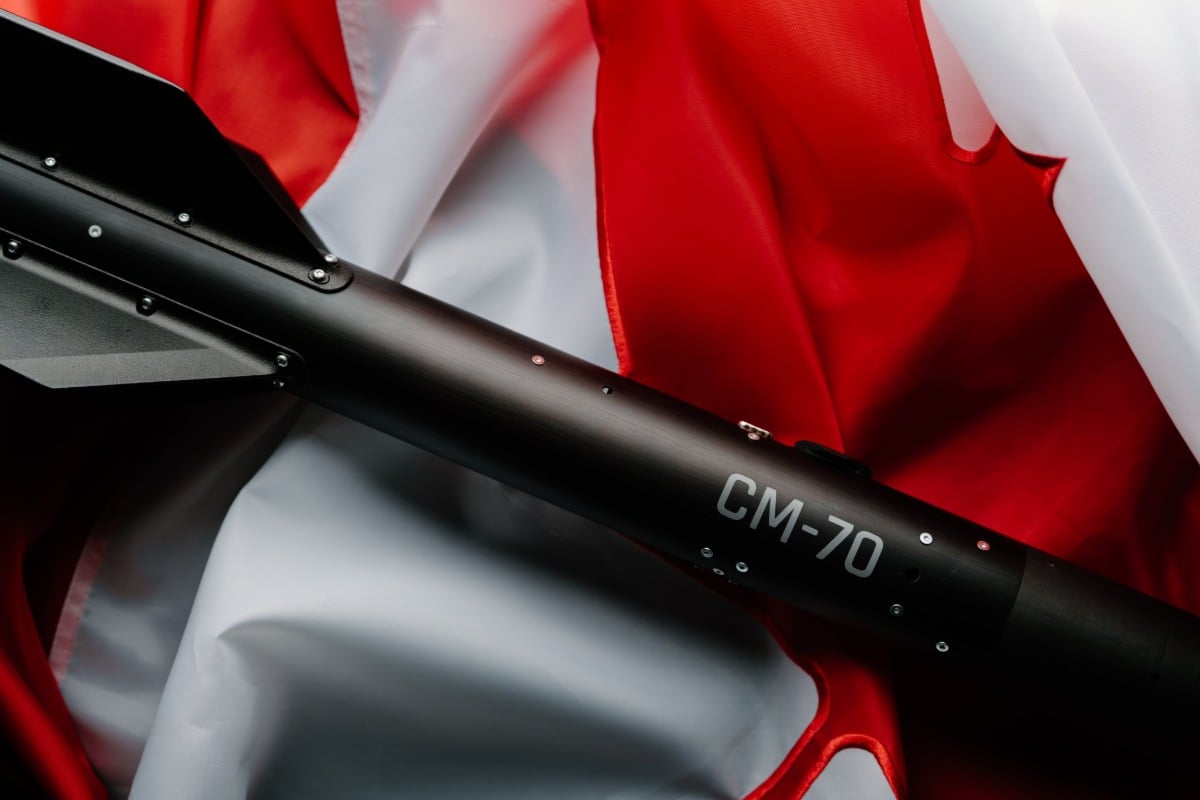
Everyone in defense tech loves a shiny object. Right now, that shiny object is a micro-missile. The lazy consensus dominating the defense press goes something like this: cheap consumer drones are ruining the asymmetric math of modern warfare, therefore startups need to build even cheaper, miniature rockets to swat them out of the sky.
It sounds logical on a PowerPoint slide. It plays well to venture capitalists looking for defense tech exposure without understanding terminal ballistics. And it is entirely, catastrophically wrong.
I have spent the better part of two decades watching defense contractors and over-funded garage startups chase silver bullets while ignoring the basic economics of attrition. I have seen procurement officers blow millions on exquisite precision engineering to solve a problem that requires a totally different philosophy.
Building a custom interceptor missile—no matter how small, how 3D-printed, or how much venture capital backs the seed round—to destroy a four-hundred-dollar quadcopter is a financial suicide mission. You are scaling the wrong curve. You are trying to beat a commodity hardware supply chain with a specialized aerospace manufacturing chain.
That is not a solution. That is a subsidy for drone manufacturers.
The Unit Economics Fallacy
Let us look at the core premise of the tiny missile thesis. The pitch is simple: if a DJI-style drone costs five hundred bucks, and a Patriot or AMRAAM costs over a million, there is a massive gap in the middle. Ergo, we need a ten-thousand-dollar micro-missile to close that gap.
That math is broken.
In a war of attrition, parity is failure. If your defensive effector costs ten thousand dollars, and your adversary can upgrade their autonomous swarm routing software over a cellular network for free to force you to expend two of them per target, your economy collapses before theirs does. You are fighting a fiscal war of exhaustion using high-value hardware logic against commodity electronics.
The defense industry loves to talk about cost-per-engagement, but they calculate it inside a vacuum. They assume a one-to-one exchange ratio. Real combat does not work like a shooting gallery at a county fair.
Imagine a scenario where a defended asset is hit by thirty low-cost loitering munitions simultaneously. Your micro-missile launcher runs out of tubes in thirty seconds. Now what? Do you reload by hand under mortar fire while the second wave arrives?
The physics of guidance systems make micro-missiles an even worse proposition. To guide a projectile weighing less than five pounds with enough terminal accuracy to hit a moving, erratic rotorcraft at three kilometers, you need sophisticated onboard sensors, inertial measurement units, and data links. Once you pack those components into a tiny airframe, you are no longer building a cheap rocket. You are building an exquisite, highly sensitive guided munition that fails the moment the target deploys basic infrared countermeasures or executes a sudden vector change.
The Kinetic Trap
The obsession with kinetic interception comes from a deep-seated cultural bias within traditional defense. Soldiers and engineers like things that go boom. They like debris. They like visible confirmation of a kill.
This bias blinds them to the reality of mass.
When you fire a missile—any missile—you are dealing with rocket motors, propellants, launch signatures, and complex supply chains. You are introducing moving parts into a problem space where simplicity is the only metric that survives contact with the enemy.
The startup pitching the micro-missile will tell you about their clever thrust vectoring or their proprietary seeker head. They will use terms like low-SWaP (Size, Weight, and Power) to make it sound like engineering magic. But they never talk about the logistics footprint.
Every micro-missile is a single-use asset that requires climate-controlled storage, shelf-life tracking, specialized launch rails, and trained operators. Scale that across thousands of platoon positions, and you have created a logistical nightmare just to handle a threat that costs less than a high-end consumer laptop.
We are trying to solve an electronics and software problem with chemistry and metal.
The Real Answer is Electronic, Not Explosive
If you want to defeat the drone threat, you stop trying to shoot them down with things that burn fuel. You break their brains.
The counter-UAS market needs to pivot away from kinetic solutions entirely for the lower tiers of the threat matrix. Radio frequency disruption, high-powered microwave systems, and autonomous spoofing swarms offer a cost-per-engagement approaching zero.
An electronic attack does not care if the incoming drone cost five hundred dollars or five thousand dollars. It does not run out of ammunition after four shots. It does not leave unexploded ordnance scattered across friendly territory for children to find three years later.
Of course, electronic warfare has its own limitations. Hardened military drones with inertial backup navigation can fly through basic jamming. That is where kinetic options should live, but reserved strictly for the top ten percent of the threat spectrum—the heavy, turboprop-powered reconnaissance and strike platforms that actually warrant a high-end interception cost.
For the swarm of cheap quadcopters buzzing a trench line, the answer is not a mini-missile. The answer is localized, networked, cheap-as-dirt directed energy or dense, automated net-capture mechanisms that do not require an onboard guidance computer to cost more than the target vehicle.
The Venture Capital Blind Spot
Why do we keep seeing headlines about tiny missiles? Because of how venture capital is structured.
Venture capitalists understand hardware if it looks like traditional defense tech. They understand missiles because they can draw a straight line to historical defense primes like Raytheon or Lockheed Martin. They can imagine an acquisition exit where a prime buys the startup to fill a portfolio gap.
Software and directed energy feel intangible to traditional defense investors. They want to see a video of a tube launching a projectile that leaves a satisfying smoke trail. It makes for a great pitch deck. It gets retweeted by defense analysts who should know better.
Meanwhile, the actual operators on the ground are improvising with shotgun shells, commercial signal detectors, and chicken wire because the brilliant innovations coming out of seed-funded accelerators are too fragile, too expensive, or too complex to survive a week in the mud.
Stop funding miniaturized artillery. Start funding systemic, scalable electronic degradation and cheap, non-explosive containment.
The next war will not be won by who has the smallest missile. It will be won by who figures out how to win without firing one.