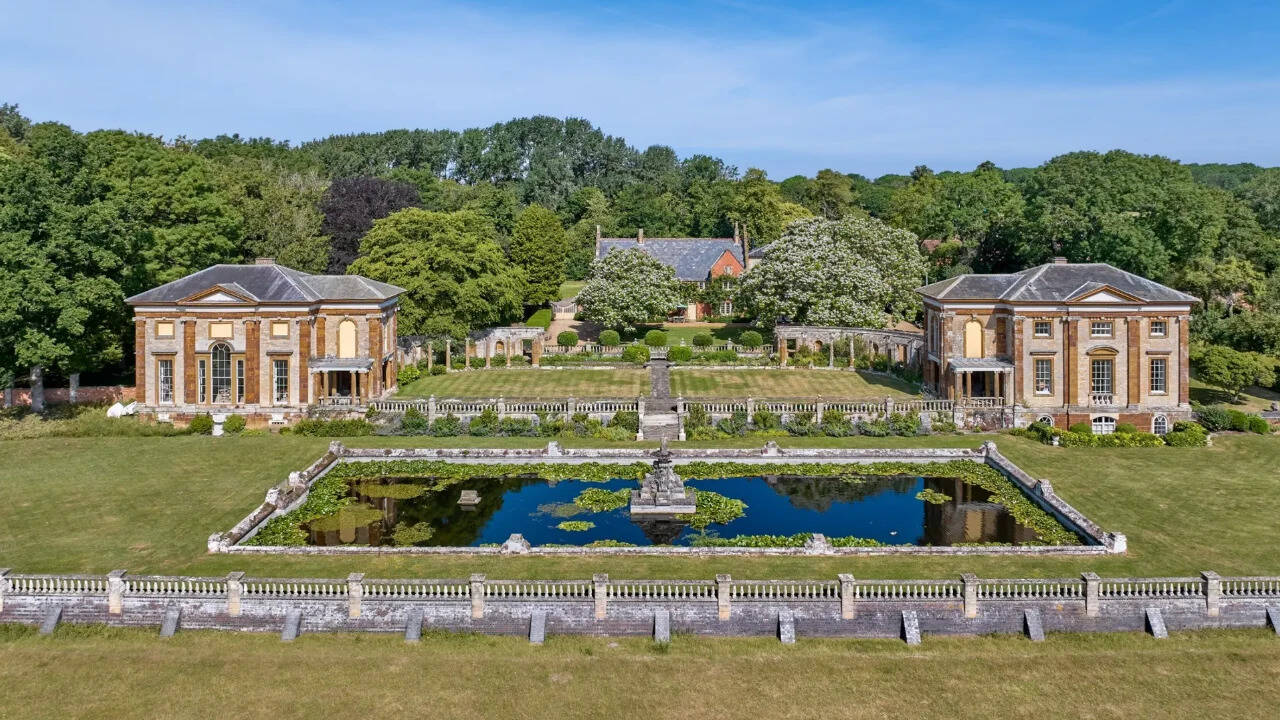
Every few months, a glossy real estate listing for a former royal hunting lodge hits the press, and the financial media loses its collective mind.
This week, it is a £5.25m estate once tied to Henry VIII. The mainstream coverage reads like a press release written by the listing agent. They gush over the exposed oak beams. They romanticize the Tudor provenance. They frame the £5.25m asking price as a bargain compared to a cramped three-bedroom flat in Mayfair.
That narrative is pure financial malpractice.
The lazy consensus in luxury property journalism treats historic British estates like blue-chip art. You buy the canvas, hang it on the wall, and watch the value appreciate while enjoying the prestige. In reality, buying a Tudor-era country house is less like buying a Picasso and more like adopting an aging, chronically ill thoroughbred that requires open-heart surgery every winter. The £5.25m price tag is not the cost of the asset. It is merely the cover charge to enter a decades-long war of attrition against damp, rot, and the British planning system.
I have watched ultra-high-net-worth buyers walk into these transactions blinded by romanticism, only to quietly offload the properties five years later at a massive net loss after sinking seven figures into invisible structural repairs. If you are looking at a £5.25m Tudor estate and seeing an investment, you are asking the wrong question. You should not be asking what the house is worth. You should be asking how much capital you are willing to incinerate to cosplay as a 16th-century aristocrat.
The Lie of the Asking Price
When a prime London townhouse sells for £5.25m, your transaction costs are predictable. You pay Stamp Duty Land Tax—which, on a £5.25m residential purchase in England, will immediately strip £543,750 out of your liquidity (or £806,250 if it is a second home). You pay legal fees, a standard structural survey, and you move in.
When you buy a 500-year-old hunting estate, the acquisition cost is a rounding error compared to the carrying costs.
The mainstream press loves to compare price-per-square-foot between London and the Home Counties. They will tell you that £5.25m buys you 2,000 square feet in Kensington, or 8,000 square feet plus thirty acres in the countryside. This metric is completely useless. Square footage in a historic building is not an asset; it is a liability surface area. Every square foot of hand-made clay roof tile, lime-rendered facade, and single-glazed leaded window represents an ongoing maintenance obligation.
- The Roof Trap: A traditional clay tile or Horsham stone roof on a sprawling Tudor footprint does not get patched with modern materials. You are sourcing reclaimed stone and hiring specialist heritage roofers who charge a massive premium. A full re-roof on an estate of this scale easily clears £250,000.
- The Heating Black Hole: These buildings were designed before central heating, insulation, or basic thermodynamics were understood. They rely on breathability—meaning air must flow through the lime plaster and stone to prevent condensation and dry rot. If you seal the building up to retain heat, you trap moisture inside the walls and rot the structural timbers. If you let it breathe, your heating bills in winter will comfortably exceed £2,500 a month just to keep the interior from feeling like a meat locker.
- Grounds Maintenance: Thirty acres of parkland and formal gardens do not manicure themselves. A full-time head gardener and seasonal grounds staff will cost you upwards of £60,000 to £80,000 annually before you even buy a single commercial mower or repair a crumbling perimeter wall.
Listed Building Consent Is Your New Landlord
Buyers coming from the United States or modern European markets often assume that owning the freehold means they own the property. In the United Kingdom, if you buy a Grade I or Grade II* listed building—which almost anything with genuine Tudor royal provenance will be—you do not own the house. You are an unpaid custodian for Historic England and your local conservation officer.
Let us be crystal clear about the legal definitions here, because estate agents routinely gloss over them.
Grade I buildings are of exceptional interest (only 2.5% of listed buildings fall into this category). Grade II* buildings are particularly important buildings of more than special interest (5.8% of listed buildings). Under the Planning (Listed Buildings and Conservation Areas) Act 1990, carrying out unauthorized works to a listed building is a criminal offense. Not a civil dispute. A criminal offense punishable by unlimited fines and up to two years in prison.
Want to replace those drafty, single-glazed Tudor casements with discreet slimline double glazing? Rejected. Want to knock through a non-structural wall to create the open-plan kitchen-diner that modern luxury buyers actually want? Rejected. Want to install solar panels on the south-facing barn roof to offset your astronomical energy bills? Rejected, unless you want to spend £40,000 on heritage impact assessments and wait eighteen months for a committee to say no anyway.
Everything must be repaired like-for-like. You cannot use modern Portland cement because it traps moisture and blows the face off historic brickwork; you must use traditional lime mortar, which can only be applied in specific temperature windows during the year. You cannot use standard emulsion paint on interior walls; you must use breathable distemper or clay paint.
Imagine a scenario where a storm takes down a section of a 16th-century garden wall. On a modern property, you call a builder, spend £5,000, and the wall is up by Friday. On a listed estate, you are waiting three months for a heritage surveyor, sourcing matching handmade bricks from a reclamation yard in Sussex, applying for Listed Building Consent, and paying £35,000 six months later. Your autonomy as a property owner is zero.
Dismantling the Royal Provenance Myth
The hook in every single article about this property is the Henry VIII connection. "Henry VIII hunted here." "Henry VIII stayed here."
Let us apply a shred of historical literacy to this claim. Henry VIII ruled England for nearly 38 years. He was notoriously restless, constantly moving his court from palace to palace to avoid plague outbreaks, escape political pressure, and indulge his obsession with hunting. Over the course of his reign, the King owned over sixty palaces and manors, and he stayed at hundreds more belonging to nobles, bishops, and local gentry.
Saying "Henry VIII visited this estate" is the Tudor equivalent of saying "Elon Musk once tweeted from this zip code." It is historically trivial and commercially meaningless.
Unless the property was a primary royal seat like Hampton Court or Nonsuch Palace, royal provenance adds zero intrinsic liquidity to the asset. When you try to sell that house in ten years, the buyer pool will not pay a £1m premium because a bloated monarch once ate venison in the great hall in 1534.
In fact, the obsession with provenance actively blinds buyers to the structural realities of the building. Agents use history as a shiny object to distract you from the fact that the floorplan makes no sense for modern family life. Tudor houses were built for a completely different social structure—small, dark, compartmentalized rooms designed to keep heat in, connected by narrow, steep staircases, with kitchens banished to the farthest corners of the footprint to minimize fire risk.
Converting that layout into something functional without destroying the historic fabric—and without triggering the wrath of the conservation officer—is an architectural nightmare.
What Everyone Gets Wrong About Country Estates
If you look at the standard search queries surrounding properties like this, buyers are constantly asking the wrong questions. They want to know about capital appreciation, tax loopholes, and prestige. Let us dismantle those assumptions with brutal honesty.
"Do historic estates appreciate faster than modern luxury homes?"
No. They underperform. According to long-term market data tracked by firms like Savills and Knight Frank, prime country houses saw a brief, artificial spike during the pandemic-induced race for space in 2020 and 2021. Since interest rates normalized, the upper tier of the country house market has been sluggish at best. Buyers have become hyper-aware of running costs and EPC (Energy Performance Certificate) regulations. A turnkey, newly built Georgian-style mansion with ground-source heat pumps, subterranean leisure complexes, and zero listed restrictions will outsell a genuine 16th-century estate every single day of the week, and it will hold its value far better over a twenty-year horizon.
"Can I offset the maintenance costs by turning it into a wedding venue or hotel?"
This is the classic delusion of the cash-poor aristocrat, and it is increasingly infecting newly wealthy tech and finance buyers. Turning a private £5.25m home into a commercial hospitality venue is a fast track to misery. First, you have to navigate commercial change-of-use planning permissions, which your wealthy, NIMBY neighbors will fight to the death to block. Second, you have to bring a 500-year-old building up to modern commercial fire, accessibility, and health-and-safety codes—installing fire doors, emergency lighting, and commercial kitchens inside a listed structure. Third, you are no longer living in a private sanctuary; you are running a low-margin events business where drunk wedding guests are spilling red wine on your antique flagstones every Saturday night.
"Aren't there tax breaks for owning heritage properties?"
Unless you are willing to open your house to the general public for a minimum number of days every year under the Conditional Exemption Tax Incentive Scheme—meaning strangers are literally walking through your living room taking photos of your furniture—the tax breaks are virtually non-existent. You do not even get a VAT exemption on repairs to listed buildings anymore; the UK government scrapped the zero-rating for approved alterations to listed buildings back in 2012. You pay the full 20% VAT on almost every penny of your eye-watering restoration bills.
The Contrarian Playbook for Buying Heritage
Now, let us acknowledge the obvious caveat. Not every financial decision is made on a spreadsheet. If you have £50m in liquid net worth, spending £5.25m on a Tudor estate plus £250,000 a year to keep it standing will not change your lifestyle. There is an undeniable, visceral magic to living inside a piece of living history that a sterile new-build in Surrey can never replicate.
If you are going to ignore the financial warnings and buy a historic estate anyway, stop acting like a starry-eyed tourist and start acting like a distressed-debt investor.
- Hire a Heritage Building Surveyor, Not a RICS generalist. Never use a standard residential surveyor for a pre-1850 building. They do not understand timber-frame mechanics or lime chemistry, and they will flag normal historic movement as catastrophic subsidence while missing actual deathwatch beetle infestations. Hire a specialist accredited by the RICS Building Conservation register. Pay the £5,000 to £8,000 fee. Let them tear the building apart on paper before you exchange contracts.
- Audit the "Unlisted" Curtilage. A common trap in historic estates is assuming that only the main house is listed. Under UK planning law, any pre-1948 structure within the "curtilage" (the enclosed land surrounding the main house)—including old stables, barns, and garden walls—is automatically treated as listed by association. Map out every single structure on the grounds with a planning lawyer before you make an offer so you know what you can actually touch.
- Price the Capital Expenditure Into Your Bid. If a Tudor estate is listed at £5.25m, and your specialist survey reveals £800,000 in essential five-year maintenance (rewiring, roof stabilization, drainage overhaul), your offer is not £5.25m. Your offer is £4.2m. Sellers of historic estates are notoriously emotional and anchor their pricing to ego rather than market reality. Let the property sit on the market for nine months—most of them do—and submit a ruthlessly discounted cash offer backed by your survey findings.
- Separate the Land from the House. If the estate comes with significant acreage, evaluate the agricultural or equestrian lease potential immediately. You do not need to manage thirty acres yourself. Lease the pasture to a local farmer or equestrian operator on a strict grazing license. You keep the visual buffer and privacy of the open countryside, while someone else pays you a nominal rent to maintain the fencing and keep the grass down.
The real estate press will continue to churn out breathless fairy tales every time a Tudor manor hits the market. They sell the dream because dreams generate clicks.
The reality is much simpler. A £5.25m historic estate is not a trophy. It is a heavy, expensive, bureaucratic anchor. Buy it only if you love the history enough to subsidize it unconditionally—and never confuse a money pit with an investment.



