Every defense analyst in Washington loves a shiny new weapons delivery. Headlines scream about fresh fleets of advanced jets touching down on tarmac across the strait, framing each shipment as a magical shield against regional aggression. The lazy consensus is simple: more high-end hardware equals better deterrence.
It is a comforting narrative for defense contractors and armchair strategists alike. It is also dangerously wrong. You might also find this similar story insightful: The Anatomy of a Breakdown When State Power Collides With Human Reality.
I have spent years watching military budgets get funneled into prestige platforms while the actual mechanics of modern deterrence rot from neglect. Buying multi-million dollar airframes while ignoring the asymmetric reality of modern missile warfare is not defense. It is an expensive form of theater.
The Myth of the Silver Bullet Jet
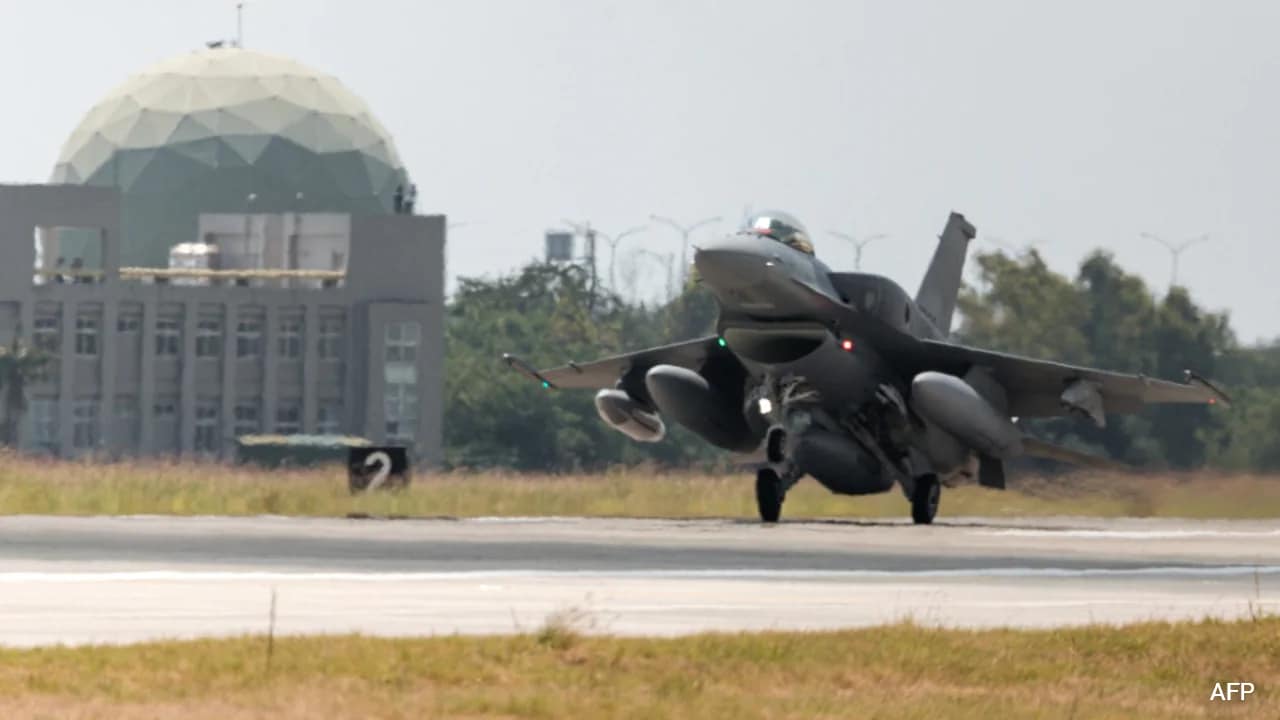
Let us look at the asset everyone loves to celebrate. The F-16V is a formidable machine with upgraded radar systems and avionics. But assigning these airframes a starring role in defending an island ninety miles off the coast of a continental superpower ignores basic geography and physics. As discussed in latest reports by Associated Press, the effects are significant.
Airfields are stationary. Missiles are mobile, cheap, and plentiful.
When an adversary possesses a massive arsenal of precision ballistic and cruise missiles designed specifically to crater runways within the opening hours of any conflict, parking sophisticated aircraft on large asphalt targets is tactical malpractice. The moment hostilities commence, those billion-dollar hangers and long runways become high-priority craters. You cannot project air superiority if your birds cannot leave the ground.
Defense is not about collecting the coolest toys on the military surplus market. It is about survivability, redundancy, and cost asymmetry.
The Cost Curve is Broken
Think about the math of modern attrition. A single advanced fighter jet costs tens of millions of dollars to acquire, years to maintain, and requires highly specialized infrastructure to keep operational. On the flip side, mass-produced anti-air batteries and saturation missile systems trade at a fraction of that cost.
When you spend your finite capital on exquisite platforms, you fall directly into the opponent's economic trap. They want you to buy targets that require massive maintenance tails and centralized bases. Every dollar spent maintaining a fragile runway-dependent fleet is a dollar diverted from what actually works: dispersion, mobility, and redundancy.
Imagine a scenario where a defensive force abandons the obsession with prestige air superiority entirely. Instead of fighting for airspace against a numerically superior foe with home-field advantage in missile production, defense planners shift every resource toward coastal defense cruise missiles, maritime mines, mobile air defense nodes, and hardened underground shelters.
Suddenly, the calculus changes. The attacker no longer faces a few high-value targets to eliminate in a neat opening salvo. They face thousands of mobile, hidden threats scattered across mountains, urban centers, and civilian traffic networks. That is how you make an invasion mathematically unviable.
Expertise Beats Enthusiasm
Military analysts love to talk about force multipliers, but they rarely mention force liabilities. A complex weapons platform operated without strategic depth is a liability.
True expertise in modern defense strategy requires looking past the glossy promotional brochures provided by aerospace manufacturers. The foundational principle of modern asymmetric warfare is denial, not dominance. If you cannot establish total control over your own airspace because of geographic proximity to a continental adversary, trying to win an air-to-air dogfight contest is a fool's errand.
We need to stop evaluating military preparedness by counting tail numbers. Counting high-end jets parked in neat rows tells you nothing about combat endurance. It only tells you how much money was spent on items that can be neutralized before they burn their first gallon of jet fuel.
The Vulnerability of Our Own Logic
Admitting the flaws in this hardware-heavy approach means confronting an uncomfortable truth. Shifting away from prestigious multi-role fighters toward distributed, unglamorous defensive systems requires political courage. Lawmakers love ribbon-cuttings for aircraft deliveries. They do not get glowing press releases for buying ten thousand anti-ship mines or hardening underground communications networks.
The defense establishment is addicted to visible symbols of power. Those symbols offer false security. When deterrence fails, nobody cares about how sleek the jets looked on the tarmac during the delivery ceremony. They care about whether the defense network can survive the first thirty minutes of an onslaught.
The lazy consensus treats defense acquisition like a shopping trip where the most expensive item wins. Real strategy is about ruthless math.
Stop buying targets. Start building nightmares for anyone foolish enough to try crossing the water.