Most foreign policy analysts laughed when Tehran officially designated Argentina's Navy and Air Force as terrorist organizations. They called it petty. They called it absurd. They dismissed it as hollow diplomatic theater from a regime grasping for leverage.
They are completely wrong.
Viewing Iran's reciprocal designation through the lens of Western legal standards is a rookie mistake. While mainstream headlines mock the move as a bizarre tantrum over Buenos Aires blacklisting the Islamic Revolutionary Guard Corps (IRGC) and Quds Force, international security observers point out that Tehran is executing a calculated legal and asymmetric doctrine. By framing state military branches as terrorist entities, Iran is not trying to convince the United Nations or the Hague. It is building a domestic and regional legal framework to justify extraterritorial targeting, maritime harassment, and plausible deniability across the Western Hemisphere.
If you think this is just diplomatic noise, you haven't been paying attention to how modern asymmetric warfare actually operates.
The Lazy Consensus on Diplomatic Reciprocity
Standard wire reports and breaking news commentary framed the story around surface-level irony. According to international press coverage of the announcement, Iran's Foreign Ministry declared the Argentine Navy and Air Force "terrorist organizations" in direct retaliation for President Javier Milei's administration designating the IRGC and Quds Force—alongside Hamas and Hezbollah—as terrorist groups.
The conventional takeaway was predictable. Pundits pointed out that a conventional nation-state's uniformed military cannot, by traditional international definitions, be classified as a non-state terrorist actor. Analysts noted that Argentina has no naval or air assets stationed anywhere near the Persian Gulf, rendering the designation practically unenforceable.
That analysis is lazy because it assumes Iran plays by the rules of the post-1945 Westphalian order. It assumes Tehran cares about the semantic distinction between a state military and a non-state militant network.
In reality, Iran spent the last forty years erasing that exact boundary.
Why Western Definitions Fail Here
Under United States law and European Union frameworks, terrorist designations target non-state actors or specific state-sponsored apparatuses like the IRGC to trigger financial sanctions, asset freezes, and travel bans. When Washington or Buenos Aires blacklists the Quds Force, the goal is to choke off banking networks, criminalize material support, and isolate operatives globally.
Iran has no global financial clearinghouse to enforce sanctions against Buenos Aires. Argentine naval officers are not holding accounts in Tehran banks, nor are Argentine Air Force pilots vacationing on Kish Island.
So why do it? Because in Tehran's strategic doctrine, legal symmetry is a weapon of information warfare and operational pre-authorization.
The Real Mechanics Behind Tehran's Legal Warfare
To understand what Iran is actually doing, you have to look at its track record of "lawfare"—the use of domestic legal mechanisms to mirror Western actions and create moral equivalence for domestic and Global South audiences.
When the United States designated the IRGC as a Foreign Terrorist Organization in 2019, Iran's parliament immediately passed legislation labeling United States Central Command (CENTCOM) and all associated forces as terrorists. Critics mocked that move too, arguing that labeling the entire U.S. military presence in the Middle East as terrorists was meaningless posturing.
Three years later, Iranian state media, judicial authorities, and proxy commanders routinely cited that exact domestic statute to frame attacks on U.S. bases in Iraq and Syria not as acts of war against a sovereign state, but as "counter-terrorism operations" against an illegal occupying force.
Three Functions of the Argentine Designation
According to analysts tracking Iranian asymmetric strategy and Latin American security dynamics, designating Argentina's Navy and Air Force serves three distinct, non-obvious purposes:
- Pre-Justifying Maritime and Aviation Harassment: Iran's naval doctrine relies heavily on asymmetric swarming, vessel seizures, and gray-zone harassment in international waters. By labeling the Argentine Navy a terrorist entity, Tehran establishes an internal legal pretext to detain, board, or harass any Argentine-flagged vessel—or any commercial ship loosely tied to Argentine state interests—that transits near Iranian spheres of influence.
- Neutralizing the AMIA Bombing Narrative: Argentina's recent designations of Iranian entities are rooted in decades of unresolved judicial investigations into the 1992 Israeli embassy bombing and the 1994 AMIA Jewish community center bombing in Buenos Aires, which killed dozens of people. Argentine courts have formally blamed Iran and Hezbollah for orchestrating those attacks. By flipping the label onto Argentina's military, Tehran attempts to muddy the waters for audiences across Latin America and the non-aligned world, framing the dispute as a mutual exchange of political slurs rather than a decades-long pursuit of accountability for mass-casualty bombings.
- Signaling to the Tri-Border Area: Security officials in Washington, Buenos Aires, and Asunción have long monitored illicit financing networks operating in the Tri-Border Area where Argentina, Brazil, and Paraguay meet. Under the Milei administration, Argentina aggressively aligned itself with the United States and Israel, revitalizing intelligence cooperation against Hezbollah-linked networks in South America. Tehran's designation sends an unmistakable message to its regional operatives and sympathetic political factions: the Argentine state apparatus is now officially classified as a hostile terrorist threat.
Dismantling the "Argentina Has No Reach" Fallacy
One of the most common questions circulating in online policy circles is straightforward: How can Iran enforce a terrorist designation against a South American military with zero power projection in the Middle East?
The question itself is flawed. It assumes enforcement requires conventional military contact.
In modern intelligence and asymmetric conflict, enforcement happens in the shadows, through third-party proxies, cyber operations, and diplomatic leverage. Argentina does not need a destroyer in the Strait of Hormuz to feel the consequences of being on Tehran's blacklist.
Consider the vulnerabilities that exist far away from the Persian Gulf:
- Diplomatic and Intelligence Personnel: Argentine diplomats, defense attachés, and military officers traveling abroad—particularly in regions where Iranian intelligence services maintain heavy footprints, such as parts of Latin America, West Africa, and the Middle East—face heightened surveillance and potential targeting.
- Cyber Infrastructure: Iran's cyber warfare units, frequently linked by Western cybersecurity firms to the IRGC, do not need naval bases in the South Atlantic to disrupt Argentine defense networks, port logistics, or aviation systems. Designating those specific branches paints a formal target on their digital infrastructure.
- Commercial and Dual-Use Supply Chains: Argentina's Navy and Air Force rely on international defense contractors, maintenance providers, and spare parts suppliers. While Iran cannot sanction Western defense firms, it can pressure sympathetic governments or commercial intermediaries in the Global South to complicate transit, overflight rights, or logistical support for Argentine military aircraft and vessels.
The Political Shift in Buenos Aires Changed the Calculus
To see why Tehran reacted with such disproportionate aggression, you have to look at the abrupt geopolitical U-turn in Buenos Aires.
For years under previous Peronist administrations, Argentina's approach to Iran oscillated between cautious distance and controversial diplomatic engagement—most notoriously the 2013 Memorandum of Understanding signed under former President Cristina Fernández de Kirchner, which critics argued would have dismantled international arrest warrants for Iranian officials implicated in the 1994 AMIA bombing.
President Javier Milei shattered that trajectory immediately upon taking office.
Milei moved to align Argentina firmly with Washington and Jerusalem. His government designated Hamas as a terrorist organization, followed by formally blacklisting the IRGC and Quds Force. Argentine federal courts simultaneously issued landmark rulings explicitly declaring Iran a "terrorist state" responsible for the 1990s bombings in Buenos Aires, declaring the attacks crimes against humanity.
From Tehran's perspective, Argentina transformed overnight from a manageable, occasionally pliable Latin American state into an active ideological and legal adversary in the Western Hemisphere.
Why the Navy and Air Force Specifically?
Notice what Iran did not designate. Tehran did not blacklist the entire Argentine government, nor did it focus solely on the Argentine Army. It singled out the Navy and the Air Force.
Why those two branches?
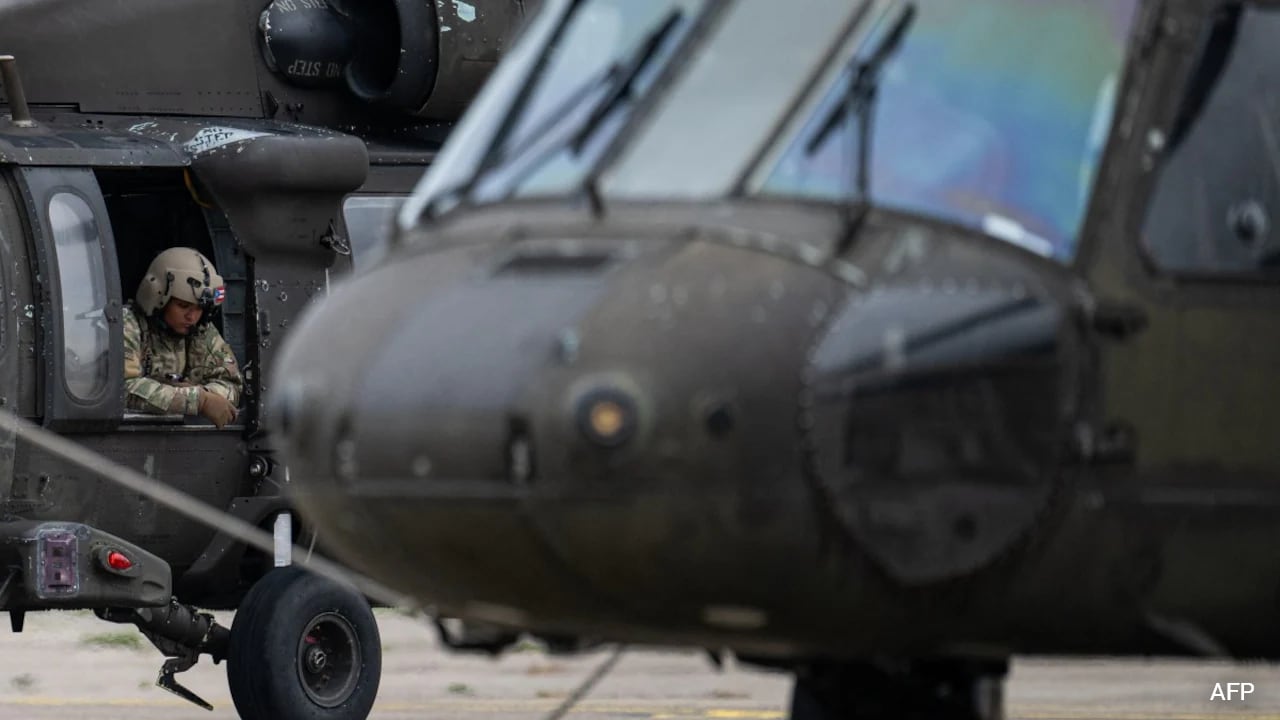
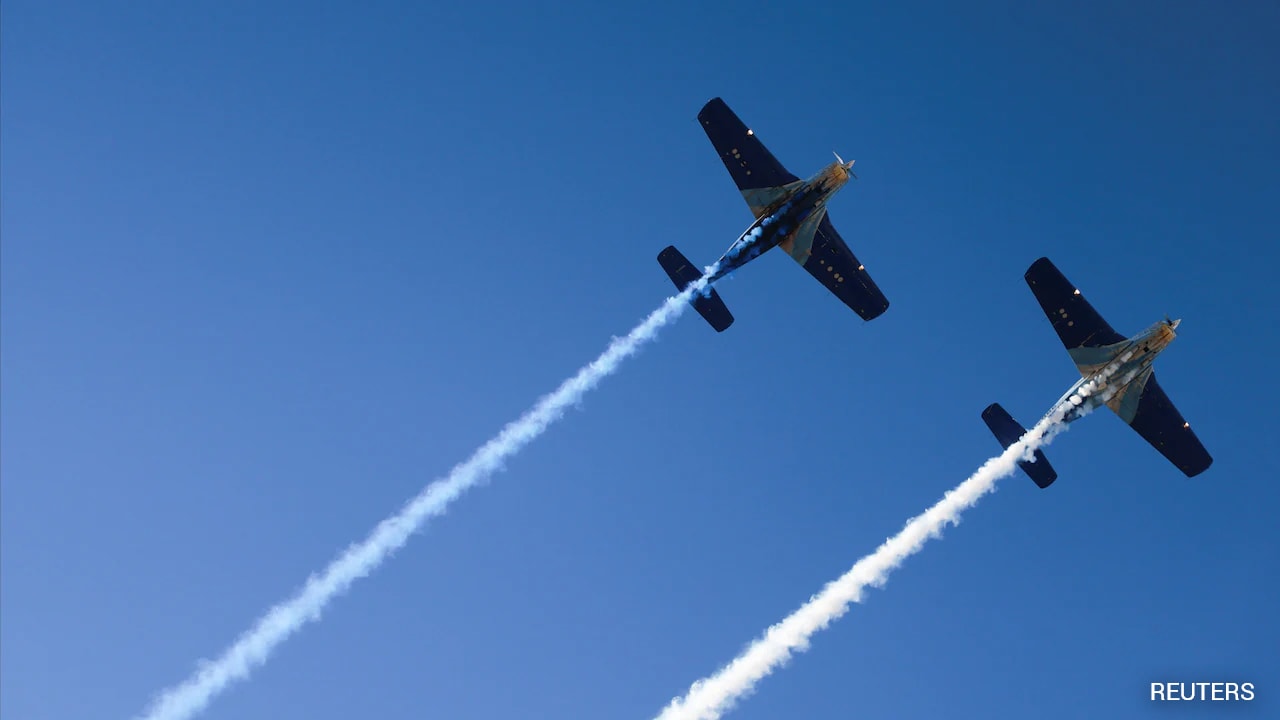
Maritime and aerospace domains are precisely where Argentina has deepened its operational integration with the United States and Western allies. Under the Milei administration, Argentina purchased F-16 fighter jets from Denmark with U.S. backing, hosted visits from the head of U.S. Southern Command (SOUTHCOM), and expanded joint naval exercises in the South Atlantic—a region strategically vital for global shipping lanes, Antarctic access, and maritime chokepoints.
By targeting the Navy and Air Force in its designation, Iran is directly signaling its opposition to Argentina's military modernization and its growing interoperability with U.S. Southern Command. Tehran is treating Argentina's naval and air forces not as independent national defense institutions, but as regional extensions of American and Israeli security architecture.
The Blind Spot in Western Security Analysis
I have watched defense analysts make this exact mistake for over a decade: they measure an adversary's move by whether it would work in a Western courtroom, rather than how it functions inside the adversary's own command structure.
When analysts dismiss Iran's announcement as "performative" or "symbolic," they lull policymakers into treating asymmetric threats as punchlines.
Yes, there is a clear downside to overreacting to Tehran's rhetoric. Giving Iran's diplomatic statements excessive oxygen can inadvertently amplify its propaganda, making a isolated regime appear to have far greater reach in South America than it actually possesses. Argentina's military is not suddenly facing an imminent naval blockade from Tehran, and treating every diplomatic communiqué as an existential crisis distorts threat assessments.
However, underestimating the doctrinal intent behind the label is far more dangerous.
In Iranian strategic culture, rhetoric is rarely divorced from operational planning. Declarations by the Foreign Ministry and parliamentary decrees create the ideological and legal scaffolding that allows intelligence operatives and proxy networks to act later without needing fresh political authorization. When Tehran defines an entity as a terrorist organization, it lowers the internal threshold for hostile action against that entity's personnel, assets, and allies.
What Policymakers and Observers Need to Watch Next
If you want to track whether this designation remains paper theater or translates into real-world friction, stop watching press briefings in Tehran and start watching three concrete indicators:
- South Atlantic Naval Cooperation: Watch how Buenos Aires proceeds with joint maritime patrols and port security initiatives alongside U.S. and European naval forces. Any escalation in diplomatic protests from Tehran or its regional allies in Caracas and Managua will show how seriously Iran views Argentina's naval alignment.
- Tri-Border Area Enforcement: Monitor financial seizures, deportations, and intelligence arrests along the Argentina-Brazil-Paraguay border. Tehran's designation is a direct response to pressure on its regional fundraising networks; increased crackdowns by Argentine security forces will trigger sharper asymmetric pushback.
- Cyber and Intelligence Incidents: Pay close attention to anomalous cyber intrusions targeting Argentine defense ministries, port authorities, and aviation regulators over the next twelve months. Asymmetric states rarely retaliate where you expect them to—they hit where defenses are thinnest and attribution is hardest.
Laughing at Iran's terrorist designation for Argentina's Navy and Air Force is easy. It makes for a great headline and an effortless punchline.
It also completely misses how asymmetric regimes weaponize law, redefine warfare, and set the stage for conflict long before a single shot is fired.