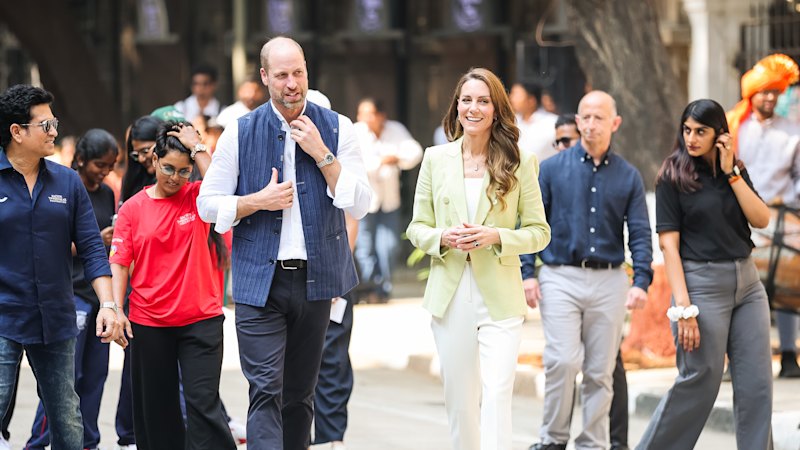
When Prince William and Kate Middleton stepped onto the dusty turf of Mumbai’s Oval Maidan in April 2016 to play street cricket, the global press treated it as a spontaneous burst of royal charm. It was nothing of the sort. That twenty-minute match—complete with Sachin Tendulkar watching from the sidelines and local children bowling to the Duchess of Cambridge in a flowing Anita Dongre tunic—was a meticulously engineered piece of soft power diplomacy designed to soften post-colonial friction, repair decades of stilted British-Indian royal optics, and rebrand the modern British monarchy for a skeptical Commonwealth audience.
To understand why a royal couple batting in Mumbai mattered, you have to look at what came before it. For decades, royal tours of India carried the heavy, unmistakable odor of the Raj. Even well-intentioned visits often devolved into parades of stiff handshakes, palace banquets, and awkward ceremonial inspections that reminded Indian citizens of subjugation rather than partnership. By the time Kensington Palace began planning the 2016 tour of India and Bhutan, British diplomats in New Delhi and London faced a clear problem. Britain needed deeper trade ties with a rising economic superpower, and the monarchy needed to prove its relevance to a young Indian demographic that felt zero nostalgia for Buckingham Palace.
The Architecture of a Viral Photo Op
Nothing on a royal tour happens by accident. Every stride, wardrobe choice, and venue is vetted months in advance by a joint team of palace press secretaries, Foreign Office diplomats, and local security detail. The Oval Maidan was selected because it sits at the intersection of Mumbai’s colonial past and its chaotic, aspirational present. Framed by the Victorian Gothic spires of the Mumbai University library and the Art Deco buildings along Marine Drive, the field is where working-class kids play cricket beside corporate lawyers on lunch breaks.
Putting the Duke and Duchess of Cambridge on that specific patch of grass sent an immediate visual message. They were not locked behind the gates of a luxury hotel or waving from a gilded balcony. They were standing in the heat, sweating through their clothes, participating in the one obsession that unites every social stratum in India.
Consider the mechanics of the event itself. Palace advance teams coordinated with three local non-governmental organizations—Magic Bus, Doorstep, and India’s Childline—to bring disadvantaged youth onto the pitch. This served a dual purpose. First, it anchored the photo opportunity to charitable work, insulating the couple from accusations of shallow tourism. Second, it guaranteed authentic, unscripted reactions from children who cared far more about bowling out a celebrity than observing royal protocol.
When Kate swung her bat in wedge heels and a patterned boho dress, she missed a few balls, laughed openly, and eventually connected for a solid shot that sent photographers into a frenzy. William followed, taking his turn at the crease while Tendulkar—widely revered across India as a sporting deity—offered casual tips. Within forty-five minutes, those images had bypassed traditional diplomatic channels and landed on the front pages of newspapers from Delhi to Toronto.
Why Sachin Tendulkar Was the Real Anchor
Inviting Sachin Tendulkar to stand beside William and Kate was a masterstroke of cultural positioning. In India, British royals hold historical curiosity, not automatic deference. Tendulkar, by contrast, commands near-universal reverence across linguistic, religious, and class lines.
By sharing the frame with Tendulkar, the Duke and Duchess borrowed his cultural capital. Photographers captured William and Kate looking genuinely starstruck as they chatted with the retired batsman, subtly inverting the traditional colonial dynamic. Instead of Indian subjects bowing to British rulers, two heirs to the British throne were deferring to an Indian icon on his home turf. That single visual adjustment neutralized potential criticism from nationalist commentators who routinely scrutinize British visits for hints of patronizing behavior.
The Diplomatic Weight Behind the Bat
Public relations stunts only work when they serve a concrete strategic goal. In spring 2016, Britain’s geopolitical position was precarious. The Brexit referendum was just two months away, and London was scrambling to shore up bilateral relationships outside the European Union. India, with its massive consumer market and rapidly expanding tech sector, sat at the top of Downing Street’s priority list.
Traditional trade missions rarely capture public imagination. A minister signing a memorandum of understanding in a beige conference room generates three paragraphs in the business section and zero emotional resonance. Royal diplomacy operates on a different frequency. It bypasses policy wonks and speaks directly to public sentiment, creating a warm diplomatic climate that politicians and trade envoys can later exploit.
The street cricket match kicked off a seven-day itinerary calibrated to hit every strategic nerve center:
- Economic Modernization: Hours after leaving the Oval Maidan, William and Kate attended a glamorous Bollywood charity gala at the Taj Mahal Palace Hotel, rubbing shoulders with Shah Rukh Khan and Aishwarya Rai to spotlight creative industry ties.
- Tech and Entrepreneurship: Later in the week, William launched a major startup initiative in Mumbai, directly linking British venture capital with Indian tech founders.
- Conservation and Climate: The couple traveled to Kaziranga National Park in Assam to highlight anti-poaching efforts, aligning the British Crown with global environmental stewardship.
- Historical Reconciliation: They laid a wreath at the Taj Mahal Palace Hotel memorial for the victims of the 2008 Mumbai terror attacks and visited Gandhi Smriti in New Delhi, acknowledging shared trauma and honoring the architect of Indian independence.
Every stop built upon the goodwill generated during those first twenty minutes on the cricket pitch. Had the opening event felt stiff or aloof, the rest of the tour would have played out under a cloud of cynicism.
The Wardrobe Strategy and Cultural Signaling
Media coverage of royal tours inevitably fixates on fashion, often treating it as frivolous filler. In reality, royal wardrobe curation is a deliberate branch of visual diplomacy. For the Oval Maidan match, Kate wore a printed georgette tunic dress designed by Mumbai-based couturier Anita Dongre.
The choice was surgical. Wearing a high-end British designer in 90-degree Mumbai heat would have looked detached and colonial. Wearing an ultra-expensive couture gown would have clashed violently with the surroundings of a public playground populated by underprivileged children. Dongre’s dress—priced around $200 at the time and rooted in traditional Rajasthani prints—struck a precise balance. It honored local craftsmanship, boosted an Indian business, and looked practical enough for a casual game of cricket.
Within hours of the photos hitting the wire, Anita Dongre’s website crashed from global traffic. The dress sold out almost instantly, forcing the brand to rush additional stock into production. From a diplomatic standpoint, Kensington Palace had just delivered millions of dollars in free international publicity to an Indian enterprise before the couple had even finished their first afternoon in the country.
William’s attire was equally calculated. Ditching the bespoke Savile Row suits that usually define royal engagements, he wore a simple light-blue button-down shirt with the sleeves rolled up and casual chinos. Sweat patches were visible under his arms. Rather than trying to hide the discomfort of the Mumbai humidity, his team let the cameras capture it. Seeing a future British king visibly sweating through a pickup game of cricket humanized him in a way no speech ever could.
What the Feel-Good Coverage Left Out
For all its tactical brilliance, the Oval Maidan spectacle relied on a selective framing of history and reality. Veteran observers of British-Indian relations know that warm photo ops do not erase structural friction, and several uncomfortable truths sat just outside the camera’s lens during that week in April 2016.
First, there is the lingering question of historical accountability. Throughout the tour, William and Kate carefully avoided any direct confrontation with the darker chapters of British rule in India. They visited Gandhi’s residence and praised India’s vibrant democracy, yet steered completely clear of places like Jallianwala Bagh in Amritsar—the site of the 1919 massacre where British troops killed hundreds of unarmed Indian civilians. It took another three years before a senior British figure offered a formal expression of deep regret at the site, and even then, a full apology remained off the table.
Second, bilateral tensions over immigration and visas simmered beneath the surface. While the British press gushed over the royal couple’s rapport with Indian youth, Indian business leaders and students were growing increasingly frustrated with restrictive UK visa policies implemented under then-Home Secretary Theresa May. A charming game of cricket could not disguise the fact that Britain wanted Indian investment while making it harder for Indian engineers, doctors, and students to enter the United Kingdom.
Third, the charitable framework of the Oval Maidan event carried its own built-in limitations. NGOs like Magic Bus and Doorstep do vital, grueling work on the ground in Mumbai’s slums, using sports to keep vulnerable children in school and out of child labor. Yet royal drop-ins rarely translate into sustained, structural funding once the press corps packs up its lenses and flies back to London. The charities received a welcome burst of visibility and a modest financial boost from the accompanying Bollywood gala, but the systemic poverty surrounding Mumbai’s affluent districts remained untouched.
The Evolution of Royal Tour Playbooks
To see how thoroughly the 2016 Mumbai cricket match reshaped royal touring strategy, compare it to earlier generations. When Queen Elizabeth II visited India in 1961, she rode in open-top cars past cheering crowds, attended tiger hunts hosted by maharajas, and inspected troops in crisp white gloves. It was pure imperial theater—majestic, distant, and entirely unapproachable.
By the time Prince Charles and Princess Diana visited in 1992, the cracks in that model were showing. The tour became famous not for diplomatic triumphs, but for the devastating photograph of Diana sitting alone on a marble bench in front of the Taj Mahal—an image that exposed the collapse of their marriage and hijacked the entire geopolitical purpose of the trip.
William and Kate learned from both eras. They rejected the imperial stiffness of the 1960s and tightly controlled the narrative to prevent the personal melodrama of the 1990s. When they finally posed on that same marble bench at the Taj Mahal at the end of their 2016 tour, they sat together, smiling for the cameras, explicitly rewriting the visual memory of Diana’s isolation.
That discipline began on the cricket pitch in Mumbai. By embracing physical activity, local sport, and controlled informality right out of the gate, Kensington Palace established a template that modern royals still rely on today. Whenever a senior royal steps onto a basketball court in New York, joins a rugby drill in New Zealand, or kicks a soccer ball in Jamaica, they are running the exact same play.
Why Street Cricket Worked Where Speeches Fail
Diplomacy is ultimately an exercise in translation. Governments speak in treaties, tariffs, and white papers, none of which mean anything to a twelve-year-old growing up near Churchgate station. Sport requires no translation. The rules of street cricket—improvised wickets, taped tennis balls, chaotic field placements—are understood instantly across South Asia.
When Kate Middleton swung a wooden bat in Mumbai, she was not solving trade disputes or erasing centuries of colonial extraction. She was performing a gesture of cultural humility that signaled respect for her hosts on their terms. Critics rightly point out that royal pageantry often substitutes symbolism for substance, using glossy imagery to paper over unresolved political grievances. Even so, in the brutal arena of international public opinion, symbols carry real weight, and the British monarchy proved in twenty dusty minutes on the Oval Maidan that it still knows how to stage a scene the entire world will watch.