The Electoral Incentive Behind Dismissing Foreign Press
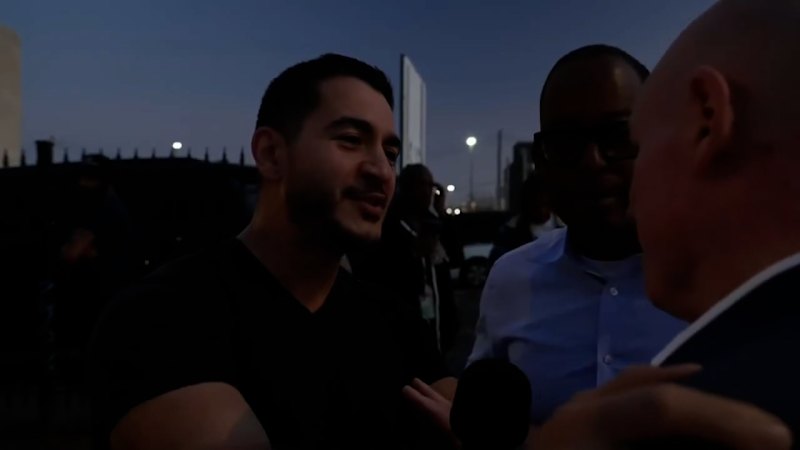
When a candidate for the United States Senate tells a foreign correspondent that he wants zero votes in the correspondent's home country, the exchange operates as a deliberate signal about voter constituency rather than a spontaneous slip of temper. During the November 2026 midterm cycle in Michigan, Democratic Senate hopeful Abdul El-Sayed clashed with Sky News U.S. correspondent James Matthews as election returns began coming in. El-Sayed asked whether Matthews was registered to vote in Michigan, dismissed the relevance of addressing viewers in the United Kingdom, and placed his hands on the reporter's shoulders while asking him to stop chasing him around.
Standard news coverage of the episode frequently treats the moment as an isolated personality clash or a question of press etiquette. A rigorous analysis requires separating verified facts from rival interpretations. Documented facts establish the setting—Election Night 2026 in Michigan—the participants, the verbal exchange over UK viewership and Michigan voter registration, and the physical contact involving El-Sayed placing his hands on Matthews's shoulders. By contrast, characterizing the physical contact as "manhandling" or treating the dismissal as proof of hypocrisy regarding prior critiques of media evasion represents an interpretive framing rather than a settled physical measurement. If you enjoyed this article, you should look at: this related article.
To understand why this friction matters strategically, the incident must be mapped across three structural layers:
- Constituency allocation: Campaign time and rhetorical attention are scarce resources allocated toward actors who can affect the outcome in the relevant jurisdiction.
- Media framing divergence: Domestic U.S. political outlets, international broadcasters, and partisan commentators evaluate the same clip through competing norms of access, neutrality, and accountability.
- Downstream governance exposure: Once a candidate wins statewide office, policy votes and committee assignments reach well beyond state borders, altering the cost-benefit calculus of treating international press as irrelevant.
How Electoral Geography Shapes Candidate Pushback
In a statewide U.S. Senate race, every minute spent on camera carries an opportunity cost measured in local reach, donor mobilization, and turnout. El-Sayed's pushback centered on a sharp boundary between domestic voters and foreign audiences: he noted that he was not running for office in the UK and framed his reluctance to continue the exchange around lack of electoral standing in Michigan. Matthews countered that the election carries international significance. For another look on this story, refer to the recent coverage from USA Today.
Both positions rest on coherent premises that collide in real time. From a candidate's tactical perspective, a foreign network's primary audience cannot cast ballots in Michigan's Senate contest. Spending late-night energy on Election Day answering questions geared toward overseas viewers offers minimal direct return on a domestic ballot. From a journalistic perspective, U.S. midterm outcomes shape global trade, alliance posture, and diplomatic signaling, giving international correspondents a legitimate mandate to cover the contest.
When those two premises collide on camera, the exchange turns into a contest over legitimacy. The candidate challenges the interviewer's standing as a stakeholder in the race, while the reporter asserts the global salience of the office being sought. Neither argument resolves the tension automatically because electoral accountability is legally local while policy impact is often transnational.
Physical Proximity and Escalation Dynamics in Live Encounters
Unscripted street or hallway encounters during an election night create high escalation risk because movement, microphones, cameras, and crowd noise compress personal space. Reports of the Sky News encounter note that El-Sayed placed his hands on Matthews's shoulders while asking him to stop chasing him, while Matthews rejected the characterization that he was chasing him.
In high-pressure media environments, physical contact between a public figure and a journalist acts as an immediate amplifier. Even when a candidate intends a gesture to mark a boundary or end an exchange, touching a reporter's body shifts attention away from the underlying policy or electoral argument and toward physical conduct and personal space. Critics and commentators rapidly seize on that visual cue to argue that a candidate crossed a line with the press, turning a dispute over interview scope into a story about demeanor and restraint.
Consider a practical campaign operations analogy: if a press handler fails to establish a clean exit lane or a firm verbal stop before an interview ends, the candidate is forced to manage boundary enforcement on live camera. Once a candidate takes on boundary enforcement directly—especially through physical contact—the campaign loses control of the clip's focal point.
Asymmetric Incentives Across Domestic and Foreign Outlets
Coverage of the confrontation illustrates how media ecosystems filter the same raw footage according to their structural incentives. A British broadcaster covering U.S. midterms focuses on how American political shifts resonate with international viewers and how candidates respond to overseas scrutiny. Domestic partisan outlets and advocacy commentators frequently extract such moments to reinforce broader narratives about a candidate's temperament, consistency, or contested associations.
A common analytical error is assuming that viral clips automatically alter voter behavior in a uniform direction. In practice, audiences filter confrontational footage through preexisting priors. Supporters of an insurgent or combative candidate may read sharp pushback against an outsider journalist as toughness or authenticity, whereas skeptics and press critics may read the same behavior as hostility, defensiveness, or disrespect toward reporters.
- Audience composition: Domestic Michigan voters weigh local representation and campaign identity, whereas UK viewers watch through a different political lens.
- Timing on the calendar: Clashes occurring on Election Night arrive after most ballots are already cast or being tabulated, limiting immediate persuasion while still shaping post-election narratives.
- Prior media history: Repeated tense media exchanges during a campaign create a cumulative pattern that commentators link together when evaluating how a candidate handles scrutiny.
Why Officeholders Face Broader Accountability Than Candidates
A critical cause-and-effect shift occurs between campaigning for a seat and serving in the U.S. Senate. While a candidate can plausibly argue during a state race that foreign audiences have no vote in the election, a sitting U.S. senator participates in federal decisions with direct international consequences—including foreign policy legislation, sanctions, defense cooperation, and diplomatic confirmations.
Once elected, dismissing foreign reporters as irrelevant to viewers abroad becomes harder to sustain strategically. International outlets cover federal lawmakers precisely because U.S. legislative and oversight actions affect global allies, markets, and security arrangements. Treating foreign press solely as non-voters overlooks how global coverage feeds back into international diplomatic perception and domestic reputation.
At the same time, no media strategy eliminates friction entirely. Aggressive questioning from adversarial outlets, selective editing of clips, and ideological polarization mean that even disciplined officials face hostile exchanges. Acknowledging that limitation prevents overclaiming: better media mechanics reduce avoidable self-inflicted wounds, but they cannot guarantee favorable coverage or neutral reception across every audience.
Operational Protocol for High-Stakes Media Boundaries
Campaigns and legislative offices that want to enforce limits on press encounters without generating avoidable backlash should follow a disciplined sequence rather than improvising on camera:
- Pre-define exit cues with press staff: Establish a clear verbal signal and physical path away from cameras before an interview begins so staff can close the exchange cleanly.
- State boundaries verbally without physical contact: Deliver a concise, calm refusal—such as declining further questions and stepping away—without touching the reporter's body or clothing.
- Separate electoral scope from policy relevance: Acknowledge global interest briefly when appropriate while anchoring answers to constituent priorities, avoiding dismissive generalizations about audiences that may matter once in office.
- Audit clip risk before walking away: Assume any contentious final sentence or gesture will be clipped and circulated out of context across rival media ecosystems.
In the transition from Senate candidate to sitting senator, the strategic play is to replace ad-hoc street pushback with structured boundary control—keeping hands off reporters, keeping refusals brief, and calibrating media engagement to the broader institutional reach of federal office.