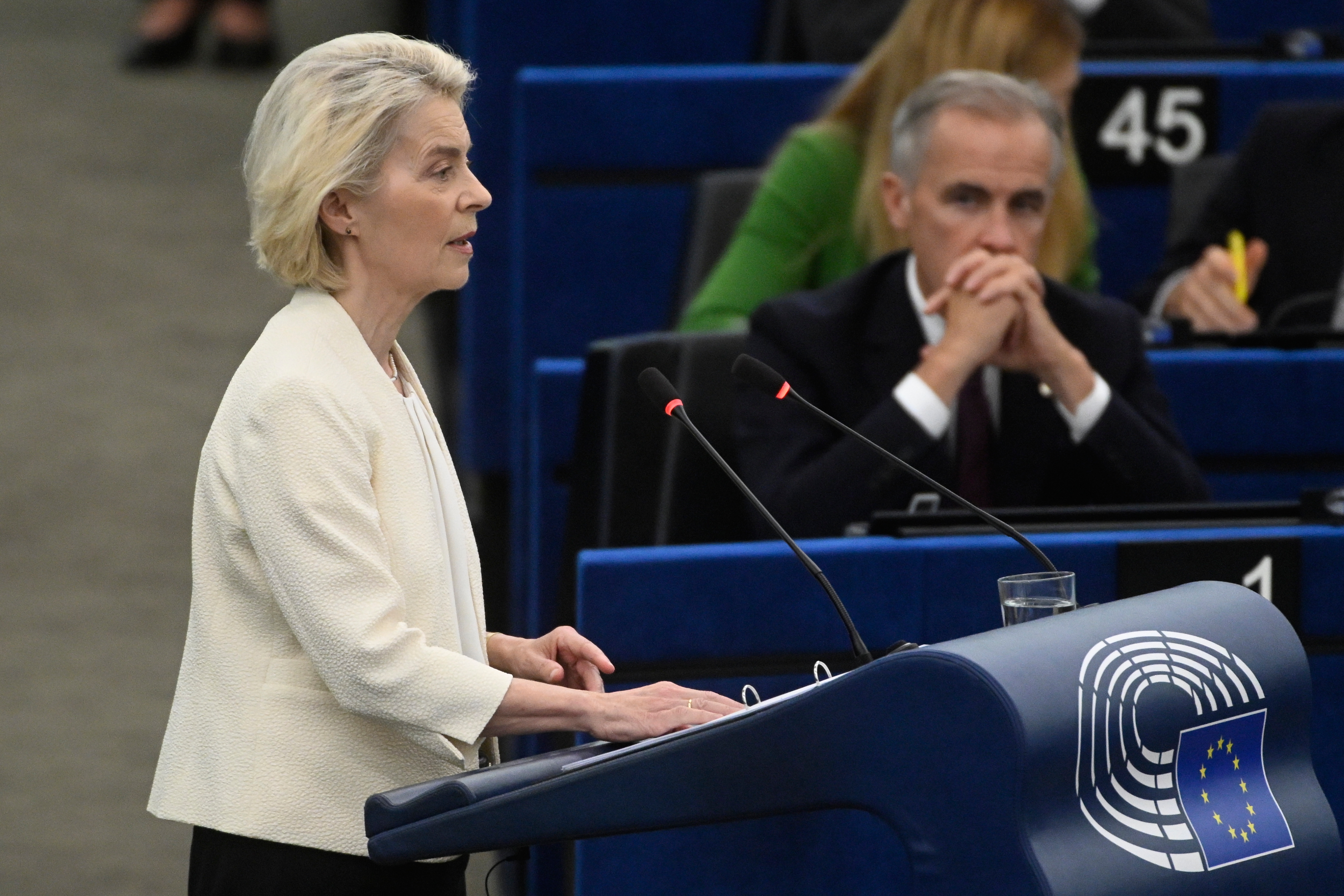
Ursula von der Leyen floating the concept of Canada stepping into an associate membership role within the European Union sounds like a warm, fireside chat among like-minded democracies. Editorial boards across North America swooned, framing it as the logical next step for transatlantic solidarity, a bold defense of the rules-based international order, and a natural evolution beyond the Comprehensive Economic and Trade Agreement.
It is none of those things. It is a geopolitical sugar pill designed to mask Europe's structural economic stagnation and Ottawa's desperate diplomatic search for relevance outside the American shadow. You might also find this connected article insightful: Silence in the Warm Heart of Africa.
To understand why this proposal is a bad deal for Canada, you have to strip away the diplomatic varnish and look at how Brussels actually operates. Associate membership is not a seat at the adult table; it is a permanent junior partnership where you absorb the costs of European bureaucracy while having zero influence over the pen that writes the rules.
The Norway Fallacy and the Rule-Taker Reality
The lazy consensus in international relations circles assumes that closer institutional ties to the European single market are an unmitigated good. Proponents point to the European Economic Area or various association agreements as proof that integration brings prosperity without the baggage of full political union. As reported in recent articles by The Guardian, the results are significant.
Look closer at the mechanics. Take the EEA model used by nations like Norway. Oslo contributes billions annually to the European Union budget to maintain market access. It adopts thousands of European directives, regulations, and standards governing everything from environmental compliance to consumer product safety. Yet, Norwegian diplomats do not sit on the European Council, Norwegian voters elect zero members to the European Parliament, and the European Court of Justice holds ultimate jurisdiction over legal disputes.
Norway is a rule-taker, not a rule-maker. They have taxation without representation, executed voluntarily by a wealthy sovereign state that prefers administrative comfort to geopolitical friction.
Canada is not Norway. Canada is a G7 economy spanning half a continent, sharing a massive land border with the world's most dynamic economic engine, and possessing a resource base that fuels heavy industry across the globe. Guttural submission to Brussels-based regulatory committees makes zero strategic sense for a country whose primary economic survival depends on agility, natural resource development, and North American supply chain integration.
Imagine a scenario where Canadian mining projects, agricultural exports, and energy grids are subjected to the labyrinthine approval processes of the European Commission. Environmental mandates drafted in Brussels—designed for densely populated European peninsulas with entirely different ecological realities—would be slapped onto the Canadian Shield and the oil sands. Ottawa would find itself fighting endless legal battles in European courts to protect domestic industries, only to be outvoted by member states whose primary interest in Canada is extracting concessions on critical minerals.
What Brussels Actually Wants
Europe is staring down a multi-front crisis. German manufacturing is losing its competitive edge under high energy costs and rigid labor laws. The continent's tech sector is a ghost town compared to Silicon Valley and Shenzhen. Most importantly, Europe faces a chronic shortage of the exact raw materials required for the green transition: lithium, nickel, cobalt, graphite, and uranium.
Brussels needs security of supply. Ursula von der Leyen knows that global competition for critical minerals is fierce, and China dominates processing supply chains. By dangling the carrot of "associate membership," European diplomats hope to lock Canada into a preferential trade and resource pact that guarantees European industries first dibs on Canadian commodities.
It is an extraction strategy wrapped in multilateral rhetoric. Europe offers market access to manufactured goods that Canadians already buy, in exchange for guaranteed access to raw wealth that Canada should be processing domestically to build its own industrial base.
Consider the track record of past European overtures. CETA took years to negotiate, faced endless roadblocks from sub-national European parliaments over minor agricultural disputes, and even today remains only provisionally ratified by several member states. If a standard free trade agreement bogs down for over a decade because a regional parliament in Wallonia objects to beef quotas, the idea that a complex, deeply integrated associate membership could pass through the legislative meat grinder of twenty-seven distinct European capitals is pure fantasy.
The North American Gravity Well
Geographic and economic gravity cannot be legislated away by technocrats in Brussels. Over three-quarters of Canadian exports cross the border into the United States. Our financial systems, defense arrangements, logistics networks, and energy grids are fundamentally intertwined with the American economy.
When Washington sneezes, Ottawa catches a cold. When Washington implements industrial policy like the Inflation Reduction Act, Canadian businesses scramble to align their investments south of the border to stay competitive.
Trying to graft European regulatory standards onto a North American economy creates a schizophrenic compliance burden for Canadian corporations. A mid-sized manufacturer in Ontario or Alberta cannot simultaneously satisfy USMCA supply chain rules, US federal environmental standards, and rigorous European directives without destroying their profit margins.
Proponents of closer European integration argue that this gives Canada a third option, a hedge against American protectionism or political volatility. That argument ignores economic reality. You cannot hedge against your primary market by tying your ankles to a sclerotic economic bloc that struggles to grow at two percent a year. Europe's share of global GDP has been shrinking for decades. Chaining Canadian industrial policy to Europe's regulatory fortress is economic self-harm disguised as diversification.
The True Cost of Prestige Diplomacy
Why do Canadian politicians and diplomats find the idea of European association so intoxicating? Because it strokes the national ego. It flatters Canadian sensibilities to sit in European conference rooms, sipping espresso, and discussing global governance while pretending we are equal partners in shaping Western hegemony.
It is performative internationalism. It allows Ottawa to project an image of progressive global leadership while dodging the hard, unglamorous work of fixing domestic productivity, reforming internal interprovincial trade barriers, and modernizing our own defense capabilities.
Canada spends less than two percent of its GDP on defense, chronically underfunds its armed forces, and relies on the United States for continental security. Yet, politicians talk grandly about joining European geopolitical structures. If Canada cannot meet its basic NATO commitments to protect its own Arctic frontier, how can it pretend to shoulder the responsibilities of European associate membership?
What Ottawa Should Actually Do
True economic independence does not come from signing up to be a rule-taker in someone else's empire. It comes from building domestic strength, sharpening competitive advantages, and negotiating hard-nosed, transactional bilateral agreements where the terms strictly favor Canadian interests.
Canada should stop chasing validation in Brussels. Instead of pursuing nebulous associate membership statuses that sacrifice regulatory sovereignty for diplomatic prestige, Ottawa should focus on three concrete imperatives:
First, tear down internal trade barriers. It is easier for a Canadian province to trade with the European Union under CETA than it is for that same province to sell goods across its neighboring provincial border. Fixing internal free trade would instantly unlock billions in domestic economic productivity without requiring a single signature from a European bureaucrat.
Second, process at home. Stop exporting raw critical minerals to Europe and Asia only to buy them back as finished batteries and electric vehicles. Use regulatory and tax incentives to build domestic refining and manufacturing capacity. Make the world come to Canada on Canadian terms.
Third, engage Europe commercially, not institutionally. Maintain CETA where it works, buy and sell what makes economic sense, and cooperate on intelligence and security through established frameworks like NATO and the G7. But draw a hard line at regulatory alignment and political integration.
Canada does not need to become an associate member of anything. It needs to stop looking across the Atlantic for permission to succeed, and start acting like a sovereign nation that dictates its own terms to the world.