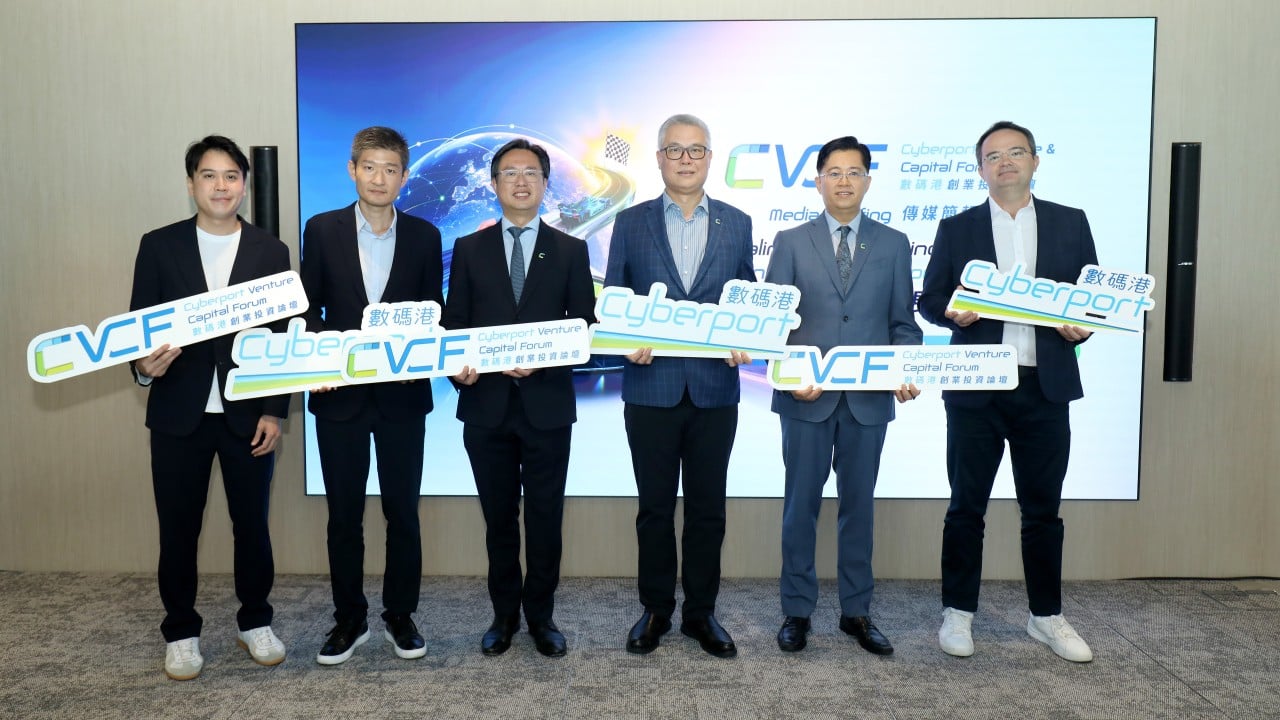
Institutional venture capital is undergoing a structural repricing as artificial intelligence transitions from an experimental software layer into the primary engine of enterprise unit economics. The Cyberport Venture Capital Forum (CVCF) 2026 operates as a critical clearinghouse for this transition, uniting Asian liquidity providers, sovereign wealth allocators, and technical founders in Hong Kong to resolve a widening valuation gap between legacy SaaS multiples and compute-intensive AI architectures. Rather than functioning as a routine networking summit, the forum exposes the exact capital allocation frameworks required to survive the commoditization of foundation models and the concentration of compute infrastructure.
The Structural Shift in Venture Economics
Traditional software investing relied on near-zero marginal costs of replication. Once a codebase was written, selling the millionth license required minimal incremental capital expenditure, allowing gross margins to settle routinely above 80 percent. Artificial intelligence inverts this financial model. Every inference call, context-window expansion, and fine-tuning run incurs direct compute and energy expenses, compressing initial gross margins to between 50 and 65 percent while front-loading capital requirements.
Allocators convening at CVCF 2026 confront three distinct economic pressures that dictate modern term sheets:
- The Compute-to-Revenue Ratio: Early-stage startups can no longer raise Series A rounds on user growth alone. Investors now underwrite the efficiency with which a company converts GPU cycles into recurring enterprise contracts. If inference costs scale linearly with customer usage without a corresponding pricing power mechanism, the business model fails stress testing.
- Defensibility Beyond Model Weights: Foundation model capabilities depreciate rapidly as open-weights alternatives match proprietary performance within months. Capital now flows away from thin application wrappers and toward startups that control proprietary data flywheels, deeply embedded workflow integrations, or regulatory compliance moats.
- Liquidity Horizon Compression: High interest rates and delayed global IPO windows have forced regional Limited Partners (LPs) to demand clearer paths to secondary liquidity, corporate M&A, or cash-flow profitability within a 48-month window.
Hong Kong as a Cross-Border Liquidity Bridge
Geopolitical fragmentation has split global technology supply chains and capital pools into distinct regulatory jurisdictions. Hong Kong occupies a specific arbitrage position within this divided architecture, acting as an institutional interface between mainland Chinese engineering depth and international institutional capital.
Cyberport, operating as Hong Kong’s digital technology flagship with an ecosystem exceeding 2,000 startups and technology enterprises, structures CVCF 2026 to formalize this cross-border capital routing. For Western and Middle Eastern family offices, direct investment into mainland deep-tech carries complex compliance and due diligence friction. Conversely, mainland AI and robotics founders face steep barriers when attempting to commercialize intellectual property across Southeast Asia, Europe, or the Americas.
The forum resolves this friction through two operational mechanisms:
- Regulatory Sandbox Alignment: Hong Kong’s financial regulators—specifically the Hong Kong Monetary Authority (HKMA) and the Securities and Futures Commission (SFC)—have established controlled testing environments for generative AI in banking, cross-border wealth management, and tokenized assets. Startups validated within these sandboxes present significantly lower regulatory risk to institutional investors.
- Co-Investment syndication: The Cyberport Macro Fund (CMF) functions as an anchor co-investor, reducing due diligence overhead for private venture funds. By committing state-backed capital alongside private lead investors, the ecosystem de-risks early-stage deep-tech rounds that would otherwise stall due to long R&D cycles.
The Three Pillars of AI Underwriting at CVCF 2026
When institutional investors evaluate AI ventures during the forum's pitch sessions and closed-door LP-GP roundtables, the underwriting criteria divide into three non-negotiable categories.
1. Vertical Integration and Sovereign Data Loops
Horizontal AI tools—general-purpose writing assistants, basic coding copilots, and generic image generators—have consolidated around hyperscalers with massive balance sheets. Venture returns now concentrate in vertical AI systems built for high-friction industries such as biotech, supply chain logistics, legal discovery, and industrial manufacturing.
A defensible vertical AI company must establish a closed-loop feedback architecture. When an enterprise user corrects an AI-generated output within a specialized workflow, that correction must immediately update the local model's weights or retrieval-augmented generation (RAG) index. Over 24 months, this creates a domain-specific dataset that no foundation model provider can scrape from the public internet. Investors at CVCF 2026 audit technical architectures specifically to verify whether this data capture is automated or reliant on expensive human-in-the-loop consulting.
2. Agentic Workflow Execution Over Passive Co-Pilots
The first wave of enterprise AI relied on human-prompted interfaces, which suffered from low daily active usage once initial novelty faded. The second wave—the primary focus of 2026 venture deployment—centers on autonomous agents capable of executing multi-step operational tasks across disparate software APIs without continuous human intervention.
Consider the operational difference in trade finance, a core sector in Hong Kong's economy. A passive co-pilot summarizes a bill of lading when prompted by a compliance officer. An autonomous agent ingests incoming shipping documents, cross-references sanctions databases, flags discrepancies against letters of credit, drafts the amendment notice, and routes it for final cryptographic sign-off. The economic value shifts from saving an employee ten minutes of reading to eliminating entire operational bottlenecks, allowing the vendor to price the software based on transaction volume or cost savings rather than per-seat licensing.
3. Hardware-Software Co-Design and Edge Inference
Cloud-based inference creates prohibitive latency and data privacy risks for physical industries. As AI expands into robotics, autonomous logistics, and smart manufacturing across the Greater Bay Area, capital is rotating back into specialized silicon, neuromorphic sensors, and edge-computing frameworks.
Investors evaluate these ventures on power-consumption metrics (TOPS per watt) and bill-of-materials scalability. By pairing Hong Kong’s intellectual property protection and international financing with Shenzhen’s rapid prototyping and hardware supply chains, regional startups compress hardware iteration cycles from years to months.
The Valuation Trap and Operational Due Diligence
Despite aggressive capital deployment into AI, historical venture mechanics prove that technological breakthroughs frequently destroy investor equity when entry valuations detach from cash-flow fundamentals. During the 2023–2024 AI cycle, seed-stage companies routinely raised at $40 million to $60 million post-money valuations with zero recurring revenue. Many of these entities now face flat or down rounds as enterprise buyers scrutinize return on investment.
Rigorous investors attending CVCF 2026 apply strict operational filters to avoid this valuation trap:
- Net Dollar Retention (NDR) Stress Testing: High initial annualized recurring revenue (ARR) in AI startups often masks massive churn. Enterprises allocate experimental innovation budgets to test new AI tools, inflating initial sales figures, only to cancel contracts at renewal when the tool fails to integrate into core production systems. Experienced allocators separate experimental pilot revenue from multi-year production contracts before assigning a revenue multiple.
- Vendor Lock-In and Model Agnosticism: Startups whose core architecture depends entirely on a single proprietary API face existential pricing risk. If the upstream model provider alters its pricing tier or releases a native feature that replicates the startup's core function, the startup's equity value collapses overnight. Technical due diligence now requires proof of model routing—the ability to dynamically switch inference tasks between large proprietary models, smaller fine-tuned open models, and local deployments based on latency and cost thresholds.
- Customer Acquisition Cost (CAC) Payback: Enterprise sales cycles for AI have lengthened because Chief Information Security Officers (CISOs) and legal teams now require extensive data-privacy audits before approving deployment. If a startup's CAC payback period exceeds 18 months, equity capital is consumed merely to subsidize sales overhead rather than product engineering.
Strategic Execution for Ecosystem Participants
To extract measurable alpha from CVCF 2026 rather than treating the event as passive market observation, founders and capital allocators must execute targeted operational protocols before and during the forum.
For Founders Raising Institutional Capital:
Audit your financial model to separate software subscription revenue from non-recurring engineering (NRE) or integration fees. Present a granular unit-economics breakdown demonstrating how gross margins will expand from current baselines toward 75 percent over an eight-quarter horizon through model quantization, caching, or migration to smaller, domain-specific architectures. Anchor your pitch in proprietary workflow ownership rather than model performance benchmarks, which become obsolete every 90 days.
For Institutional Investors and Family Offices:
Concentrate capital allocation in infrastructure middleware, compliance auditing tools, and vertical agentic platforms serving regulated Asian industries—specifically cross-border finance, maritime logistics, and healthcare administration. Utilize co-investment structures through established regional vehicles to mitigate single-asset risk, and enforce strict governance milestones tied to production-grade enterprise retention rather than top-line pilot sign-ups.