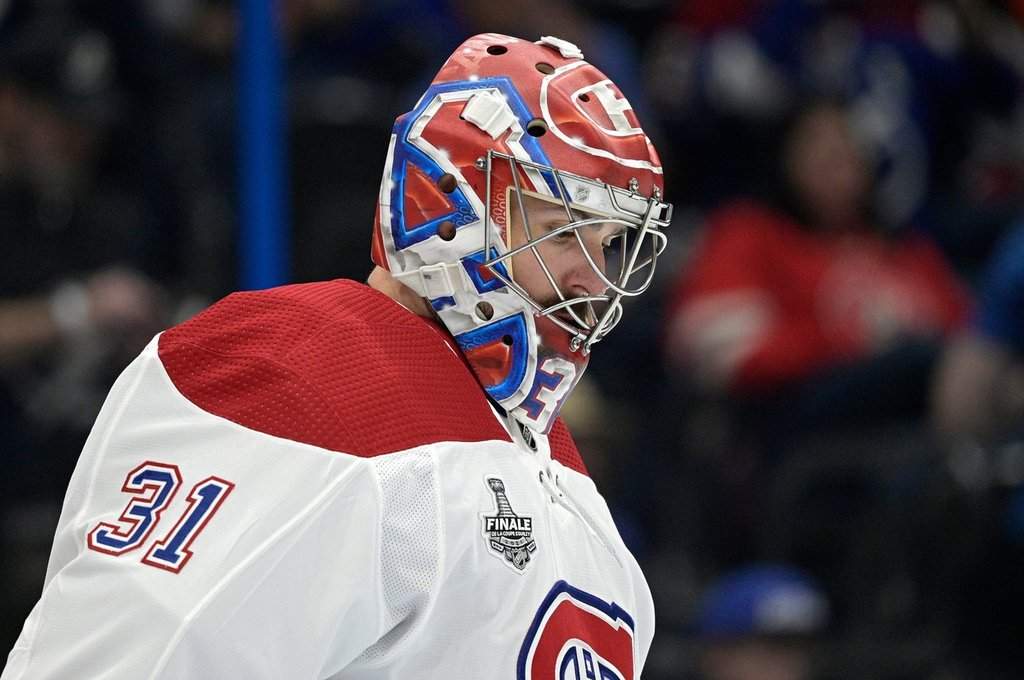
Carey Price never hoisted the Stanley Cup.
For years, that single missing line on his resume fueled endless barstool debates and sports radio segments across North America. Critics pointed to his lack of a championship ring as a fatal flaw in his legacy. Yet when the Hockey Hall of Fame announced its Class of 2026, Price didn't just sneak in on a weak ballot. He headlined it.
Honestly, it wasn't even close. Anyone who watched the Montreal Canadiens between 2012 and 2021 knows Price carried rosters that had no business sniffing the postseason. Being inducted into the Hockey Hall of Fame in 2026 validates what players, coaches, and analytics departments knew all along. Individual brilliance in the crease shouldn't be held hostage by a front office's inability to build a top-six forward group.
Why Carey Price Was a Lock for the 2026 Hockey Hall of Fame
First-ballot inductions for goaltenders are notoriously rare in Toronto. The selection committee treats netminders with a level of scrutiny they rarely apply to 1,000-point scorers. You don't get the call on your first try unless you fundamentally altered how your position was played or dominated an entire era. Price did both.
Look at the 2014-15 season. That year remains the gold standard for modern goaltending. Price won the Vezina Trophy, the Hart Memorial Trophy, the Ted Lindsay Award, and the William M. Jennings Trophy. No goaltender since Dominik Hašek in 1997 and 1998 had pulled off the Hart-Vezina double. Price posted a 44-16-6 record with a 1.96 goals-against average and a .933 save percentage in front of a Canadiens squad that finished 20th in league scoring.
He literally dragged them to the top of the Atlantic Division by himself.
Then you have the international stage. When the NHL sent its absolute best players to the 2014 Winter Olympics in Sochi, Team Canada didn't just win gold—they suffocated opponents. Price allowed three goals across five starts. He posted consecutive shutouts in the semifinal against the United States and the gold medal game against Sweden, finishing the tournament with a ridiculous .972 save percentage and a 0.59 goals-against average. He followed that up two years later by backstopping Canada to a sweep at the 2016 World Cup of Hockey.
The 2021 Playoff Run Sealed the Deal
If there were any lingering doubts about his big-game pedigree, Price erased them in the spring of 2021. Playing on a knee that was essentially held together by tape and sheer willpower, he led an 18th-seeded Montreal team all the way to the Stanley Cup Final.
Montreal upset the heavily favored Toronto Maple Leafs in seven games, swept the Winnipeg Jets, and dismantled the Vegas Golden Knights in six. Price posted a .924 save percentage across 22 playoff games. That run cost him the rest of his career, as his body finally gave out following offseason knee surgery, limiting him to just five games in 2021-22 before he stepped away from the ice.
He retired as the Montreal Canadiens' all-time wins leader with 361 victories, passing Jacques Plante and Patrick Roy—two legends whose numbers hang in the Bell Centre rafters. You don't sit atop the franchise leaderboard of the most storied organization in hockey history and wait around for a Hall of Fame induction.
Who Joined Carey Price in the Class of 2026
While Price grabbed the bulk of the headlines across Quebec and the rest of Canada, the 2026 induction class reflects a broader shift in how the selection committee evaluates modern careers. For decades, the committee leaned heavily on traditional counting stats—500 goals, 1,000 points, 400 wins. That old-school math kept deserving two-way players and era-adjusted stars waiting in the wings.
The 2026 ballot rewarded peak dominance, international hardware, and sustained defensive excellence alongside raw offensive output.
The Modern Goaltending Standard
Price's induction alongside his peers highlights just how brutal the NHL became for goalies during the 2010s. Scoring rates climbed steadily after the 2012-13 lockout, power plays became lethal, and high-danger cross-crease passes turned into the norm. Maintaining a career save percentage above .915 across more than 700 regular-season games during that transition is absurd.
Compare Price's era to the dead-puck days of the late 1990s and early 2000s. Goalies back then wore oversized chest protectors and massive leg pads while facing dump-and-chase offenses. Price played in streamlined equipment against shooters using composite sticks that whipped pucks at 100 miles per hour from bad angles. Yet his calm, economy-of-motion style made elite NHL snipers look like they were shooting at a brick wall. Every young goalie entering junior hockey today models their posture, post integration, and puck-handling mechanics after Price.
What Most Fans Get Wrong About the Stanley Cup Argument
Let's address the elephant in the room. Whenever a player like Carey Price, Henrik Lundqvist, or Roberto Luongo enters the Hall of Fame, a vocal minority of fans immediately screams about the lack of a Stanley Cup ring.
It's a lazy argument.
Hockey isn't basketball. LeBron James or Nikola Jokić can play 42 minutes a night, touch the ball on every single offensive possession, and single-handedly dictate the outcome of a seven-game series. Even the greatest NHL forward of all time plays roughly 20 to 22 minutes a game. A goaltender plays all 60 minutes, stops 93 percent of the rubber fired at him, and still loses 1-0 if his power play goes 0-for-5.
Look at the rosters Price played behind in Montreal:
- Lack of elite center depth: Throughout his entire prime, Price never played with a single point-per-game center. Not one. Think about that. Every recent Cup winner—Pittsburgh, Chicago, Tampa Bay, Colorado, Vegas, Florida—built their dynasty around elite middle-of-the-ice talent. Price had David Desharnais, Tomas Plekanec, and Phillip Danault. Good players, sure, but nowhere near the tier of Sidney Crosby, Nathan MacKinnon, or Aleksander Barkov.
- Drafting misses: Between 2008 and 2017, Montreal's amateur scouting department repeatedly whiffed on first-round picks, leaving the franchise starved for homegrown offensive star power.
- Coaching turnover: Price adapted to four different head coaches during his prime—Jacques Martin, Michel Therrien, Claude Julien, and Dominique Ducharme—each demanding radically different defensive zone coverage systems.
Judging Price for not winning a Cup in Montreal is like blaming a Formula 1 driver for finishing second in a midfield car. He maximized every ounce of potential those teams possessed. When Lundqvist went in as a first-ballot inductee in 2023 without a ring, the selection committee officially buried the outdated notion that a goalie needs a Cup to earn immediate immortality. Price's 2026 induction simply cemented that precedent.
How the Hockey Hall of Fame Selection Process Actually Works
If you've ever wondered why certain obvious candidates get snubbed while others sail through, you need to look at how the 18-person selection committee operates behind closed doors in Toronto.
Unlike the Baseball Hall of Fame, where hundreds of writers cast public or semi-public ballots, the Hockey Hall of Fame relies on a tight-knit group of former players, general managers, coaches, and veteran broadcasters. To get elected, a candidate needs at least 75 percent of the vote—meaning 14 out of 18 committee members have to say yes.
There's also a strict cap. The committee can induct a maximum of four male players, two female players, and two builders (or one builder and one referee/linesman) per year. That four-player ceiling creates massive logjams. When a generational lock like Carey Price becomes eligible—three full seasons after his last professional game—he instantly eats up one of those four spots.
Why First-Ballot Status Matters
Getting in on your first year of eligibility is the ultimate flex in hockey. Players like Wayne Gretzky, Mario Lemieux, Sidney Crosby, and Carey Price bypass the annual waiting game entirely. Once you miss your first ballot, you're suddenly competing against the next wave of newly retired superstars. Ask Alexander Mogilny or Rod Brind'Amour how hard it is to climb out of the backlog once the committee passes you over the first time.
Price never had to worry about the backlog. His name went on the whiteboard, the committee looked at the 2015 hardware, the 2014 Olympic gold, and the 361 wins in the NHL's toughest media market, and the vote was a formality.
The Bell Centre Legacy and What Comes Next
Montreal doesn't treat hockey players like normal athletes. In Quebec, the Canadiens are closer to a cultural institution than a sports franchise, and the starting goaltender carries the weight of the entire province on his shoulders. Patrick Roy cracked under the pressure and demanded a trade in 1995. José Théodore won a Hart Trophy and burned out within four years. Jaroslav Halák became a folk hero for six weeks before getting shipped to St. Louis.
Price handled the spotlight for 15 seasons with a stoic, unflappable grace that bordered on superhuman. Even when fans booed him during a rough preseason game early in his career—prompting his famous "chill out" gesture—he never pointed fingers at teammates or threw coaches under the bus.
With his induction into the Hockey Hall of Fame in 2026, only one ceremonial milestone remains for Carey Price in Montreal. The Canadiens are famously stingy about retiring jersey numbers, having honored just 15 players in over a century of hockey. Every single player whose banner hangs from the Bell Centre rafters is in the Hall of Fame, and nearly all of them won multiple Stanley Cups.
Number 31 belongs up there next to Roy's 33 and Dryden's 29. If you're planning a trip to Montreal for the 2026-27 NHL season, keep a close eye on the Canadiens' home schedule release—booking tickets early for the inevitable jersey retirement night and Hall of Fame tribute game at the Bell Centre will save you from paying astronomical secondary-market prices.