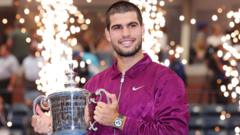
Carlos Alcaraz is walking straight into New York without a single warm-up match on hard courts. That sounds completely insane for anyone trying to defend a Grand Slam title.
After spending four months on the sidelines recovering from a brutal right-wrist injury sustained back in April at the Barcelona Open, the Spaniard recently shocked the tennis world by announcing his Flushing Meadows comeback. He bypassed Toronto and Cincinnati entirely, skipped the entire clay and grass swings, and enlisted football transfer guru Fabrizio Romano to drop a viral "Here we go!" announcement on social media.
It is high drama. It is also a massive physical gamble.
The Anatomy of a Four-Month Layoff
Wrist injuries in tennis ruin careers. You don't have to look far back in history to find warning signs. Dominic Thiem and Juan Martín del Potro both watched their primes evaporate because their wrists simply refused to cooperate after surgeries and heavy loads. When Alcaraz pulled out of Barcelona after feeling a sharp pain in his right wrist while returning a serve from Otto Virtanen, nobody knew it would turn into a four-month dark period.
He missed Roland Garros. He missed Wimbledon. For an athlete who thrives on rhythm, momentum, and constant competition, sitting at home watching rivals fight for majors was pure torture.
Yet, his camp used the downtime as an aggressive mini-preseason. While he couldn't hold a racket for weeks, Alcaraz built up his physical armor elsewhere. Trainers put him through rigorous fitness work in Murcia. He arrived at this recovery phase without the chronic fatigue that usually drags down top players by August.
Why Experts Are Worried About New York
Practice sessions with Holger Rune and hitting ball-striking videos posted online look promising, but practice isn't reality. Former US Open finalist Greg Rusedski warned publicly that jumping straight into best-of-five-set matches without a tune-up event is a recipe for disaster.
Adrenaline changes everything. When you step onto Arthur Ashe Stadium under the lights, you hit every ball five to ten percent harder than you do in a quiet training block. Nerves flare up. Muscles tense. If that right wrist hasn't truly adapted to the sudden deceleration required on heavy topspin forehands, trouble will follow fast.
Alcaraz faces a brutal draw reality, too. He has zero match sharpness. While players like Jannik Sinner have spent the summer grinding through hard-court battles, Alcaraz is testing a repaired joint against tour-level killers who are already running at full speed.
The Upside of Total Desperation
If you think Alcaraz is returning just to wave to the crowd, you don't know his competitive DNA. He expects to win every single tournament he enters.
Fresh legs matter immensely during the grueling North American swing. By late summer, most of the locker room is completely exhausted, dragging tired limbs across asphalt courts after months of non-stop travel. Alcaraz is stepping onto the grounds with a hyper-charged battery and a point to prove.
Managing expectations is the real key here. If his wrist holds up under the pressure of five-setters, the rest of the tour is in trouble. If it fails, the consequences could stretch well into next season. Watch his opening round closely. The way he handles defensive stretches on his forehand side will tell you everything you need to know about whether this gamble will pay off or blow up in his face.