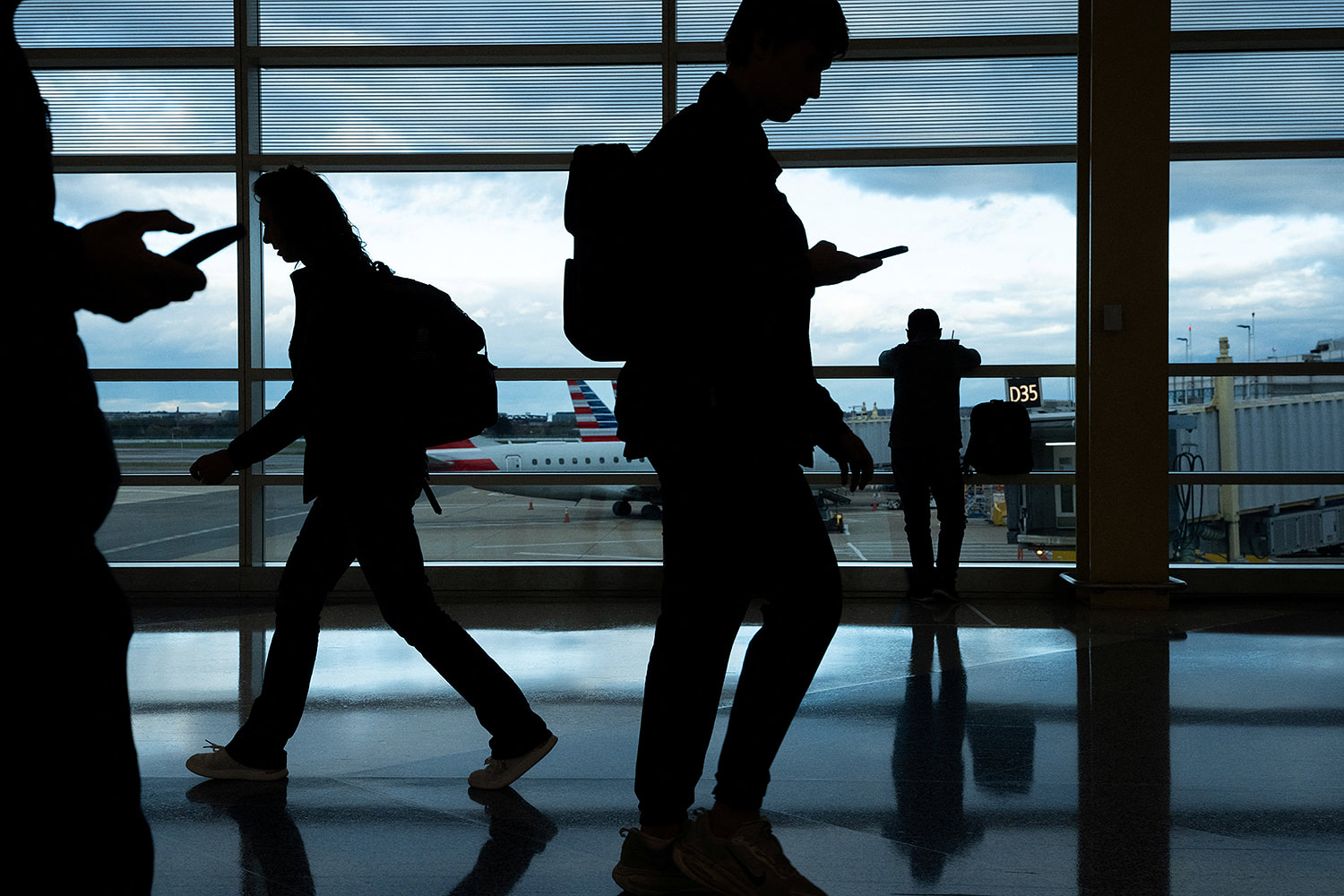
Modern commercial aviation operates as a hyper-coupled, zero-slack network where a localized ground stop acts less like a temporary pause and more like a systemic cardiac arrest. When an air traffic control authority or an airline operations center initiates a ground stop, the immediate halt of departures is merely the first domino in a multi-day operational collapse. True network normalization does not occur when the ground stop is lifted; it occurs only after airlines untangle three deeply intertwined resource constraints: aircraft positioning, crew legality timers, and airport gate capacity. Understanding the recovery curve requires analyzing the mathematical and regulatory bottlenecks that prevent carriers from simply resuming a published schedule once the skies clear.
The Architecture of Hyper-Coupled Aviation Networks
Legacy airline operations rely heavily on hub-and-spoke topologies to maximize load factors and route connectivity. While economically efficient during steady-state operations, this architecture introduces severe structural fragility. A single aircraft does not fly back and forth between two cities; it executes a multi-leg daily routing across four to six distinct airports, carrying downstream passengers and connecting crews at every node. Expanding on this topic, you can also read: Why Celebrating Jackdaw Gas Is the Most Dangerous Illusion in European Energy.
When a ground stop freezes departures at a major hub, the disruption propagates outward through three primary transmission vectors:
- Downstream Equipment Starvation: An outbound flight held at Hub A cannot operate its subsequent return leg from Spoke B, nor its afternoon flight from Hub A to Spoke C. Within three hours of a major ground stop, aircraft tail numbers are completely decoupled from their scheduled geographic locations.
- Crew Pairing Fragmentation: Flight crews are scheduled in multi-day pairings that rarely mirror the exact routing of a single airframe. A pilot might fly one aircraft into a hub and be scheduled to fly a different aircraft out. When aircraft arrivals desynchronize from crew arrivals, an airline can possess both a fueled plane and a rested crew at the same airport, yet remain unable to launch the flight because the two assets belong to different operational pairings.
- Passenger Flow Compression: Modern revenue management systems routinely push load factors above 85 percent. This leaves less than 15 percent spare seat capacity across the entire network to absorb displaced passengers. A single weekend of widespread cancellations generates a passenger backlog that exceeds the systemic seat surplus for the following four to five days.
The Regulatory Ceiling on Recovery Speed
Standard reporting on flight disruptions treats recovery as a matter of airline willpower or weather clearance. In reality, the speed at which an airline can clear a backlog is strictly bounded by federal aviation regulations, specifically Federal Aviation Regulation (FAR) Part 117 in the United States and equivalent flight-time limitation frameworks globally. Analysts at CNBC have also weighed in on this situation.
Crew legality is governed by hard, non-negotiable mathematical ceilings. Pilots and flight attendants operate under strict limits regarding maximum flight duty periods (FDP), cumulative flight hours over rolling 28-day and 365-day windows, and mandatory minimum rest periods between shifts.
When a ground stop traps an aircraft on a taxiway or holds it at a gate, the crew's duty clock continues to tick. If a two-hour ground stop pushes a crew past their maximum allowable FDP, the flight cannot depart even after the ground stop is lifted. The airline must source a reserve crew. However, reserve pools are sized for statistical averages—typically covering 10 to 15 percent of daily operations—rather than catastrophic, network-wide failures. Once the reserve pool is exhausted, the carrier hits a hard operational wall. Aircraft sit idle on the tarmac until timed-out crews complete mandatory 10-to-12-hour rest cycles, creating an artificial lag between the resolution of the root cause and the resumption of flight volume.
The Three Phases of Network Normalization
When media reports state that air travel is "starting to normalize," they are usually observing a drop in real-time cancellation rates. From an operational standpoint, normalization is a distinct, multi-stage engineering process executed by the Airline Operations Center (AOC).
Phase 1: Triage and Schedule Thinning
Before an airline can recover, it must stop the bleeding. During the height of a ground stop, the AOC intentionally cancels flights proactively—a process known as schedule thinning. By canceling 15 to 20 percent of the next day's schedule in advance, dispatchers free up aircraft tails and crew pairings to cover the remaining 80 percent of flights. This prevents the network from entering a state of total gridlock where every flight is delayed by six hours and every crew times out mid-shift.
Phase 2: Asset Repositioning (Ferry Flights)
Once the ground stop lifts, the geographic distribution of the fleet is entirely wrong. Airlines may have twelve narrow-body jets stranded in secondary markets while major hubs lack equipment for morning banks. Carriers must execute non-revenue repositioning flights—commonly called ferry flights—to move empty aircraft back to primary hubs. These flights generate zero revenue, burn expensive jet fuel, and consume valuable crew duty hours, representing a direct financial loss required to reset the network's physical geometry.
Phase 3: The Re-Accommodation Tail
Even after the flight schedule reaches a 98 percent completion factor—the industry benchmark for normal operations—the passenger experience remains disrupted. This is the re-accommodation tail. Because load factors are structurally high, thousands of passengers stranded over the weekend must be slotted into the few remaining middle seats on Monday, Tuesday, and Wednesday flights. During this phase, the airline's physical operations are technically normal, yet airport terminals remain congested with standby passengers and customer service queues remain maxed out.
The Cost Function of a Weekend Ground Stop
A weekend disruption imposes a severe, asymmetric financial penalty on a carrier. Unlike a localized mid-week weather event, a weekend ground stop hits during peak leisure travel windows when aircraft utilization is highest and spare capacity is lowest.
The financial bleed occurs across four distinct buckets:
- Direct Revenue Dilution: Ticket refunds for canceled flights and fee waivers for rebooked itineraries immediately strip cash from the top line.
- Crew Overtime and Premium Pay: To incentivize off-duty pilots and flight attendants to pick up open trips during a meltdown, airlines frequently trigger contractually mandated premium pay clauses, paying 150 to 200 percent of standard hourly rates.
- Passenger Duty of Care: Depending on whether the ground stop was triggered by an internal airline IT failure, an air traffic control staffing shortage, or severe weather, carriers face varying liabilities for hotel vouchers, meal stipends, and rebooking passengers onto competitor airlines at full walk-up fares.
- Downstream Maintenance Deferrals: Routine preventative maintenance is scheduled during overnight layovers at specific maintenance bases. When aircraft are stranded away from these bases, routine checks are delayed, compressing the maintenance schedule for the following week and increasing the risk of subsequent mechanical delays.
Why Traditional Metrics Mask Systemic Fragility
Public-facing aviation metrics—specifically daily cancellation percentages and on-time arrival rates (defined by the Department of Transportation as arriving within 14 minutes of schedule)—fail to capture the true severity of a ground stop.
An airline can report a respectable 85 percent on-time performance on the Tuesday following a weekend meltdown while still failing tens of thousands of customers. On-time metrics measure the performance of the aircraft, not the passenger. If an airline consolidates three half-empty regional flights into one mainline flight, the single operated flight may depart and arrive on time, registering a 100 percent success rate in operational reporting. Meanwhile, hundreds of passengers bumped from the canceled regional legs experience a 24-hour delay that never appears in the carrier's on-time statistics.
Furthermore, average delay minutes obscure the bimodal distribution of network failures. During a recovery phase, 80 percent of flights may operate with zero delay, while the remaining 20 percent suffer delays exceeding four hours due to localized crew shortages. Averaging these figures produces a benign-looking 48-minute average delay, masking the reality that one-fifth of the network is entirely broken.
Structural Vulnerabilities in Air Traffic Management
While airlines bear the operational brunt of ground stops, the triggers frequently sit outside their direct control. Air traffic control (ATC) infrastructure relies on aging radar and communication systems alongside chronic staffing shortages in critical Terminal Radar Approach Control (TRACON) facilities and Air Route Traffic Control Centers (ARTCC).
When controller staffing dips below minimum safe thresholds at a single high-density sector—such as the New York TRACON or Jacksonville Center—the Federal Aviation Administration (FAA) must artificially reduce the arrival rate into affected airports. Ground stops are the blunt instrument used to meter traffic flow and prevent mid-air holding patterns, which burn excessive fuel and create safety hazards. Because ATC staffing pipelines require years of training to replenish, the aviation system remains structurally vulnerable to sudden capacity reductions triggered by minor disruptions, localized weather, or equipment glitches.
Operational Limitations of Network Resiliency
Critics frequently argue that airlines should build more slack into their schedules to prevent weekend meltdowns. From an economic and operational standpoint, this recommendation runs directly into the brutal unit economics of commercial aviation.
Aviation is a fixed-cost-heavy business with razor-thin operating margins. Purchasing spare aircraft to sit idle at hubs as "hot spares" requires hundreds of millions of dollars in capital expenditure for assets that generate zero return on invested capital 95 percent of the year. Similarly, maintaining a 30 percent reserve pilot pool instead of a 15 percent pool inflates labor costs to a degree that would force ticket prices up across the board, rendering a carrier uncompetitive against ultra-low-cost rivals.
Consequently, airlines optimize for 95 percent of operating days—accepting that the network will violently fracture during the remaining 5 percent of extreme disruption days. The mathematical reality is that the cost of preventing a rare weekend meltdown exceeds the financial loss incurred when the meltdown actually happens.
Strategic Execution for Travel Managers and Network Planners
Given that hyper-coupled aviation networks will continue to experience periodic, severe ground stops, corporate travel managers, logistics planners, and frequent flyers must abandon reactive booking habits and adopt structural risk-mitigation protocols:
- Enforce Morning Departure Windows: Schedule critical travel before 10:00 AM local time. Morning flights rely on aircraft and crews that originated at the departure station overnight, isolating them from the cumulative propagation delays that build across the network throughout the afternoon.
- Eliminate Single-Carrier Hub Dependencies: When booking multi-leg itineraries during peak travel weekends, avoid connecting through congested, single-carrier fortress hubs that lack alternative routings. Prioritize point-to-point flights or connections through secondary hubs with lower air traffic density.
- Monitor Inbound Tail Numbers: Do not rely on airline app departure boards, which often lag behind real-time AOC decisions. Track the physical inbound aircraft assigned to your flight at least four hours prior to departure. If the inbound aircraft is delayed at an upstream airport, initiate rebooking immediately before the general passenger population floods the airline's re-accommodation queues.
- Maintain Dual-Alliance Status for Critical Operations: Organizations reliant on high-frequency executive travel must split volume across at least two competing airline alliances. During a single-carrier ground stop or IT failure, internal rebooking channels collapse; the only viable escape valve is purchasing last-minute inventory on an unaffected competitor network.