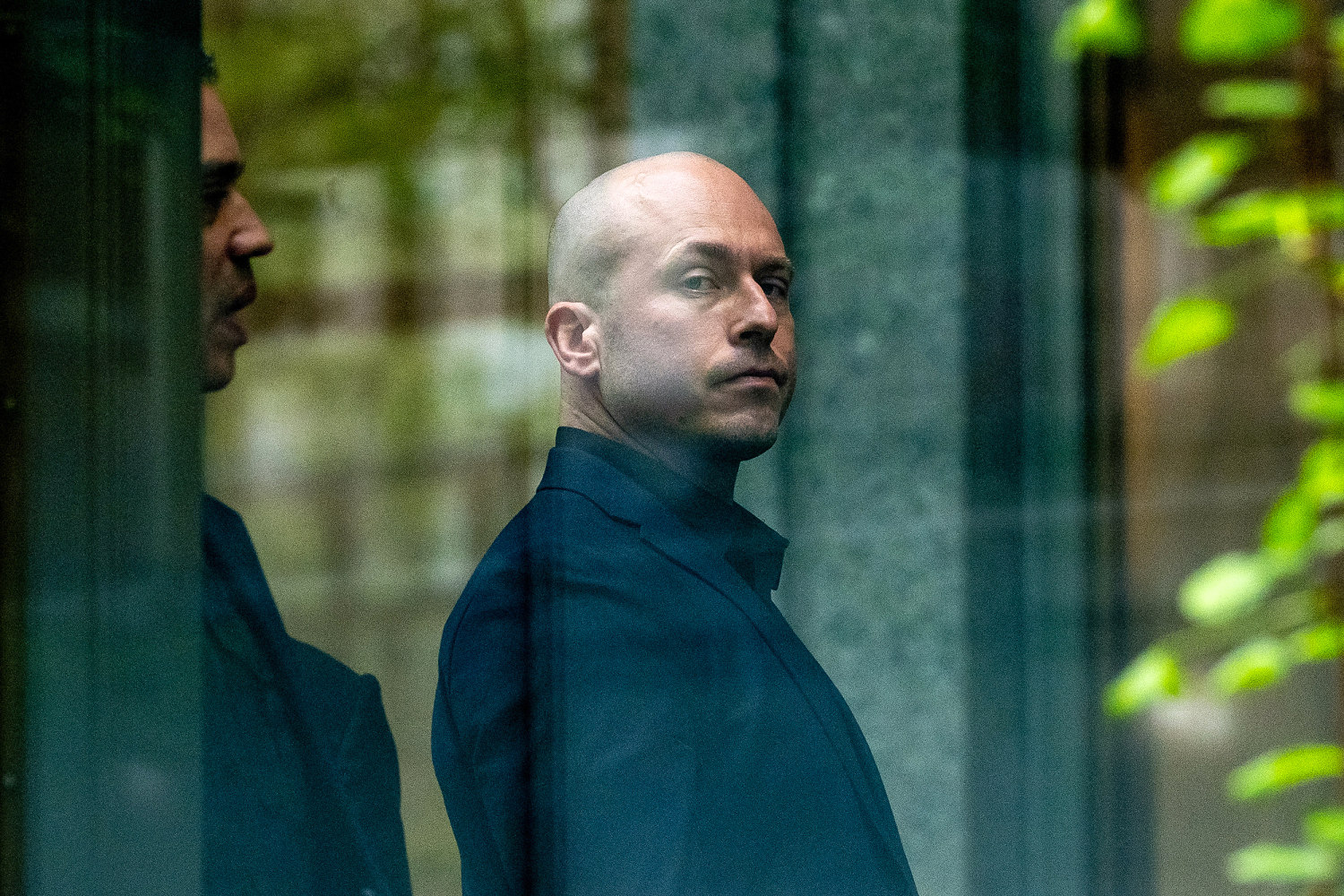
A U.S. Army soldier just walked into a federal courtroom and told a judge he isn't guilty of trying to profit from the downfall of a foreign head of state. It sounds like the plot of a cheap political thriller. Except this is real life, and the stakes involve federal conspiracy charges and the murky world of international "bounty" operations.
Sergeant First Class Joseph Cohen, a man who spent years serving in the military, now finds himself at the center of a federal indictment. The government says he didn't just watch the chaos in Venezuela from the sidelines. They claim he tried to turn the potential capture of Nicolás Maduro into a personal payday. It’s a wild story that highlights the bizarre intersection of private military ambition and federal law.
The Charges Facing Joseph Cohen
Let's look at what the Department of Justice is actually alleging here. This isn't just about a soldier having a side hustle. The indictment claims Cohen was part of a scheme to facilitate a "mercenary" operation. Specifically, the goal was to collect on the massive multi-million dollar rewards offered by the U.S. government for the arrest or conviction of high-ranking Venezuelan officials, including Maduro himself.
The feds say Cohen wasn't acting alone. He's accused of working with a group of individuals who thought they could bypass official channels to execute a high-risk mission on foreign soil. The problem? You can't just organize a private raid to collect government bounties. That's not how the State Department’s Narcotics Rewards Program works.
Cohen pleaded not guilty in a Florida court. His defense is likely to lean on the idea that he was either misunderstood or that his actions didn't actually cross the line into criminal conspiracy. But the prosecution has a different view. They've laid out a timeline of meetings and communications that they believe shows a clear intent to violate the Neutrality Act.
What is the Neutrality Act Anyway
Most people have never heard of this law. It’s an old one, dating back to the early days of the Republic. Basically, it makes it illegal for any U.S. citizen to launch or participate in a private military expedition against a country that the U.S. is at peace with. Even though relations with Venezuela are incredibly strained, we aren't "at war" in a legal sense.
When a soldier gets involved in this kind of thing, it's a massive red flag for the Pentagon. The military has strict rules about "outside employment" and even stricter ones about using specialized training for private gain. If the allegations hold up, Cohen didn't just break the law; he violated the fundamental trust the military places in its NCOs.
Why Private Citizens Think They Can Topple Governments
You might be wondering why anyone would think they could actually pull this off. To understand that, you have to look back at "Operation Gideon" in 2020. That was a botched attempt by a group of former Green Berets and Venezuelan dissidents to invade the country and spark an uprising. It was a disaster. People ended up dead or in prison.
Despite that failure, the allure of a $15 million reward—the amount the U.S. has placed on Maduro’s head—remains a powerful motivator. It attracts the "soldier of fortune" types who believe their tactical skills outweigh international law. Cohen, according to the government, saw an opportunity to capitalize on his military background to help plan or support a similar venture.
The documents suggest he was providing advice on logistics and tactical execution. He wasn't just some guy in a basement; he was an active-duty soldier with access to real-world expertise. That’s what makes this case so dangerous for the defense. It’s hard to argue you were "just talking" when you’re literally training the people meant to carry out the job.
The Problem With Government Bounties
The U.S. government uses rewards to pressure regimes they don't like. It's a standard tool of foreign policy. But these rewards are meant to incentivize tip-offs and law enforcement cooperation, not private wars. When the State Department puts a price on someone's head, they expect a legal extradition process to follow.
What happened here is a classic case of someone taking the bait the wrong way. The lure of "life-changing money" can cloud the judgment of even seasoned professionals. If Cohen really thought he could help orchestrate a capture and then just walk into a U.S. embassy to claim his check, he was catastrophically mistaken.
The Legal Road Ahead for Cohen
The court case is going to be a long, drawn-out battle. Federal prosecutors don't usually bring these kinds of charges unless they have a paper trail. We're talking about encrypted messages, bank records, and likely testimony from co-conspirators who have already flipped.
Cohen’s legal team will probably try to argue that his involvement was purely "consultative" and never reached the level of an actual attempt. They’ll say he was exploring possibilities, not executing a plan. But the line between "exploring" and "conspiring" is razor-thin in federal court.
What This Means for Military Personnel
If you're in the service, this case is a loud, clear warning. The Department of Defense is hyper-sensitive to the "mercenary" label. Since the wars in Iraq and Afghanistan, where private contractors became a household name, the military has tried to crack down on soldiers selling their skills to the highest bidder outside of official contracts.
The message is simple: Your training belongs to the U.S. government. Using it to try and cash in on international political instability will get you a one-way ticket to a federal penitentiary. It doesn't matter if you think you're "the good guy" or helping U.S. interests. If you aren't authorized, you're a criminal.
The Broader Impact on U.S.-Venezuela Relations
This trial isn't happening in a vacuum. The relationship between Washington and Caracas is a powder keg. Every time a U.S. citizen—especially a soldier—gets caught in a plot like this, it gives the Maduro regime propaganda fuel. They love to claim that every internal problem they have is actually a "Yankee invasion" or a CIA plot.
Cases like Cohen’s make it harder for legitimate diplomats to do their jobs. It creates a narrative of lawlessness that Maduro uses to crack down even harder on his own people. Even if Cohen was acting entirely on his own, his actions have geopolitical consequences that go far beyond a courtroom in Miami.
The prosecution is likely to emphasize this "harm to national security" angle during the trial. They want to show that Cohen wasn't just a guy looking for a payday, but someone whose actions could have sparked a major international incident.
Next Steps in the Process
The case is currently in the discovery phase. This is where the defense gets to see all the evidence the government has collected. Expect a lot of motions to suppress evidence and arguments about the scope of the Neutrality Act. Cohen remains under strict supervision while the legal process plays out.
For anyone following this, the key is to watch for whether other names start to drop. These operations rarely involve just one person. If Cohen was "betting" on the operation, who else was holding the stakes? Usually, where there's one soldier involved in a plot like this, there are others—either veterans or active duty—who were part of the conversation.
Keep an eye on the specific communications the government presents. If they have recordings or texts of Cohen discussing tactical specifics, his "not guilty" plea is going to be very hard to maintain. This isn't a case about free speech or political opinion. It's a case about whether an American soldier tried to turn a foreign policy objective into a private business venture. Don't expect the government to go easy on him. They need to make an example of anyone who thinks they can play Rambo with taxpayer-funded training.