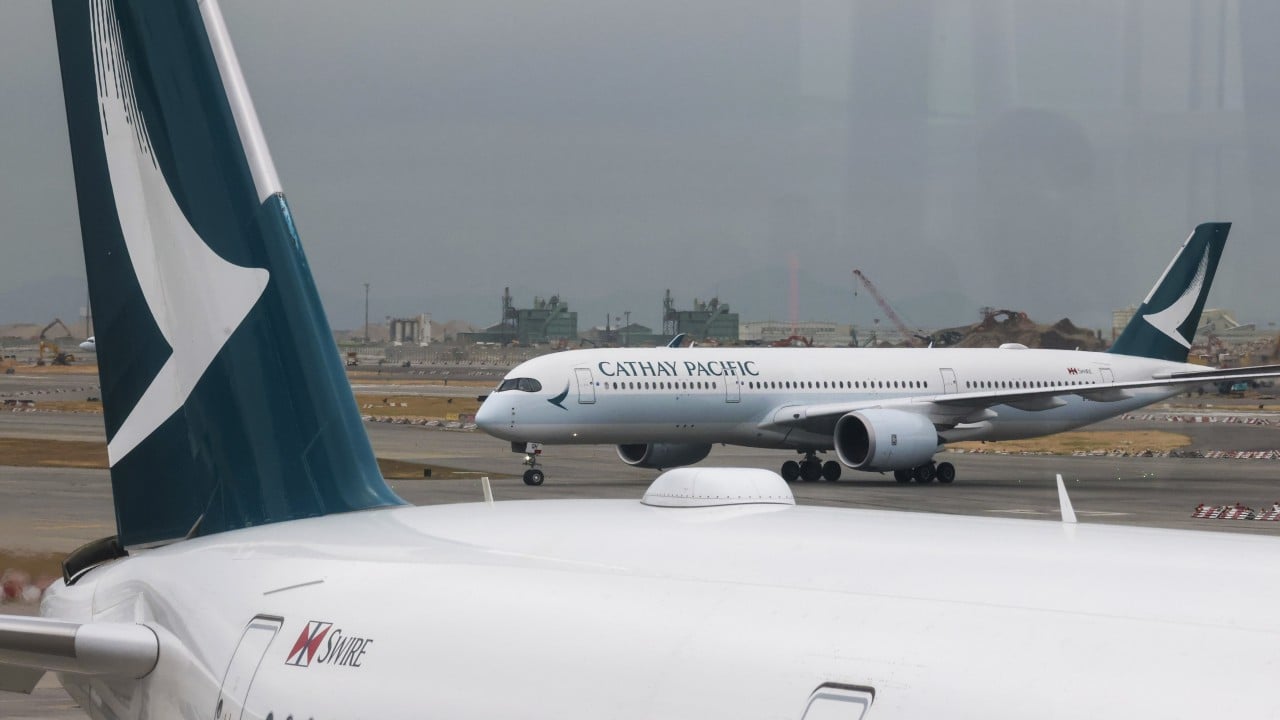
Cathay Pacific has scrubbed its flight schedules to Dubai and Riyadh through March 31, 2026. While the airline cites regional instability and the ongoing conflict as the primary driver, this isn’t just a simple safety precaution. It is a calculated retreat from a theater where the math of long-haul aviation no longer adds up. By extending this suspension, Hong Kong’s flagship carrier is acknowledging a grim reality. Operating in the Middle East has become a logistical nightmare that drains fuel, stretches crew rotations, and creates a liability profile that shareholders are no longer willing to stomach.
The Geopolitical Chokehold on Flight Paths
Modern aviation relies on the efficiency of "Great Circle" routes. When those lines on a map are forced to bend around war zones, the profit margins of a flight can vanish in minutes. For Cathay Pacific, the routes connecting Hong Kong to the Gulf hubs of Dubai and Riyadh are currently a tactical mess.
War doesn’t just close airports; it closes the sky. As missile activity and drone incursions fluctuate across the Levant and the Red Sea, international regulators and insurance underwriters have tightened the screws. An airline doesn't just decide to fly over a conflict zone based on gut feeling. They follow the dictates of Risk Management Assessments that are now flashing red across the entire Arabian Peninsula.
When an aircraft has to divert hundreds of miles to avoid sensitive airspace, it burns thousands of pounds of extra kerosene. On a flight from Hong Kong to Riyadh, a thirty-minute detour can be the difference between a profitable voyage and a dead loss. Cathay is essentially admitting that it cannot guarantee a flight path that is both safe and economically viable.
The Quiet Crisis of Insurance and Liability
Insurance premiums for hull war risks have surged. For a veteran analyst, this is the most telling metric. Underwriters are currently pricing in the "what-if" scenarios of stray munitions or GPS jamming incidents that have plagued commercial pilots in the region over the last year.
Aviation insurance isn't a static cost. It is a live, breathing expense that reacts to every headline. When Cathay extends a suspension by several months, they are signaling to the market that they don't see the insurance environment stabilizing anytime soon. It is cheaper to keep a Boeing 777-300ER on the tarmac at Chek Lap Kok than it is to pay the astronomical premiums required to land it in a zone where the threat level is categorized as "volatile."
Furthermore, there is the human element. Flight crews are increasingly vocal about their refusal to lay over in cities that sit within the reach of regional ballistic capabilities. Cathay Pacific, still recovering from the labor shortages that followed the pandemic, cannot afford a mutiny among its senior pilots. The logistical headache of finding "safe" hotels and ensuring rapid extraction plans for staff in Dubai or Riyadh adds a layer of operational friction that most passengers never see.
Pivot to More Profitable Skies
While the headlines focus on the "war," the real story is where Cathay is sending those planes instead. An idle wide-body jet is a financial black hole. By suspending the Middle East routes, the airline is freeing up capacity to double down on the North American and European corridors where demand is surging and the air remains clear.
- Regional Reallocation: Aircraft once destined for Riyadh are being pushed into the Tokyo and Seoul markets.
- Pacific Strengthening: Increased frequencies to Los Angeles and Vancouver offer a more stable revenue stream.
- The Cargo Factor: Cathay’s massive cargo division thrives on predictability. Shifting freight operations away from the Middle East reduces the risk of expensive "tech stops" or cargo being stranded in a theater of war.
This isn't just about avoiding a fight; it's about chasing the money. The Hong Kong-Middle East corridor was always a play for "connector" traffic—people flying from China to Europe or Africa via the Gulf. With the rise of competitors like Emirates and Qatar Airways, Cathay was already fighting a localized price war. The current conflict provided the perfect strategic cover to exit a market that was becoming a liability.
The Mirage of a Quick Return
Industry insiders know that "March 31" is a placeholder date, not a promise. In the world of airline scheduling, dates at the end of a fiscal quarter are used as benchmarks to re-evaluate the global environment. If the regional tension doesn't de-escalate by February, expect that date to slide into the summer.
There is a ripple effect here. When a major player like Cathay pulls out, it changes the competitive balance for the remaining carriers. Those who continue to fly—mostly the state-backed Gulf giants—take on the risks but also the rewards of a monopoly on those routes. Cathay’s absence leaves a vacuum that smaller, more risk-tolerant operators might try to fill, but for a premium brand, the reputational risk of a "near-miss" or a sudden grounding of passengers is too high.
Operational Complexity and the GPS Problem
One factor often overlooked by casual observers is the rise of GPS spoofing in the region. Pilots flying near conflict zones have reported their navigation systems being fed false data, making it appear as though the aircraft is miles away from its actual position. While commercial pilots are trained to use terrestrial navigation aids, the added mental load and the risk of straying into protected airspace by mistake is a nightmare for an airline’s safety department.
For Cathay, a company that prides itself on a "Safety First" culture that borders on the fanatical, these technical anomalies are a deal-breaker. They aren't just worried about a missile; they are worried about a navigation error that results in a diplomatic incident or a safety violation.
The Economic Aftershocks for Hong Kong
As a hub, Hong Kong needs connectivity. The loss of direct links to the financial centers of Saudi Arabia and the United Arab Emirates hurts the "Super Connector" status that the city’s government has been desperate to rebuild. Riyadh, in particular, was a key piece of the "Belt and Road" expansion strategy.
The suspension creates a bottleneck for business travelers. Those who used to rely on Cathay’s premium service now have to pivot to Middle Eastern carriers, shifting the economic gravity away from Hong Kong. It’s a blow to the city’s post-2020 recovery narrative. Yet, from a cold, analytical perspective, Cathay is making the right move. An airline that prioritizes optics over its balance sheet is an airline that doesn't survive the decade.
The reality of 2026 is that the sky is no longer a borderless highway. It is a fragmented map of high-risk zones, expensive detours, and political minefields. Cathay Pacific has chosen to step back from the edge. Whether they return in April depends less on their own strategy and more on whether the powers in the Middle East can find a way to stop making the air above them a liability.
If you are holding a ticket for April or May, don't get comfortable. Keep your eye on the "War Risk" surcharges and the movement of insurance benchmarks. They will tell you more about when Cathay is coming back than any airline press release ever will.
Monitor the Brent Crude price and the London insurance market's "Joint War Committee" updates if you want to know when the flights will actually resume.


