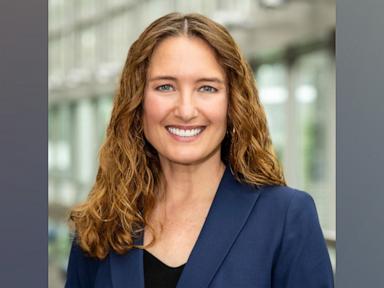
Everyone in Washington is reading the tea leaves wrong.
A headline hits the wire: the Centers for Disease Control and Prevention’s chief medical officer resigns just months after being hired in April. Immediately, the predictable chorus starts singing. Pundits blame political infighting. Cable news panels speculate about personal friction. Trade publications treat it like a routine HR hiccup inside a massive federal bureaucracy.
That lazy consensus completely misses the structural rot sitting right in front of us.
When a senior clinical executive walks out the door after a single season on the job, you aren't looking at a personality clash. You are looking at an institutional design flaw. The modern CDC is structurally allergic to decisive clinical leadership, and until we stop treating rapid executive turnover as a mere personnel quirk, public health credibility will keep bleeding out.
The Myth of the "Bad Fit"
Media coverage of federal health departures almost always defaults to palace intrigue. Who clashed with whom? Which policy memo got watered down? Which political appointee overstepped?
Those questions are distractions. They reduce systemic governance failures into soap opera gossip.
In the private healthcare sector, if a major hospital network recruits a chief medical officer in the spring and loses them before the leaves finish falling, the board doesn't shrug and blame "culture fit." Investors demand an audit. They recognize that a six-to-eight-month tenure means the role itself is a trap—a title loaded with public accountability and stripped of operational authority.
Yet in public health, we normalize the revolving door. We treat the CDC’s highest-ranking clinical voice as an expendable shock absorber for bureaucratic inertia.
Here is the reality nobody inside Atlanta wants to put on the record: the chief medical officer role at a sprawling federal agency often functions less like a commanding executive post and more like an advisory ornament. You sit in endless interagency working groups. You review guidance that has already been pre-negotiated by communications teams, legal counsel, and political liaisons. By the time a clinical directive reaches your desk, the science has been diluted by consensus-building.
If you spent twenty years making real-time life-and-death calls in clinical medicine, stepping into a role where it takes six weeks to approve a three-paragraph guidance update isn't a promotion. It’s professional suffocation.
Why Rapid Turnover Destroys Institutional Memory
Let’s look at what actually happens inside an agency when top clinical talent exits within months of onboarding.
First, onboarding at the federal level eats half that timeline alive. Security clearances, ethics reviews, briefing books, and stakeholder introductions consume the first ninety days. By month four, a new chief medical officer is just beginning to map where the real decision-making bottlenecks live. By month six, they realize those bottlenecks aren't bugs—they are the operating system.
When that leader resigns, the agency doesn't just lose a name on an organizational chart. It loses:
- Clinical urgency: Career bureaucrats measure success in process compliance and zero-error clearance chains. Clinicians measure success in patient outcomes and speed of intervention. Without a strong medical executive holding the line, process always swallows outcomes.
- External trust: State health departments, hospital chief medical officers, and frontline physicians need a clear peer at the federal level. When that chair keeps emptying, practicing doctors stop looking to the CDC for leadership and start relying exclusively on specialty medical societies.
- Recruiting leverage: Top-tier medical leaders watch these exits closely. Every short-lived tenure signals to the next candidate that the job is a career dead end. The talent pool shrinks to people who value the resume line more than the mandate.
I have watched major healthcare systems burn millions of dollars trying to recruit visionary medical directors into rigid, committee-run structures. Every single time, the outcome is identical. The sharpest clinicians leave within a year because they were hired to drive change inside an organization engineered to prevent it. The CDC is playing out that exact failure on a national stage.
Dismantling the Wrong Questions
Whenever a high-profile CDC exit makes the news, search engines light up with the same predictable queries. Let’s strip away the polite evasions and answer them directly.
Did the chief medical officer leave because of a specific scandal?
Looking for a single smoking gun is a waste of time. High-level clinical leaders rarely quit over one isolated disagreement. They leave when they realize the gap between their public responsibility and their actual authority is unbridgeable. Waiting for a dramatic whistleblower memo misses the daily attrition of fighting a bureaucracy that values consensus over clarity.
Does one resignation actually change CDC guidance for patients?
Not overnight, and that is precisely the problem. The machinery keeps humming along, churning out dense, hedged guidance documents written by committee. What disappears isn't the output—it's the clinical sharpness. You get fewer clear, actionable recommendations for frontline doctors and more cautious, legally bulletproof prose that leaves clinicians guessing how to apply it at the bedside.
Can the CDC fix this by hiring someone with more government experience?
That is the exact opposite of what the agency needs. Hiring a career Washington insider solves the retention problem by lowering the ambition of the role. A lifelong bureaucrat won't quit over slow clearance chains because slow clearance chains are their native habitat. If you want an agency that actually leads during an outbreak or a chronic disease crisis, you need clinical disruptors—and you have to give them the power to overrule the committees.
The Structural Trap Inside Federal Public Health
To understand why a hire made in April unravels so quickly, you have to understand how power is distributed inside federal health agencies.
In theory, the chief medical officer serves as the premier clinical voice, bridging scientific research and real-world medical practice. In practice, authority is fractured across dozens of independent centers, institutes, and offices, each guarding its own budget, turf, and communication channels.
Imagine a scenario where a fast-moving respiratory pathogen emerges in the fall. In a functional clinical command structure, the chief medical officer convenes infectious disease leads, evaluates early hospital data, and issues clear diagnostic and treatment protocols within seventy-two hours.
Inside a fragmented bureaucracy, that same decision triggers a multi-week clearance marathon. One division wants to wait for more statistical power. Another worries about supply chain optics. Legal flags liability phrasing. Communications softens the language to avoid public panic. By the time the guidance publishes, frontline emergency room doctors have already improvised their own protocols on social media and in hospital grand rounds.
When the CDC became irrelevant to frontline clinicians during recent public health emergencies, it wasn't because the agency lacked smart scientists. It was because its command structure rewarded hesitation over leadership.
The Uncomfortable Downside of Strong Clinical Leadership
Before we pretend that handing unchecked authority to a single chief medical officer is a silver bullet, let’s be honest about the trade-offs.
Centralizing power in a decisive clinical executive carries real risks. Medicine is full of blind spots, and strong-willed physicians can fall in love with their own hypotheses too early. A slower, multi-layered scientific review process exists for a reason: it catches statistical errors, forces peer scrutiny, and prevents premature policy swings based on noisy early data.
If you strip away bureaucratic guardrails to let a chief medical officer move at clinical speed, you will occasionally get bold calls that turn out to be wrong. Public health officials hate being visibly wrong because critics weaponize every course correction.
But here is the harsh truth: institutional cowardice is far more dangerous than an occasional honest mistake. An agency that delays guidance for two months to protect its reputation sacrifices the exact people it exists to protect. Frontline doctors can forgive a federal agency that updates its advice as new data arrives. They will never forgive an agency that stays silent while hospitals drown.
How to Actually Fix the Role Before the Next Hire
If the CDC wants its next chief medical officer to last longer than a seasonal flu wave, tinkering with job descriptions won't cut it. The agency needs to fundamentally rewire what the seat means.
- Grant direct line authority over clinical guidance. If the chief medical officer cannot override clearance delays from non-clinical divisions during active health threats, abolish the title. An advisor without a veto is just a spokesperson.
- Enforce a 48-hour clinical clearance clock. Separate academic research publication from frontline medical guidance. Peer-reviewed data can take months; doctors treating patients today need rapid, clearly labeled interim protocols within two days.
- Require active clinical practice. Mandate that senior medical leaders spend at least one day a month in an actual clinic or hospital setting. Nothing cures bureaucratic groupthink faster than having to explain confusing federal guidelines to an exhausted resident at 2:00 AM.
- Publicly publish dissenting clinical views. Stop pretending scientific consensus is unanimous. When top medical leaders disagree on risk thresholds, publish both the primary recommendation and the clinical rationale behind the minority view. Transparency builds more trust than artificial certainty ever will.
Stop Blaming the Passengers When the Engine Is Seized
The media will move on from this resignation by next week. Another press release will eventually announce a replacement. Pundits will praise the new hire’s credentials, and the cycle will reset.
Nothing will change until we stop asking why top doctors keep leaving the CDC and start asking why any serious clinician would stay under the current rules. Until the agency values clinical speed over bureaucratic self-preservation, the chief medical officer’s chair will remain the most expensive revolving door in American medicine.