The dust in southern Lebanon has a specific smell. It is a mix of pulverized limestone, charred olive wood, and the metallic tang of spent munitions. For weeks, that scent was the only thing the people of the border towns knew. It seeped into their clothes, their hair, and the very bread they tried to bake in the brief windows between sorties. Then, the word came down from a stage in Washington.
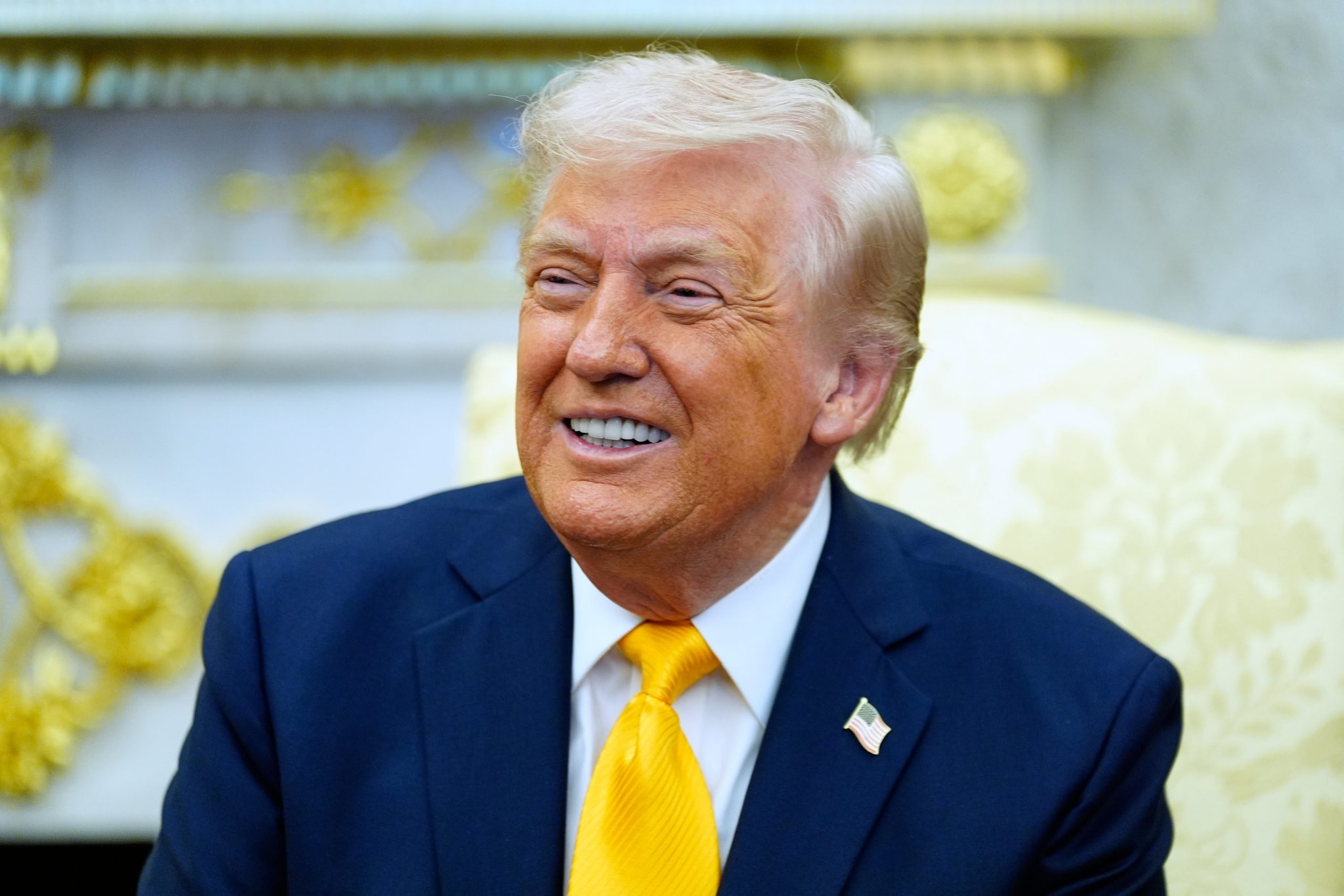
Donald Trump, the man who had just reclaimed the keys to the Oval Office, stood before the cameras and declared a shift in the gravity of the Middle East. He spoke with the bluntness of a builder marking a blueprint. Israel, he claimed, was now banned from bombing Lebanon.
It was a statement that bypassed the usual diplomatic channels of the State Department. It ignored the carefully curated "deep concerns" of the UN. It was a command issued through the airwaves, a unilateral red line drawn in the sand by a man who treats global geopolitics like a high-stakes real estate negotiation. But while the pundits in D.C. began their frantic deconstruction of what this meant for the "rules-based order," the people under the flight paths felt something much simpler.
They felt the weight of the sky change.
The Mechanics of a Mandate
To understand why this matters, you have to look past the podium. In the logic of the Trump administration, power isn't a theoretical concept discussed in think tanks. It is a tool of leverage. By stating that the Israeli Air Force—long the dominant force in the Levantine skies—was now restricted from its campaign against Hezbollah targets in Lebanon, Trump wasn't just offering a suggestion. He was asserting a new hierarchy.
Consider the hypothetical case of a family in Nabatieh. For months, their lives were dictated by the hum of drones. Every morning was a calculation of risk: Is it safe to buy flour? Can the children play in the courtyard, or is the neighbor’s house a potential coordinate on a target list? When a superpower leader says the bombing stops, that family doesn't think about "strategic pivots." They think about sleep.
The ban serves as a massive, jagged wrench thrown into the machinery of a long-standing conflict. For years, the cycle has been predictable. Rocket fire from the north leads to retaliatory strikes from the south. Escalation follows escalation. By removing the primary tool of Israeli retaliation—the airstrike—Trump is forcing a tectonic shift in how the region operates.
The Invisible Stakes
Why would a staunchly pro-Israel president suddenly pull the leash? The answer lies in the price of silence. Trump’s brand of diplomacy is rooted in the "Big Deal." He isn't interested in the slow, grinding process of incremental peace talks that have characterized the last thirty years of Middle Eastern policy. He wants a result he can put his name on.
The ban on bombing Lebanon isn't an act of pacifism. It’s a gamble on stability. If Israel stops the strikes, the burden of proof shifts entirely to Hezbollah and their backers in Tehran. The narrative changes from "Israel is destroying Lebanon" to "Can Lebanon govern itself without war?" It is a brutal, effective way to isolate the militants by removing their primary justification for existing: the defense against the "Zionist aggressor."
But the stakes are invisible to those who only read headlines. The real risk isn't just political; it's existential. If the bombing stops and the rockets continue to fly from the Lebanese side, the pressure on the Israeli government will become an internal volcano. Prime Minister Netanyahu finds himself in a pincer movement—squeezed between the demands of his most powerful ally and the fury of his own citizens in the north who are living in hotels because their homes are in a combat zone.
The Weight of a Word
History is littered with the wreckage of failed ceasefires. Usually, they are brokered by committees. They involve hundreds of pages of "memorandums of understanding" that no one actually understands. This is different. This is the "Trump Doctrine" in its purest form: a decree backed by the sheer economic and military shadow of the United States.
The ban works because of what isn't said. If Israel defies the ban, they risk the flow of munitions, the diplomatic cover at the UN, and the personal favor of the world’s most powerful man. If Hezbollah ignores the new reality, they risk a level of American intervention that could make the previous air campaign look like a skirmish.
The silence that has followed the announcement is heavy. It is the kind of silence that precedes a storm, or perhaps, the kind that follows the end of a long, exhausting fever. In the villages of the Galilee and the suburbs of Beirut, people are waiting to see if the word of one man is stronger than the momentum of a forty-year war.
The Human Cost of Calibration
We often talk about these events as if they are chess moves. We use words like "assets," "theaters," and "logistics." But those words are a thin veil for the reality of a five-hundred-pound bomb hitting a residential block. When the bombing is "banned," what we are really talking about is the preservation of the mundane.
It is about the shopkeeper who can finally restock his shelves without wondering if his inventory will be buried under rubble by Tuesday. It is about the teacher who can look at a classroom of thirty children and not have to mentally map out the quickest path to the basement. These are the small, human victories that the "cold facts" of news reports always fail to capture.
The complexity of the situation is staggering. Critics argue that this ban leaves Israel vulnerable, that it ties the hands of a democracy facing a terrorist proxy on its doorstep. And they aren't entirely wrong. The vulnerability is real. But the counter-argument is equally piercing: after decades of bombing, has the threat actually diminished? Or has it simply evolved, fueled by the very destruction meant to stop it?
A New Architecture of Power
This isn't a return to the status quo. The status quo is dead. What we are witnessing is the construction of a new architecture of power where the traditional rules of engagement are being rewritten on the fly. Trump’s move is a rejection of the idea that this conflict is permanent. By imposing a ban, he is essentially saying that the old way of doing business—the endless tit-for-tat—is no longer acceptable to the American interest.
The transition from a war footing to a forced peace is never "seamless." It is messy. It is full of friction and distrust. But the alternative is a landscape of permanent ruins.
Think of the border as a taut wire. For months, it has been vibrating with the frequency of war. Now, a hand has been placed on that wire to steady it. The vibration hasn't stopped entirely; the tension is still there, humming beneath the surface. But for the first time in a long time, the sound of the sky isn't a threat.
The ban is a gamble that the world is tired of the old stories. It is a bet that even the most bitter enemies would rather have a future of trade and stability than a present of fire and ash. Whether that gamble pays off depends on things far beyond the reach of a microphone in Washington. It depends on the restraint of generals, the desperation of politicians, and the resilience of the people who have to live in the shadows of the decisions made thousands of miles away.
The olive trees are still there, scorched but standing. The limestone is still gray. The dust is still settling. But tonight, in the valleys of southern Lebanon and the hills of northern Israel, the air is clear. For now, the ban holds. And in that quiet, there is a glimmer of something that looks suspiciously like hope, even if it was born from the most cynical of power plays.
The world is watching to see if the silence lasts until morning.



