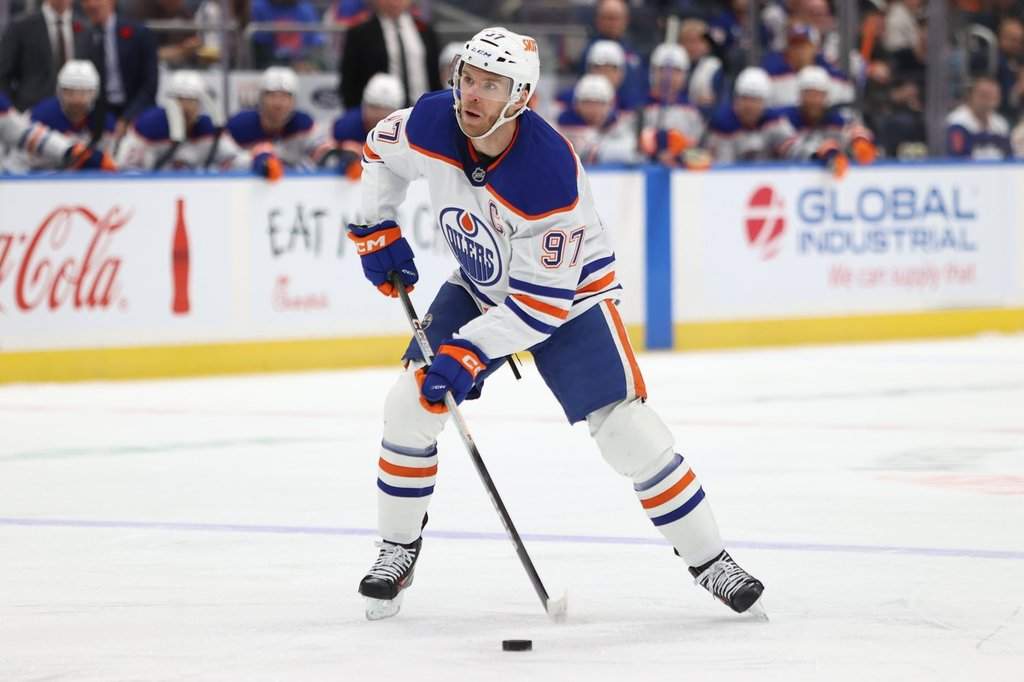
Stop throwing confetti over a box score.
Every hockey media outlet on the continent just copy-pasted the same press release: Connor McDavid racked up 27 assists and 35 points in October, shattered Wayne Gretzky’s 14-game assist record, lifted the Edmonton Oilers to a 10-2-1 start, and walked away with the NHL’s First Star of the Month. The consensus narrative is predictable. McDavid is unstoppable. The Oilers are a juggernaut. Everything is fine in Oil Country. If you found value in this piece, you might want to check out: this related article.
That is lazy sports journalism.
When you celebrate a generational center burning through his offensive ceiling in October, you are admiring the paint job on a house with a cracked foundation. I have spent twenty years watching front offices, beat writers, and fanbases get seduced by early-season scoring binges—and I have watched those exact same organizations clean out their lockers in May wondering how a 130-point superstar got bounced before the Cup Final. For another perspective on this story, check out the latest coverage from CBS Sports.
McDavid winning First Star for October isn't a victory lap. It is a flashing red warning light on Edmonton’s dashboard.
The October Mirage and the Box-Score Trap
Let’s look at what the mainstream recaps actually told you. They told you McDavid led the league in assists. They told you Kirill Kaprizov finished second with 14 goals and Pyotr Kochetkov took third with a 9-0-0 run in Carolina. They framed the NHL’s monthly awards as a definitive barometer of championship readiness.
They are asking the wrong question. Fans search for McDavid’s monthly stats assuming point totals equal Stanley Cup equity. They don't.
Here is the reality of October hockey: it is structurally broken. Coaches are still installing systems. Defensive pairings are blowing coverage in the neutral zone. Goaltenders are tracking pucks half a step slow. Special teams whistles fly at an unsustainable rate before the referees swallow their pipes in April.
Scoring 35 points in 13 or 14 games during October is an extraordinary display of individual talent. Nobody on earth processes the game at 25 miles per hour like McDavid. Yet treating an October scoring binge as proof of team dominance ignores a brutal historical truth in the salary-cap era. Since 2005-06, the correlation between winning the Art Ross Trophy and winning the Stanley Cup in the same season is practically nonexistent. Look at the names: Nikita Kucherov’s 128-point Tampa Bay squad got swept in four games in 2019. McDavid’s own 153-point masterpiece in 2022-23 ended in a second-round exit to Vegas.
When one player accounts for nearly half of a roster's offensive generation in the opening month, that isn't depth. That is dependency.
What the NHL’s Monthly Award Voters Actually Reward
If you want to understand why these awards distort hockey coverage, you have to understand how they work. The NHL’s Three Stars of the Month are a public relations vehicle—literally sponsored content designed to generate headlines and push fantasy engagement.
The selection committee defaults to raw counting stats. Goals, assists, points, and goalie win-loss records. There is zero adjustment for:
- Score-state context: How many of those 27 assists came with a two-goal lead against a depleted bottom-feeder pressing high in the third period?
- Power-play inflation: Secondary assists on a man-advantage unit where Leon Draisaitl or Evan Bouchard does the heavy lifting from the circles carry the exact same weight on the award ballot as a primary five-on-five takeaway.
- Goaltending variance: Pyotr Kochetkov went 9-0-0 in October for Carolina, earning Third Star honors. Nobody denies he played well, yet Carolina’s suppressed shot-against metrics under Rod Brind'Amour routinely turn average goaltending performances into undefeated streaks.
By handing McDavid the First Star trophy and calling it a day, media outlets confuse offensive volume with two-way sustainability.
The Real Cost of Over-Indexing on Superstars
Imagine a scenario where an NHL general manager builds a roster specifically to maximize October hardware. You load up the top six with elite finishers, stack the top power-play unit for two full minutes every whistle, and run your best center 22 to 24 minutes a night against tired third pairings. You will win every monthly award from October to February. You will sell out every home game.
Then May arrives.
In a seven-game playoff series, opposing coaches don't just play their normal system. They hard-match a shutdown defensive pair—think Aleksander Barkov or Gustav Forsling in Florida, or Jaccob Slavin in Carolina—exclusively against your First Star. They cross-check his hands every time he enters the dots. They force him to defend 200 feet of ice for four straight periods.
If your roster spent the first six months relying on one guy to put up three points a night to bail out shaky defensive zone exits, you have no Plan B when the space disappears.
The Structural Flaws Hiding Behind 35 Points
Let’s strip away the hype around Edmonton’s 10-2-1 start and look at the mechanics underneath.
First, look at workload management. Over an 82-game grind, human physiology has hard limits. High-intensity anaerobic bursts—the exact explosive crossovers McDavid uses to beat defenders wide—tax the central nervous system far more than steady-state skating. Pushing historic point paces in October requires peak physical output before the winter road trips even begin.
Second, look at tactical predictability. When McDavid is racking up two assists a game, wingers stop moving their feet without the puck. Defensemen stop activating off the weak-side blue line. Everyone on the ice subconsciously defaults to the easiest play: give it to 97 and watch.
I have seen this exact syndrome infect championship-caliber locker rooms across pro sports. In basketball, it’s the James Harden Houston Rockets—historic regular-season offensive ratings built on one man’s usage rate, followed by fourth-quarter exhaustion in the Western Conference Finals. In hockey, it’s the 2010 Washington Capitals winning the Presidents' Trophy on Alex Ovechkin’s back, only to get stonewalled by Jaroslav Halak because nobody else on the roster knew how to manufacture ugly goals when the perimeter closed down.
Why "He’s Just That Good" Is a Cop-Out
Whenever you point out the danger of over-relying on McDavid, the counterargument is always the same: He’s generational. Gretzky and Lemieux did it, and they won Cups.
Stop comparing 2026 hockey to 1988 hockey.
When Mario Lemieux put up 42 points in his first 14 games in 1992-93, the Pittsburgh Penguins didn't have a hard salary cap. They had Kevin Stevens, Ron Francis, Jaromir Jagr, Rick Tocchet, and Larry Murphy on the same payroll. When Gretzky set the old 14-game assist mark of 25, he had Jari Kurri, Mark Messier, Glenn Anderson, and Paul Coffey behind him—with zero parity across the bottom half of the league.
Today, the salary cap punishes top-heavy rosters. Every dollar spent keeping an elite core together comes directly out of your third-line center, your second-pair right-shot defenseman, and your backup goaltender. When McDavid has to produce at a 200-point clip just to keep Edmonton cruising through October, that isn't a luxury. It’s a necessity masking roster imbalances.
Answering the Questions Fans Actually Ask
When news like this drops, search engines light up with the same surface-level queries. Let’s dismantle them honestly.
1. Does winning NHL First Star of the Month predict the Hart Trophy?
Historically, yes—about as reliably as flipping a weighted coin. Voters suffer from massive recency bias. A scorching October gets forgotten the second someone goes on a 15-game tear in March. More importantly, the Hart Trophy goes to the player judged most valuable to his team, which paradoxically rewards players on flawed rosters who have to carry dead weight. If McDavid wins the Hart because he had to hit 150 points to drag Edmonton into first place, the Oilers have bigger problems than trophy engravings.
2. Is Connor McDavid’s October better than Gretzky’s or Lemieux’s?
Raw numbers say he beat Gretzky’s 14-game assist record (27 to 25) while trailing Lemieux’s point totals (35 to 42). Context says McDavid’s achievement is actually harder on a pure skill basis. Goalies today wear equipment that covers 30 percent more net than in 1985, butterfly mechanics have eliminated low-percentage five-hole goals, and every fourth-line grinder skates faster than 1980s All-Stars. Skill-wise, McDavid clears them. Strategically, however, his team is playing a far riskier game than those 1980s dynasties ever had to play.
3. Should the Oilers scale back McDavid’s ice time right now?
Yes, and no coach in the NHL has the nerve to do it. When you are winning games and your captain is chasing history, benching him for two shifts in the third period gets you roasted on talk radio. Yet smart organizations—look at how the Tampa Bay Lightning managed Nikita Kucherov and Victor Hedman during their back-to-back Cup runs—treat the regular season as an 82-game laboratory, not a sprint.
The Contrarian Blueprint for Edmonton
If the Oilers want June silverware instead of November press releases, they need to do the exact opposite of what the media is praising right now.
- Deliberately suppress McDavid’s five-on-five usage. Cut his even-strength minutes by 90 seconds per game between now and the All-Star break. Force the middle six to win low-event, 2-1 hockey games without a superstar bailing them out on the counterattack.
- Stop running the top power play up by three goals. Nothing breeds bad defensive habits faster than padding stats at 5-on-4 in the final five minutes of a blowout. Give the second unit the reps so they aren't frozen stiff when a key player takes a maintenance day in March.
- Measure success by Goals Against, not Assists For. Nobody in Edmonton should care if McDavid finishes November with 12 points instead of 35, provided the team’s five-on-five expected goals against drops into the top five league-wide.
Now, let’s be completely honest about the downside of this approach. If Edmonton dials back McDavid’s throttle right now, they will lose games they otherwise would have won. They might drop from first in the Pacific to third. The local media will panic. Fantasy owners will riot. McDavid himself—a ruthless competitor wired to dominate every single shift—will hate every second of sitting on the bench while a one-goal game hangs in the balance.
That is the price of maturity.
Anyone can win October. The standings reset to zero in April, and nobody hangs a banner for First Star of the Month. Until Edmonton proves they can win ugly when McDavid is held off the scoresheet, these monthly awards aren't proof of a dynasty—they're just the prettiest distraction in hockey.