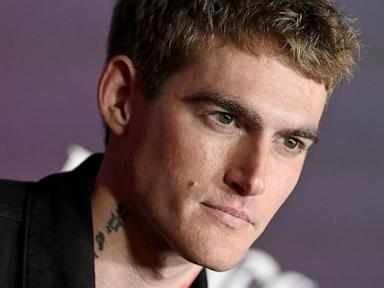
Read a headline like "Cindy Crawford's son Presley Gerber dies at 27" with an empty link and no verified body text attached, and you are already inside the trap.
The headline does not inform you. It hijacks you.
Look at what happens in the split second your eyes hit those words. A famous mother's name comes first. A young man's name comes second. An age sits at the end like a verdict. No source. No primary record. No context. Just a compressed emotional grenade engineered to trigger a click before your rational brain finishes reading the sentence.
Standard celebrity coverage treats that formula as gospel. The lazy consensus says readers want fast updates, immediate reactions, and tidy summaries of public figures and their families. Editors write for the feed. Readers scroll for the shock. Nobody pauses to ask what is actually verified, what is missing, or why a person's entire identity is being filtered through someone else's fame.
That consensus is lazy, manipulative, and intellectually bankrupt.
The Anatomy of a Hook Without a Story
When an outlet drops a bare claim about a high-profile figure—especially without a verified URL, primary documentation, or clear attribution—it is selling certainty it does not possess.
Notice how the structure works. Celebrity media relies on associative shorthand. Cindy Crawford is a recognizable household name. Presley Gerber is known primarily through that lineage. Pairing a legacy name with a shock verb and a specific age creates instant narrative gravity. Even when a reader approaches the claim skeptically, the framing dictates the conversation. The burden shifts onto the reader to hunt down proof while the headline collects the impression.
In real editorial work, a claim without verifiable sourcing is an unverified assertion, not journalism. Treating an unconfirmed headline as settled reality trains audiences to confuse velocity with truth. Once a reader accepts a bare headline as fact, every subsequent reaction—sympathy, anger, speculation, moralizing—is built on air.
Consider how often coverage of children of famous parents falls into this exact distortion. From the moment a child is born into public visibility, media outlets treat their biography as a sub-brand of their parents' career. Every milestone gets framed through inheritance, privilege, or rebellion. Even tragedy or crisis gets packaged through the lens of parental prestige.
That framing does not clarify reality. It flattens it.
Why Legacy Coverage Fails the Basic Test of Reality
Public fascination with famous families is not new. What has changed is the speed at which unverified claims circulate and the low cost of publishing hollow headlines.
In traditional publishing environments, verification acts as a friction mechanism. A claim requires corroboration from primary records, official statements, or multiple independent outlets with clear accountability. Friction slows publication. Friction also prevents public humiliation when a claim turns out to be incomplete, misattributed, or flatly wrong.
Modern attention ecosystems treat friction as an enemy. Speed wins the search index. Emotion wins the social feed. Nuance loses both.
When a headline reduces a person to "Cindy Crawford's son" and attaches a stark life-or-death claim without verifiable backing, three failures happen at once:
- Identity erasure: A named adult is subordinated to a parent's brand.
- Epistemic sloppiness: Unconfirmed assertions are presented with the grammatical confidence of settled record.
- Manufactured urgency: The reader is nudged to react immediately rather than verify independently.
You do not fix this by reading faster. You fix it by refusing to treat unverified headlines as factual premises.
A Thought Experiment in Editorial Discipline
Imagine a scenario where every media outlet and social feed is barred from publishing a headline about a public figure's life, health, or death unless the primary confirming source appears in the first two sentences, alongside the exact date and issuing authority.
Think about what happens immediately.
Half the outrage cycle vanishes overnight. Speculative threads lose their oxygen. Comment sections stop functioning as memorial boards or trial courts for rumors. Readers still care about famous people, and public interest still exists, but the emotional manipulation drops sharply because the narrative is anchored to verifiable facts rather than algorithmic bait.
Now push that thought experiment one step further. Imagine a scenario where readers refuse to click any headline that pairs a celebrity parent's name with a shock claim unless an authoritative public record or official statement is explicitly cited.
Traffic patterns shift. Incentives change. Outlets that rely on unverified shock hooks either upgrade their standards or starve for credibility.
That is not an abstract fantasy. Every serious editor knows that standards only hold when audiences penalize shortcuts.
Where Conventional Media Advice Gets It Wrong
Standard media-literacy advice tells readers to "check multiple sources" or "look for reputable outlets." That advice sounds sensible on paper. In practice, it often fails.
Why? Because in modern syndication, ten different sites can repeat the same unverified claim within minutes. Multiple appearances do not equal independent verification. Often, they just reflect copy-pasting from the same aggregator, forum post, or unvetted feed. Counting links is not the same as tracing origin.
Another common piece of advice says to wait for "official confirmation." Useful in theory, vague in execution. Official confirmation means different things depending on the domain. A publicist's statement, a municipal record, a law enforcement release, and a family spokesperson's notice carry different weights and different timelines. Telling a reader to "wait for official confirmation" without explaining how authority works leaves them guessing.
Real scrutiny requires looking at provenance, not volume.
How Actual Verification Works Under Pressure
When a high-stakes claim hits the wire—especially involving death, medical emergencies, or public figures—disciplined desks follow a strict hierarchy of evidence.
First comes primary sourcing. Who actually has direct knowledge or legal authority? A family representative, a licensed medical examiner or official registry where public, or an authorized institutional spokesperson sits at the top. A third-hand social post or an unnamed account sits at the bottom.
Second comes corroboration across independent channels. Independent means separate reporting chains, not mutual citation. If Site B cites Site A, and Site C cites Site B, you have one claim in three outfits, not three confirmations.
Third comes temporal discipline. Early reports in breaking situations are routinely messy. Ages get wrong. Middle names get swapped. Circumstances get distorted before official records settle. A disciplined reader separates the initial claim from the verified record and resists locking in conclusions early.
Anyone who has worked around high-pressure publishing knows how painful it is to hold back a story while competitors race ahead. Watching rival feeds rack up traffic while your desk waits for primary confirmation feels like losing. Until the day the rush breaks and the fast outlet has to quietly retract or rewrite while your record stands intact.
The Trade-Offs of a Contrarian Standard
Holding a strict verification standard is not free. There are real costs, and pretending otherwise would be dishonest.
First, you miss the initial wave of conversation. When a headline spreads rapidly, waiting for primary proof means showing up late to the viral moment. If your goal is raw traffic volume, restraint hurts in the short run.
Second, restraint can look cold or detached in emotionally charged moments. When a headline involves death or tragedy, people want immediate answers and clear language. Saying "this claim is not confirmed in primary sources" sounds sterile compared to a dramatic headline.
Third, verification does not guarantee completeness. Even primary sources can release partial information, withhold details for privacy reasons, or update records later. Discipline reduces error; it does not eliminate uncertainty.
Those trade-offs are real. Still, taking a loss on speed beats publishing a lie with confidence.
What Heavyweights in Media Ethics Actually Emphasize
Look at the foundational work of press critics and newsroom standards architects—figures like Bill Kovach and Tom Rosenstiel in their work on the elements of journalism, or the core principles codified by organizations like the Society of Professional Journalists. Their central point is blunt: journalism's first obligation is to the truth, and its essence is a discipline of verification.
Notice what that means in plain English. Not "first obligation is to be first." Not "first obligation is to match the crowd." Verification is a method, not a slogan.
When a headline presents "Cindy Crawford's son Presley Gerber dies at 27" without verified backing or primary reporting, it violates that baseline rule. It puts hook mechanics ahead of verification. It asks the reader to supply the trust that the publisher refused to earn.
Practical Rules for Readers Who Refuse to Be Played
If you want to navigate celebrity and news coverage without getting baited into false premises, adopt a few hard rules:
- Treat an unverified headline as a hypothesis, not a fact. Never build an opinion on a claim that lacks primary sourcing.
- Separate the person from the parent's brand. A 27-year-old adult is not a footnote to a modeling career.
- Trace the chain of custody. Ask who originated the claim and whether an authoritative source has confirmed it.
- Check authoritative records directly. For public figures and official announcements, look to verified statements from authorized representatives or official public records rather than secondary aggregators.
- Let unconfirmed claims sit. Nothing requires you to have a take on a rumor before facts exist.
Stop rewarding headlines that treat human lives like clickbait inventory.