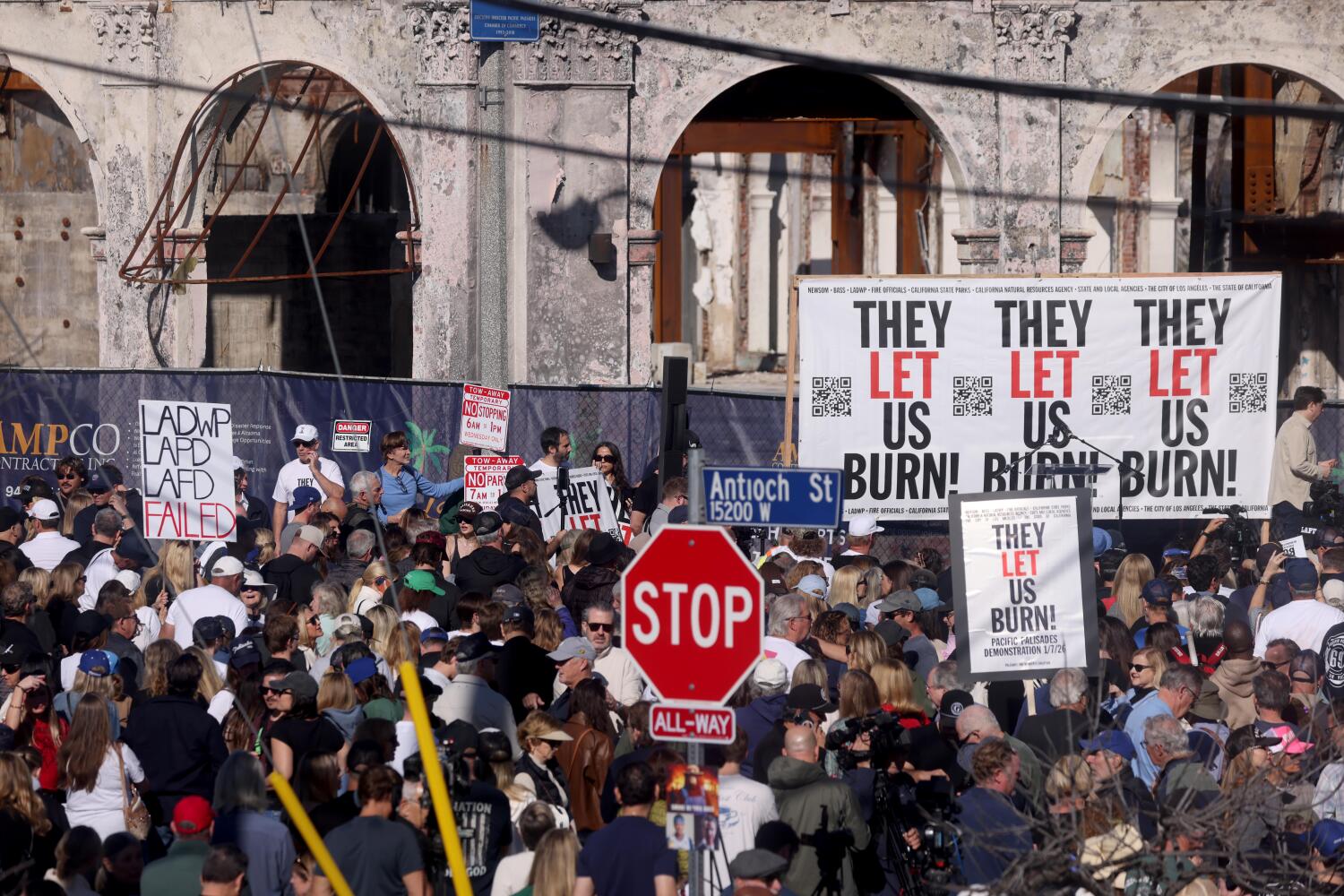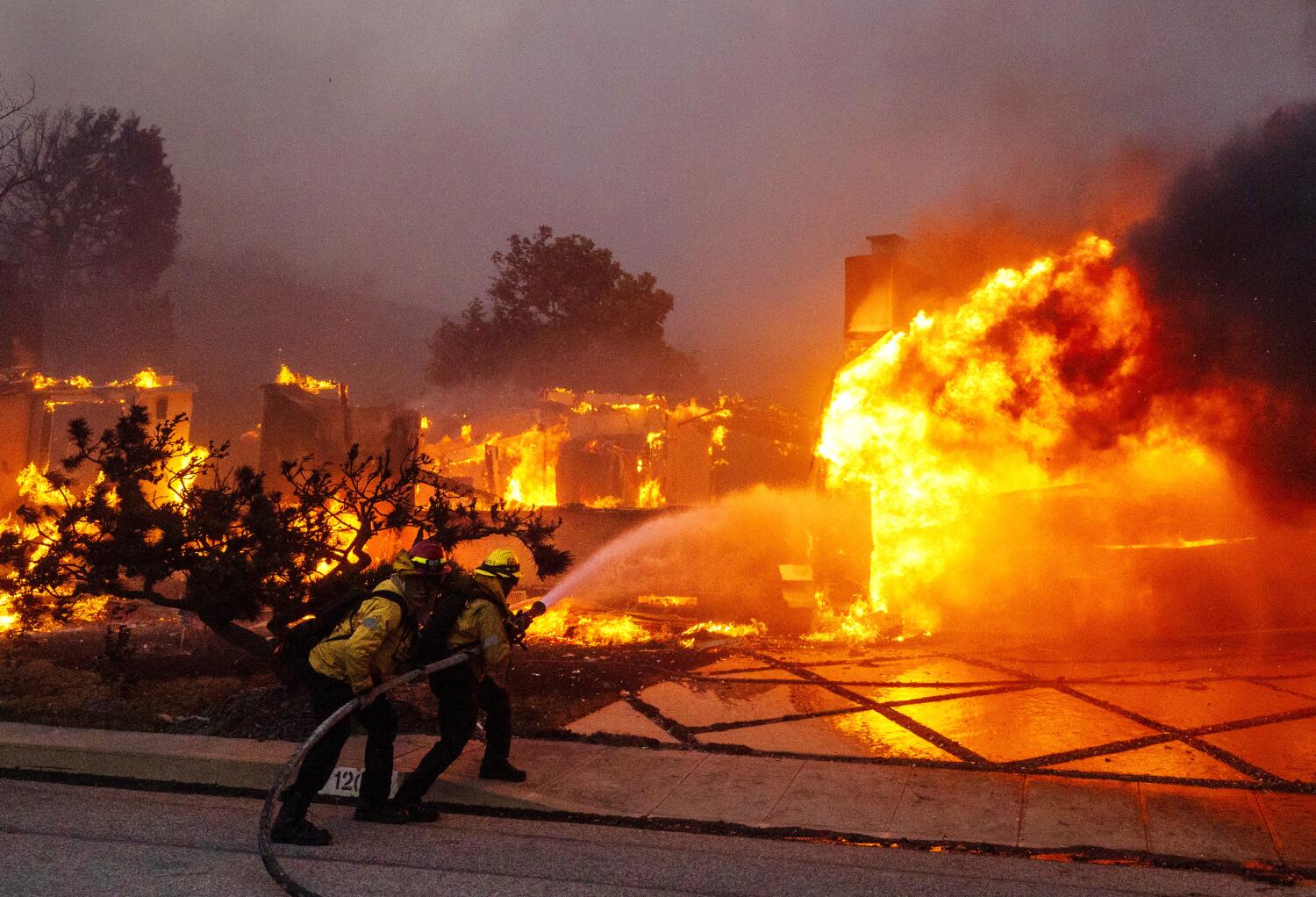
The recent testimony from a Los Angeles firefighter regarding the Lachman fire—specifically the sighting of "red hot coals" after the initial knockdown—is being framed by the media as a smoking gun of negligence. It isn’t. It’s a textbook example of the public’s fundamental misunderstanding of wildland physics and the impossible math of "putting a fire out."
The "lazy consensus" suggests that if a firefighter sees a glowing ember, the job wasn't finished. This perspective is dangerous because it ignores the reality of thermal mass and resource management. In the world of high-stakes firefighting, chasing 100% extinction is not just an obsession; it’s a recipe for burning down the next neighborhood while you're busy watering a stump.
The Myth of the Cold Trail
The term "fully put out" is a civilian fantasy. In dense brush or timber, a fire is never "out" until the seasonal rains arrive or the fuel load is reduced to zero. What the Lachman fire testimony highlights is the friction between tactical containment and absolute elimination.
When a crew "knocks down" a fire, they are stripping away the flame's ability to move. They are not turning the hillside into a walk-in freezer. "Red hot coals" are a biological certainty in heavy fuels like oak or thick manzanita. These materials have a high thermal density. You can pump thousands of gallons of water onto a root system, and three hours later, the interior will still be registered at $800^\circ F$ to $1000^\circ F$.
If every firefighter stayed on a single 10-foot by 10-foot patch until it was cold to the touch, the rest of Los Angeles would be a charcoal pit. We manage risk, not perfection.
The Resource Allocation Fallacy
I’ve seen incident commanders lose entire ridges because they succumbed to the pressure of "mop-up optics." They keep crews tied to a "contained" flank because a few news cameras might catch a wisp of smoke, while the main front is spotting two miles ahead into unburned drainage.
The Lachman testimony creates a false narrative that "seeing coals" equals "failure to act." In reality, seeing coals is a Tuesday. The question isn't "Were there coals?" The question is "Was the perimeter secured to a degree that those coals stayed where they belonged?"
Modern wildland strategy relies on the Probability of Ignition (PIG) and Heat Flux.
- PIG measures how likely a coal is to start a new fire if it lands in receptive fuel.
- Heat Flux measures the energy transfer.
If the coals are deep within a burned interior (the "black"), they are statistically irrelevant. Treating them like a direct threat is a waste of taxpayer money and a distraction from the real danger: the unburned "green" fuel across the line.
Why "Wait and See" is a Valid Strategy
The armchair experts want every ember drowned. They don't understand that water is a finite resource, even in a city. More importantly, water can sometimes hinder mop-up.
Imagine a scenario where you douse a burning log. The exterior cools and creates a charred, insulated crust. Inside, the fire continues to smolder, protected from the air and your hose. Two days later, that crust cracks, oxygen rushes in, and you have a flare-up.
Sometimes, the smartest thing a crew can do is let the fuel burn itself out under supervision. It’s called consuming the fuel. If it burns now, while we’re standing here with a brush truck, it can’t burn tomorrow when the Santa Ana winds kick up to 60 mph.
The Litigation Chill
The testimony in the Lachman case isn't just about a fire; it’s about the legal system trying to hold fluid, chaotic natural events to the standard of a sterile laboratory. When we start penalizing firefighters because they didn't achieve "zero heat" in a mountain range, we ensure that the next generation of captains will be too terrified to make the bold tactical calls necessary to save lives.
They will over-commit to "safe" zones to avoid depositions, leaving the active, unpredictable flanks understaffed. We are litigating ourselves into a bigger fire season.
How to Actually Assess Fire Success
Stop asking if the fire was "out." Start asking these three questions:
- Was the line depth appropriate for the fuel type? In light grass, a 10-foot line is a wall. In heavy brush, 100 feet might not be enough.
- What was the patrol frequency? You don't stay on the coal; you check back on the coal. If the patrol schedule was followed, the system worked.
- What were the weather inputs? A "safe" fire at 2:00 AM is a monster at 2:00 PM when the humidity drops to 8%. No amount of initial mop-up changes the physics of a dry wind.
The presence of hot coals isn't evidence of a job half-done. It’s evidence that fire happened. If you can’t handle the heat remaining in the soil after a blaze, you shouldn't be living in a chaparral ecosystem that evolved specifically to burn.
Stop looking for a scapegoat in a yellow jacket. The fire didn't "restart" because of a missed ember; the environment remained flammable because we haven't addressed the fuel loads and the housing density in the Wildland-Urban Interface (WUI). The coal is a distraction. The house built in a chimney-effect canyon is the real problem.
If you want a world where no coals are left behind, start buying more tankers and prepare to see your fire department's budget triple, or start clearing the brush yourself. Otherwise, let the professionals manage the heat while you manage your expectations.
Get off the line and let the black stay black.