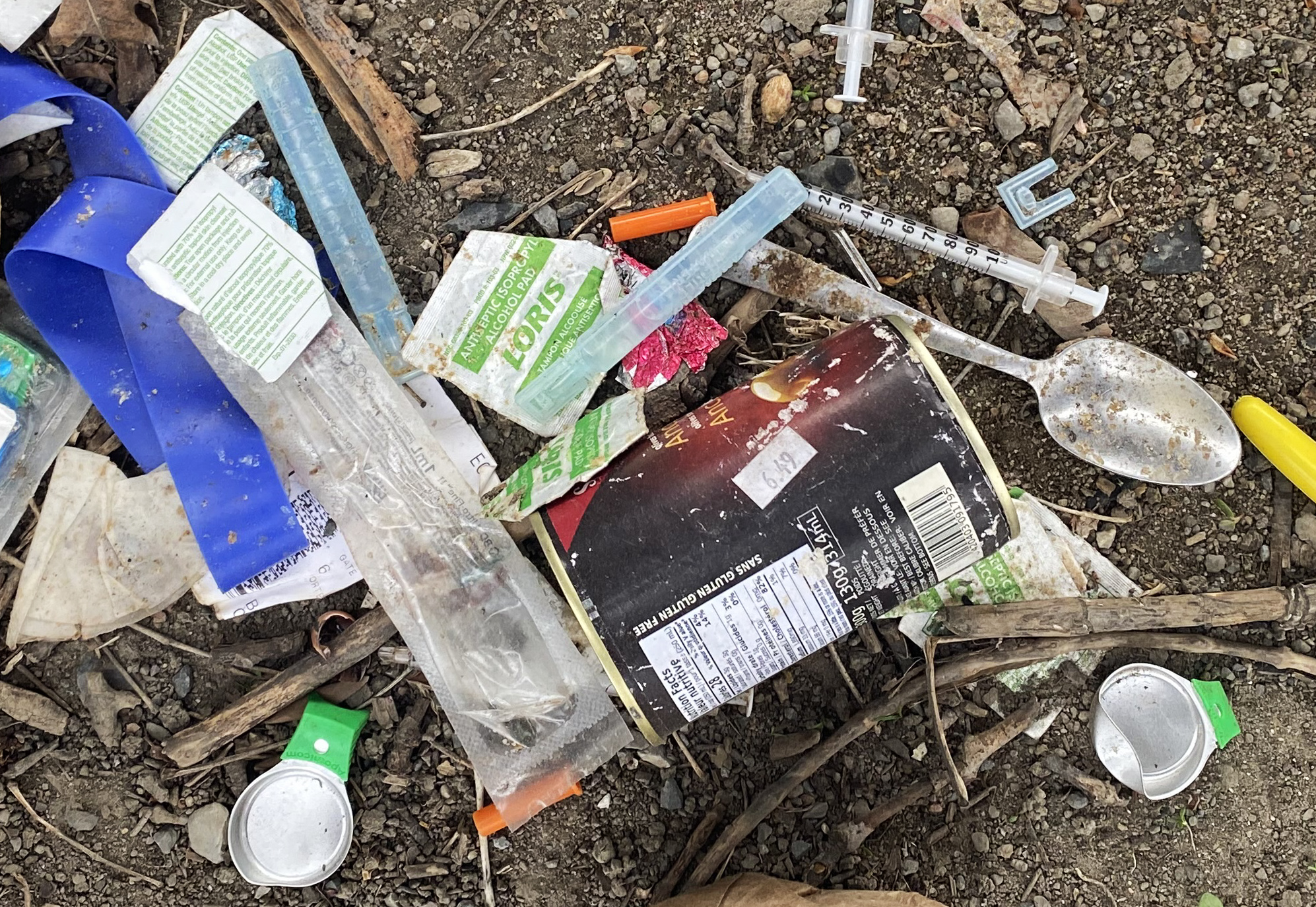
The sirens in Montreal have a specific frequency. On a humid Tuesday night in the Village, that high-pitched wail doesn't just cut through the air; it vibrates in the floorboards of the local cafes and the chests of the people standing on the sidewalk. Most passersby don't look up anymore. They know the sound. They know it usually ends with a flashing light reflecting off a brick wall and a team of paramedics crouched over a body that has forgotten how to breathe.
Public health alerts often arrive as sterile PDF files or dry headlines about "fluctuating toxicity." But statistics are a poor mask for the reality on the ground. When Montreal’s public health department warns of a spike in overdoses, they aren't talking about a predictable trend. They are talking about a chemistry experiment gone wrong in the pockets of the city’s most vulnerable.
The air in the city is changing because the supply is changing. It is no longer just about one substance or one bad batch. It is about a volatile, unpredictable cocktail where the ingredients are a mystery even to those selling them.
The Chemistry of a Ghost
Consider a hypothetical person named Marc. Marc isn’t a headline. He’s a guy who likes jazz, works in a warehouse near the Lachine Canal, and struggles with a back injury that never quite healed. When Marc buys what he thinks is a standard sedative or a recreational hit to take the edge off a sixty-hour work week, he is participating in a high-stakes lottery.
In the past, the risks were somewhat linear. If you took too much of X, you dealt with Y. Today, the "X" is a moving target.
Public health officials are seeing fentanyl—a synthetic opioid fifty times stronger than heroin—mixed with things that shouldn't be there. We are seeing the rise of "benzo-dope," a lethal combination of opioids and benzodiazepines. In a standard opioid overdose, a hit of naloxone can act like a miracle, snapping the brain back into consciousness by bumping the toxins off the receptors. But naloxone doesn't touch benzos.
When Marc goes down, his friends might use a nasal spray kit and wait for the gasp of air that signifies a life saved. This time, the gasp doesn't come. The benzos keep him under. The respiratory depression is anchored deep in his central nervous system, indifferent to the antidote.
This isn't just a "drug problem." It is a structural failure of predictability.
The Invisible Gravity of the North End
The numbers coming out of the Montreal morgue tell a story of geography and desperation. While the downtown core sees the highest concentration of emergency calls, the shadow is stretching. It’s reaching into Hochelaga, into Montreal North, and into the polished suburbs where families keep their medicine cabinets locked but their secrets tighter.
Health officials recently noted a sharp increase in overdose-related cardiac arrests. This isn't a slow drift into sleep. This is the heart simply quitting. The presence of xylazine—often called "tranq"—is the newest variable in this grim equation. It’s an animal sedative. It wasn't designed for human veins. It causes skin ulcerations that look like something out of a horror film and lowers blood pressure to levels that make survival a coin toss.
Why is this happening now?
Supply chains are fractured. When a major shipment is seized or a lab is shut down, the "cooks" at the bottom of the chain get creative. They use fillers. They use synthetic analogues that are cheaper to produce and easier to hide. The result is a product that is more potent, less stable, and infinitely more deadly.
We are living through the era of the "unintentional overdose." The term implies a mistake, but the mistake isn't always made by the person using the substance. The mistake is baked into the product itself.
The Sound of Silence in the ER
Walking into a Montreal emergency room during a "cluster" event is like entering a war zone where the enemy is invisible. There is no blood, no screaming. There is only a heavy, weighted silence.
The doctors are exhausted. They aren't just treating patients; they are solving puzzles with missing pieces. They ask: What did they take? The answer is almost always: We don't know. Test strips help, but they are lagging behind the chemists. A strip can tell you if fentanyl is present, but it might not tell you about the specific nitazene—a synthetic even stronger than fentanyl—that just hit the streets. It won't tell you the concentration. It won't tell you if the pill you're holding is 2% active ingredient or 90%.
The human cost is measured in the small things left behind. A pair of sneakers on a doorstep. A phone that won't stop buzzing with "Where are you?" texts. A mother in Rosemont who has to learn how to use a naloxone kit because she realized her teenage son’s "exhaustion" wasn't just from school.
Breaking the Cycle of Shame
The hardest part of this narrative isn't the chemistry; it's the stigma.
We treat overdoses as a moral failing rather than a toxicological crisis. When the public health department issues a warning, the general reaction is often a shrug. People think this only happens to "those people."
But "those people" are our neighbors. They are the construction workers keeping the city standing. They are the students at McGill and Concordia trying to stay awake for finals. They are the people who moved into the city for a fresh start and found a nightmare instead.
The city has responded by opening supervised consumption sites, but they are underfunded and overworked. These sites are the thin line between life and death. They are places where a person isn't a statistic; they are a human being whose heart is worth keeping in rhythm.
In these rooms, the air is thick with a different kind of tension. It’s the tension of waiting. The staff watch the rise and fall of chests. They count seconds. They offer coffee and a conversation, because sometimes the only thing stronger than a chemical craving is the feeling of being seen.
The Weight of the Warning
When you see a headline about "fentanyl mixtures," don't read it as a suggestion to look away. Read it as a weather report for a storm that is already here.
The Montreal public health warning is a flare sent up from a sinking ship. It tells us that the safety margins have evaporated. There is no such thing as a "safe" recreational pill in a market governed by chaos.
The city’s heartbeat is skipping. We feel it in the sirens that punctuate the night. We see it in the eyes of the street workers who carry extra kits in their bags like they’re carrying holy water.
The tragedy isn't just that people are dying. It’s that they are dying from a lack of information in an information age. They are dying because the chemicals changed faster than our compassion did.
Tonight, another siren will climb the hills of Mount Royal. It will echo off the Cross and fade into the sounds of the traffic on Saint-Laurent. Somewhere, a door will stay locked. A light will stay on. A family will wait for a phone call that explains the unexplainable.
The chemicals are silent. The warnings are loud. The space between them is where the city is currently losing its soul.
There is a man sitting on a bench near Place-des-Arts. He has a bottle of water and a small plastic baggie. He looks at the baggie, then at the sky, then back at the baggie. He is weighing his life against the next fifteen minutes. In that moment, he isn't a public health crisis. He is a man at the edge of a cliff, and the ground beneath him is made of powder and lies.