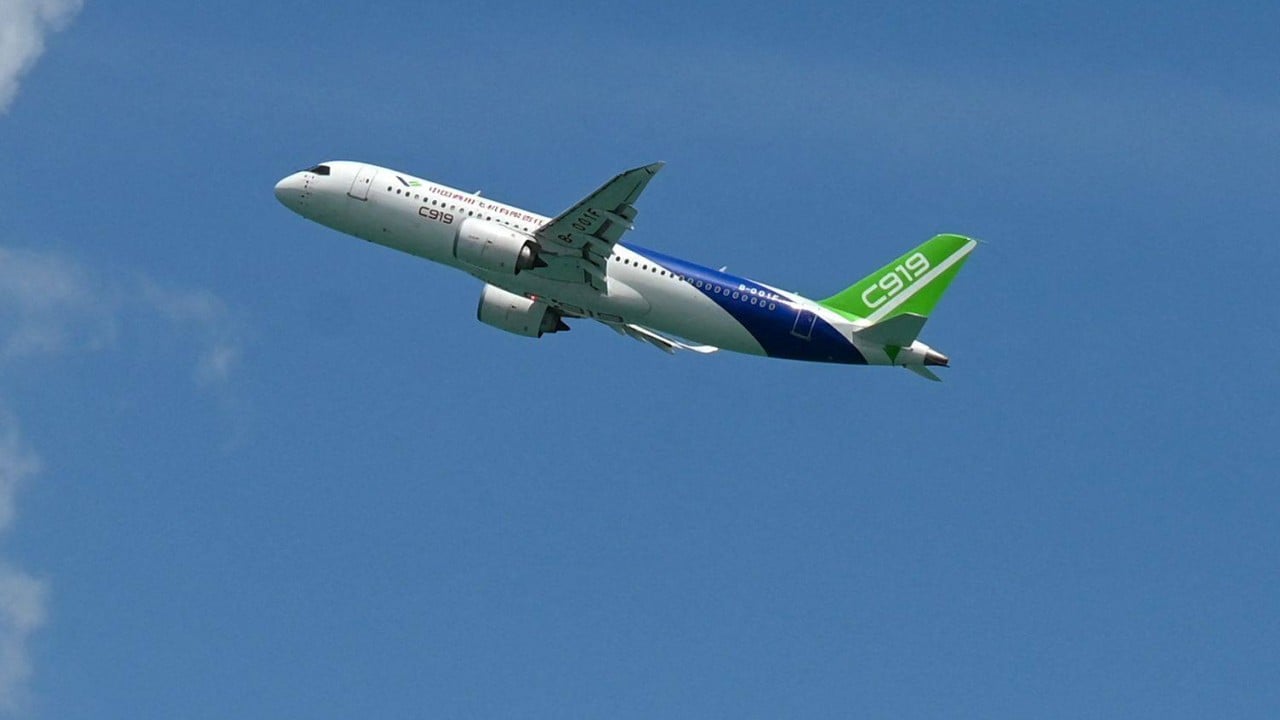
The COMAC C919 isn't just another airplane. It's a massive political and industrial statement. Right now, the European Union Aviation Safety Agency (EASA) is deep in the weeds of certifying this narrow-body jet, and the stakes couldn't be higher. Recent reports suggest that EASA pilots and technicians aren't just visiting Shanghai for quick inspections anymore. They've basically moved in. This permanent or long-term presence in China signals a shift from "we're looking into it" to "we're actually doing this." If you've been following the duopoly of Boeing and Airbus, you know how much this matters.
Europe’s certification is the gatekeeper. Without that EASA stamp, the C919 is mostly stuck flying domestic routes within China or to a few handfuls of countries with less stringent oversight. China wants global respect for its aviation tech. They're getting it by letting European regulators peel back every layer of the C919's design. It’s a slow, painful process. Aviation safety doesn't care about your national pride.
Why EASA pilots are living in Shanghai
You don't send a team of elite test pilots to live in a foreign city for fun. This move is about data and physical access. The certification process for a new aircraft involves thousands of hours of flight tests, ground tests, and simulation reviews. By stationing personnel in Shanghai, EASA eliminates the lag of international travel. They're on-site to witness tests as they happen.
Sources familiar with the situation indicate that the pace of "type certification" is picking up. This is the big one. It's the process where EASA confirms the aircraft design meets every single safety requirement. We’re talking about everything from wing load capacity to the way the software handles a mid-air engine failure. Honestly, it’s a grind. But having the regulators right there in COMAC's backyard means questions get answered in real-time. It suggests that both sides have moved past the initial "getting to know you" phase and are now wrestling with the actual technical hurdles.
The Boeing vacuum is China’s biggest opportunity
Timing is everything in the airline business. Right now, Boeing is struggling. You've seen the headlines about door plugs blowing out and production delays. Airlines are frustrated. They want planes, and they want them yesterday. While the C919 isn't a direct replacement for every 737 MAX or A320neo yet—mostly because its supply chain is still heavily reliant on Western parts—it’s the only other game in town.
China knows this. Every day that Boeing spends fixing its internal culture is a day COMAC spends trying to prove the C919 is a safe, viable alternative. The fact that EASA is even this deep into the process shows they take the aircraft seriously. They aren't just doing this as a diplomatic favor. There is a genuine technical evaluation happening. If the C919 passes, the global aviation market changes forever. It won't be a duopoly anymore. It’ll be a trio.
What EASA is actually looking for
Don't expect a rubber stamp. European regulators are notoriously strict. They’re looking at the flight control systems, the Leap-1C engines (built by CFM International, a GE and Safran joint venture), and the integration of those Western components with Chinese-built structures.
One of the biggest hurdles is documentation. In Western aviation, the "paper trail" for every bolt and line of code is as important as the part itself. COMAC has had to learn this the hard way. They've had to adapt their entire reporting structure to meet EASA’s expectations. The "permanent" stay of European pilots suggests that the documentation is finally reaching a level where it’s worth verifying in person. They're checking if the plane flies the way the manuals say it does.
The Western tech inside a Chinese jet
There’s a common misconception that the C919 is 100% "Made in China." That’s just not true. The engines come from the West. The avionics often come from companies like Rockwell Collins (now part of RTX). The landing gear and many flight control components are also sourced from international suppliers.
This creates a weird paradox. EASA is certifying a Chinese plane that uses European and American guts. It makes the certification slightly easier because the regulators already know the engines and the electronics. However, the way those parts talk to each other is unique to the C919. That integration is where the risk lives. If a software glitch causes the French-American engine to behave poorly with the Chinese flight control system, that’s a disaster. EASA's job is to make sure that never happens.
Geopolitics vs Aviation Safety
You can't talk about COMAC without talking about politics. The relationship between the EU and China is, frankly, complicated. There are trade disputes over electric vehicles and solar panels. Yet, in the skies, there’s a level of cooperation that seems to defy the broader trend of "de-risking."
Why? Because Europe has a lot to gain too. Airbus has a massive footprint in China, including a final assembly line in Tianjin. If Europe plays too hard to get with the C919, China could easily make life difficult for Airbus. It’s a delicate dance of "I’ll check your plane if you keep buying mine." But EASA maintains that safety is independent of trade. We have to hope that's true. The moment safety becomes a bargaining chip, everyone loses.
The long road to a C919 flight in London or Paris
Even if EASA speeds up, don't expect to board a C919 in Europe next month. Type certification is just the first major milestone. After that comes production certification—proving COMAC can build a thousand of these things with the exact same quality as the test bird.
Then there's the issue of the "aftermarket." An airline in Brazil or Indonesia isn't going to buy a C919 if they can't get spare parts or find mechanics who know how to fix it. Boeing and Airbus have global support networks that took decades to build. COMAC is starting from scratch. Living in Shanghai is the easy part for EASA. The hard part for COMAC is proving they can support this plane for 30 years in every corner of the world.
How this affects your future flights
For the average traveler, more competition is usually good. It keeps prices down and forces innovation. If the C919 becomes a legitimate competitor, Airbus and Boeing can't afford to be complacent. They’ll have to build better, more efficient planes.
But there's also the trust factor. Will passengers feel comfortable flying on a Chinese-made jet? History says yes, eventually. People used to be skeptical of Japanese cars and Korean electronics. Now, they're industry leaders. If EASA gives the green light, it provides a massive "seal of approval" that will help bridge the trust gap with the flying public.
The immediate reality for COMAC
Currently, China Eastern Airlines is the primary operator of the C919. They've been racking up flight hours, mostly on the Shanghai-Chengdu and Shanghai-Beijing routes. These flights are the real-world laboratory. EASA is likely looking closely at the data coming out of these daily operations. They want to see how the plane handles "cycle" fatigue—the constant pressure changes of taking off and landing multiple times a day.
The presence of EASA staff in Shanghai is a clear indicator that we are entering the final act of this certification drama. It’s no longer a question of "if" the C919 will be a global player, but "when."
To keep an eye on this transition, watch the delivery numbers. If COMAC starts hitting its goal of producing 150 jets a year by 2028, and they have that EASA certificate in hand, the aviation map will look very different. You should track the EASA "working group" reports which are usually released quarterly. Also, watch for any shifts in how the FAA (the US regulator) reacts. Usually, EASA and the FAA follow each other, but the C919 might be the first time we see a real split in how they handle a Chinese challenger. Check the official COMAC newsroom and EASA’s technical bulletins for the next big milestone announcement.